


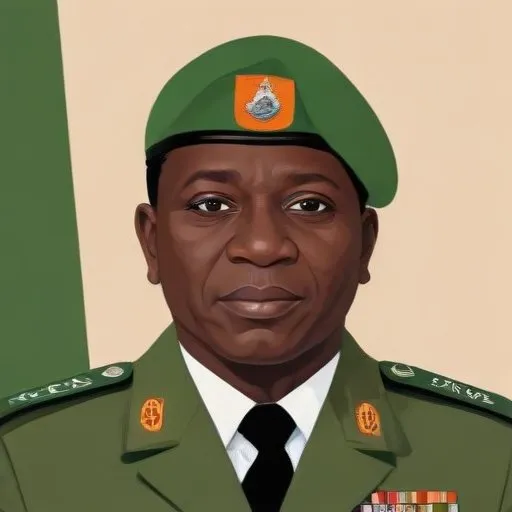
Robert Gu, a career soldier turned politician, is best known for his brief but tumultuous reign as the military ruler of Ivory Coast from 1999 to 2000. His surprising rise to power, marked by a bloody coup, was followed by a disputed election and a hasty exit from the political scene.
Born on March 16, 1941, in Kabakouma, a small village in western Ivory Coast, Gu hailed from the Yacouba ethnic community. He received his military training at the Ouagadougou military school and the prestigious St Cyr military school in France. His loyalty to President Félix Houphouêt-Boigny earned him a promotion to chief of the army in 1990, following a military mutiny.
After Houphouêt-Boigny's death in 1993, Gu's relationship with the new leader, Henri Konan Bédié, began to fray. His refusal to intervene in a political struggle between Bédié and opposition leader Alassane Ouattara in 1995 led to his dismissal as chief of staff. This event marked the beginning of his estrangement from the political establishment.
In a stunning turn of events, Gu was encouraged out of retirement to head the junta that overthrew Bédié on Christmas Eve, 1999. On January 4, 2000, he became President of the Republic, vowing to steer the country towards democratic elections. Gu's presidential ambitions, however, were short-lived, as he was resoundingly defeated by Laurent Gbagbo in the October 2000 presidential election.
Refusing to accept the election results, Gu sparked widespread protests, ultimately leading to Gbagbo's inauguration. Forced into exile, Gu retreated to Gouessesso, near the Liberian border, where he remained a figure in the political opposition. Tragically, on September 19, 2002, Gu, his wife Rose Doudou Gu, and their children were assassinated on the first day of the First Ivorian Civil War.
Robert Gu's brief but tumultuous reign serves as a cautionary tale about the dangers of military intervention in politics. His legacy is marked by controversy, violence, and instability, yet his rise to power and subsequent downfall also underscore the complexities of Ivory Coast's political landscape during the late 1990s and early 2000s.
Though his time in power was brief, Robert Gu's impact on Ivory Coast's history is undeniable. His story serves as a reminder of the importance of democratic stability and the devastating consequences of military intervention in politics.
84 Years Old
The first democratically elected President of the Ivory Coast, who led the country's economic growth and reconciliation after a decade-long civil war, and is known for his efforts to promote peace and stability in West Africa.
