


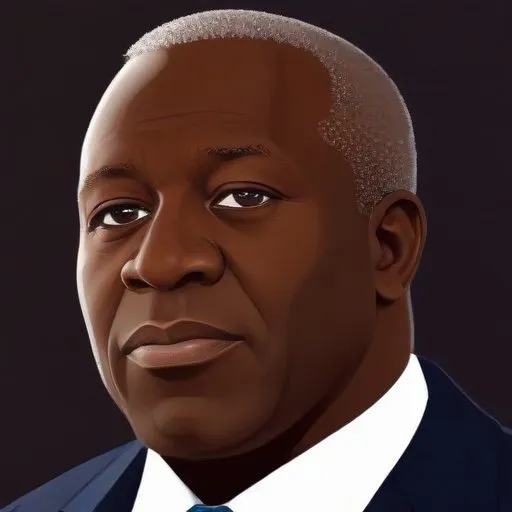
Laurent Gbagbo is known for his tumultuous presidency of Côte d'Ivoire from 2000 to 2011, marked by controversy, political unrest, and eventually, his arrest and trial at the International Criminal Court (ICC).
Early Life and Political Rise
Gbagbo was born on May 31, 1945, in Gagnoa, Côte d'Ivoire. He studied history and later became a teacher, which laid the foundation for his future political career. His activism in trade unions and advocacy for democracy led to his imprisonment in the early 1970s and again in the 1990s. He lived in exile in France during the 1980s.Gbagbo founded the Ivorian Popular Front (FPI) in 1982, which marked the beginning of his political journey. He ran unsuccessfully for president against Félix Houphouët-Boigny in 1990, the start of multiparty politics in Côte d'Ivoire. Despite this setback, he won a seat in the National Assembly of Côte d'Ivoire in 1990.
In 2000, Gbagbo claimed victory in the presidential election after Robert Guéï, the head of a military junta, barred other leading politicians from running. The Ivorian people took to the streets, toppling Guéï's regime, and Gbagbo was installed as president.
In the 2010 presidential election, Gbagbo refused to accept defeat against Alassane Ouattara, despite recognition from the international community, the African Union, and the Economic Community of West African States. This led to a short period of civil conflict, resulting in approximately 3,000 deaths.
Gbagbo was arrested in 2011 by pro-Ouattara forces, supported by French troops, and extradited to The Hague in November 2011. He was charged with four counts of crimes against humanity at the ICC.
Gbagbo's presidency was marked by controversy, political unrest, and economic instability. His refusal to accept defeat in the 2010 election led to a period of violence and instability in Côte d'Ivoire. Despite this, his presidency also saw some economic growth and infrastructure development.
"I will not leave. I will not abandon my people."
Gbagbo's presidency and subsequent trial at the ICC have had a significant impact on Côte d'Ivoire's political landscape. His legacy remains disputed, with some viewing him as a champion of democracy and others as a power-hungry leader who sparked violence and instability.
Gbagbo's story serves as a reminder of the complexities of African politics and the challenges of democratic transition in post-colonial states.
84 Years Old
The first democratically elected President of the Ivory Coast, who led the country's economic growth and reconciliation after a decade-long civil war, and is known for his efforts to promote peace and stability in West Africa.
Born in 1926
The 3rd President of Senegal, a renowned academic and politician, served from 2000 to 2012, implementing economic reforms and promoting regional stability. He's known for his efforts to modernize Senegal's infrastructure and economy.
