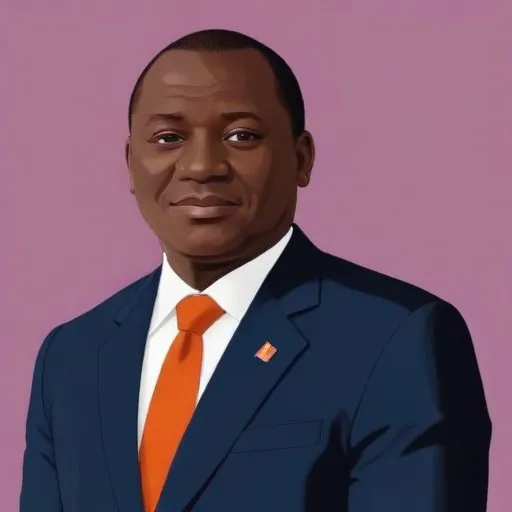
Henri Konan Bédié: A Pillar of Ivorian Politics
A Legacy of Public Service
Henri Konan Bédié is renowned for his illustrious career in Ivorian politics, having served as the President of Côte d'Ivoire from 1993 to 1999 and previously as the President of the National Assembly of Ivory Coast. His extensive experience in governance, economy, and finance has left an indelible mark on the country's development.
Early Life and Education
Born on May 5, 1934, in Dadikro, Daoukro Department, Bédié attended school in France, laying the foundation for his future endeavors. He married Henriette Koizan Bomo in 1957, and the couple has four children.
Career Highlights
- First Ambassador to the United States and Canada (1960)
- Minister of Economy and Finance (1966-1977)
- Chairman of the IMF and World Bank's joint Development Committee (1974-1976)
- Special Advisor to the World Bank Group's International Finance Corporation (1978-1980)
- Elected to the National Assembly of Ivory Coast (1980)
- President of the National Assembly (1980-1993)
- President of Côte d'Ivoire (1993-1999)
Presidency and Legacy
Bédié's presidency was marked by his commitment to democratization and economic growth. He played a crucial role in stabilizing the country after the death of President
Félix Houphouët-Boigny in 1993. As President, he worked to strengthen the country's institutions, promote national unity, and foster economic development.
Philosophical Contributions and Beliefs
Throughout his career, Bédié has championed the values of democracy, economic development, and social justice. He has consistently emphasized the importance of African unity and cooperation, believing that regional integration is key to addressing the continent's development challenges.
Personal Milestones and Key Life Events
- Won the election for President of the PDCI (1994)
Influence on Modern Society
Bédié's contributions to Ivorian politics and economy have had a lasting impact on modern society. His leadership has inspired a new generation of politicians and policymakers, and his commitment to democratic values has helped to consolidate democracy in Côte d'Ivoire.
Controversies and Public Perception
While Bédié's presidency was marked by significant achievements, it was also marred by controversy. Critics have accused him of authoritarianism and human rights abuses during his time in office. Despite these criticisms, Bédié remains a respected figure in Ivorian politics, admired for his vision and leadership.
Historical Context and Legacy
In the broader context of African history, Bédié's legacy is one of stability and progress. He has played a key role in shaping Côte d'Ivoire's development trajectory, and his contributions to regional integration and economic cooperation have had far-reaching implications for the continent as a whole.
Comparative Analysis with Contemporaries
Bédié's leadership style and vision have drawn comparisons with other prominent African leaders, including Félix Houphouët-Boigny and
Omar Bongo. While each leader has their unique strengths and weaknesses, Bédié's commitment to democracy and economic development sets him apart as a champion of African progress.
Personal Relationships and Anecdotes
Throughout his career, Bédié has forged strong relationships with international leaders and dignitaries. One notable anecdote is his close friendship with French President
François Mitterrand, which facilitated greater cooperation between Côte d'Ivoire and France during his presidency.
Impact on Pop Culture
Bédié's influence extends beyond the realm of politics, with his legacy resonating in popular culture. In Côte d'Ivoire, he is celebrated as a national hero, and his name is often invoked in music and art as a symbol of progress and development.
Awards and Honors
- Grand Cross of the National Order of the Ivory Coast
- Grand Officer of the Legion of Honor (France)
Educational Contributions and Influence
Bédié's commitment to education has led to significant investments in the sector, with a focus on improving access and quality. His efforts have inspired a new generation of Ivorian scholars and policymakers, ensuring that his legacy continues to shape the country's development trajectory.
Charitable Work and Social Contributions
Throughout his career, Bédié has been dedicated to charitable causes, particularly in the areas of education and healthcare. His philanthropic efforts have improved the lives of countless Ivorians, cementing his reputation as a champion of social justice and human development.
Inspirational Stories and Motivations
Bédié's life and legacy serve as a powerful inspiration to generations of Africans and beyond. His commitment to democracy, economic development, and social justice has motivated countless individuals to strive for positive change in their own communities.
FAQ
What was Henri Konan Bédiés role in Ivorian politics?
Henri Konan Bédié was the 2nd President of Côte dIvoire, serving from 1993 to 1999, during which he pursued economic reforms and promoted regional integration in West Africa.
What were Henri Konan Bédiés early career highlights?
Henri Konan Bédié began his political career in the 1960s, serving as Minister of Economy and Finance, and later as Prime Minister, before eventually becoming President of Côte dIvoire.
How did Henri Konan Bédiés presidency impact Côte dIvoire?
Henri Konan Bédiés presidency saw a period of relative stability and economic growth, with significant investments in infrastructure, education, and healthcare, which improved living standards for many Ivorians.
What were the challenges faced by Henri Konan Bédiés government?
Henri Konan Bédiés government faced challenges related to ethnic and religious tensions, as well as corruption allegations, which ultimately led to his ousting in a military coup in 1999.
How is Henri Konan Bédié remembered in Ivorian history?
Henri Konan Bédié is remembered as a significant figure in Ivorian politics, who worked to promote national unity and economic development, despite the challenges and controversies that marked his presidency.