


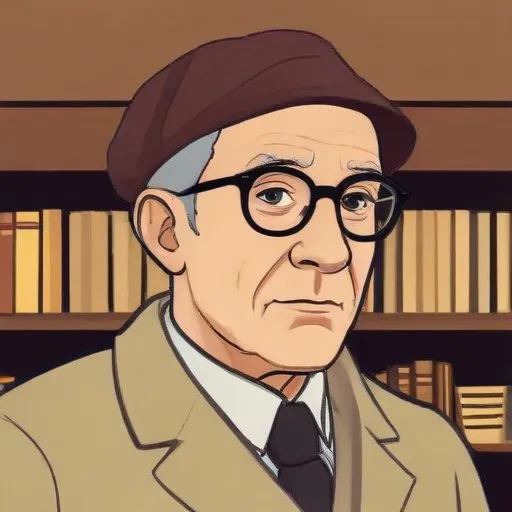
Renowned expert in ancient Greek art and architecture, particularly known for his groundbreaking work on the sculpture of the Parthenon.
Bernard Ashmole was a renowned British archaeologist and art historian who specialized in ancient Greek sculpture, leaving an indelible mark on the field with his groundbreaking contributions. Throughout his illustrious career, Ashmole held various prestigious professorships and positions, including the Yates Professor of Classical Art and Archaeology at the University of London, Lincoln Professor of Classical Archaeology and Art at the University of Oxford, and Keeper of Greek and Roman Antiquities at the British Museum.
Born on June 22, 1894, in Ilford, Essex, Ashmole was a descendant of the antiquarian Elias Ashmole. He received his early education through private tutoring before attending the private Forest School from 1903 to 1911. Ashmole then matriculated into Hertford College, Oxford, in 1913, where he was awarded the Essex Scholarship in Classics.
With the outbreak of World War I, Ashmole left university to join the British Army. Commissioned into the 11th Battalion, Royal Fusiliers, he was badly wounded at the Battle of the Somme. During his recuperation, he was made a temporary captain on November 5, 1916, and eventually returned to the trenches, reattached to the Royal Fusiliers on March 9, 1918.
Ashmole's academic and professional career was marked by several notable milestones. He studied with Percy Gardner and John Beazley at Oxford, collaborating with the latter on the Greek art chapter for the Cambridge Ancient History, 2nd ed. (1928). He also served as director of the British School at Rome (1925-1928), where he assisted in cataloguing the sculptures of the Palazzo dei Conservatori and developed a deep appreciation for modern sculpture and architecture. Ashmole succeeded Beazley to the Lincoln Chair of Classical Art at Oxford in 1956, following Beazley's retirement.
Bernard Ashmole's contributions to the field of archaeology and art history are far-reaching and profound. His work has had a lasting impact on our understanding of ancient Greek sculpture, and his legacy continues to inspire generations of scholars and researchers. Throughout his life, Ashmole was driven by a passion for discovery and a commitment to advancing knowledge, leaving behind a rich body of work that will continue to shape the field for years to come.
Ashmole received numerous awards and honors for his contributions to the field of archaeology and art history. Some of his notable awards include:
Ashmole was a prolific writer and published several notable works throughout his career, including:
Throughout his life, Ashmole was known for his dedication to his work and his passion for discovery. He was married to Dorothy Violetenso, and the couple had two sons, Peter and Timothy. Ashmole passed away on February 25, 1988, leaving behind a legacy that continues to inspire and educate scholars around the world.
Born in 1900
A pioneering archaeologist and art historian who uncovered the secrets of ancient Greek and Roman art, particularly in the excavation of Herculaneum .
99 Years Old
A renowned expert in ancient Greek art and archaeology, known for his extensive research and publications on the subject, particularly on Greek pottery and sculpture.
Born in 1868
Pioneering archaeologist and spy who mapped and excavated ancient Mesopotamian sites, shaping Middle Eastern politics and cultural understanding.
