


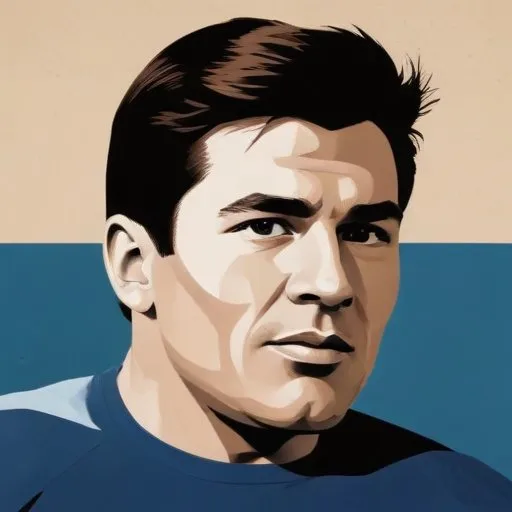
Won Olympic gold in the 10,000-meter run at the 1964 Tokyo Games, becoming the first non-European to do so, and later worked as a humanitarian and activist for Native American rights.
Billy Mills is a name etched in the annals of Olympic history, remembered for his stunning upset in the 10,000-meter run at the 1964 Tokyo Olympics. On that fateful day, Mills, a virtual unknown, outran the favorites to claim the gold medal, becoming the first non-European to win the event and the only winner from the Americas.
Born on June 30, 1938, in Pine Ridge, South Dakota, Mills grew up on the Pine Ridge Indian Reservation, home to the Oglala Lakota people. His Lakota name, Tamakhhe Thela, loosely translates to "loves his country" or "respects the earth." Orphaned at the tender age of 12, Mills found solace in running, which became an integral part of his life.
Mills' talent for running was first discovered at the Haskell Institute (now Haskell Indian Nations University) in Lawrence, Kansas, where he won the 1956 KSHSAA Class B State Championship in cross-country. He attended the University of Kansas on an athletic scholarship, earning a degree in physical education in 1962. During his time at Kansas, the track team won the 1959 and 1960 outdoor national championships, with Mills playing a significant role in the team's success.
In 1962, Mills entered the United States Marine Corps, serving as a First Lieutenant in the Marine Corps Reserve when he competed in the 1964 Olympics. It's remarkable to note that Mills didn't even own a new pair of shoes until the night before the Olympic Games, a testament to his humble beginnings.
The 1964 Summer Olympics saw Mills qualify for the U.S. Track and Field Team in the 10,000 meters and the marathon events. The favorite to win the 10,000 meters was Ron Clarke of Australia, who held the world record at the time. However, Mills had other plans.
In one of the greatest Olympic upsets, Mills outran the competition, including Clarke, to claim the gold medal in a time of 28:24.4. This monumental achievement not only made him an overnight sensation but also cemented his place in history as the first non-European to win the event and the only winner from the Americas.
Billy Mills' historic victory at the 1964 Olympics has inspired generations of athletes, particularly Native Americans. His achievement is a testament to the power of perseverance, hard work, and determination. Today, Mills remains an icon in the world of track and field, with his legacy continuing to inspire and motivate athletes around the world.
79 Years Old
American sprinter and coach who won two gold medals at the 1968 Mexico City Olympics, setting multiple world records in the 400 meters and 4x400 relay events.
59 Years Old
A Scottish saxophonist, composer, and educator who blended jazz with traditional Celtic music, creating a unique sound that inspired a new generation of musicians.
81 Years Old
Raised his fist in a Black Power salute during the 1968 Olympics, sparking a powerful symbol of protest against racial inequality.
83 Years Old
Olympic gold medalist and NFL wide receiver who excelled in both track and football, earning him the nickname "Bullet Bob."
81 Years Old
A pioneering African American athlete who won four Olympic gold medals and set multiple world records in the 100-meter dash, breaking barriers for women and minorities in sports.
80 Years Old
American sprinter and football player who won two Olympic gold medals and set multiple world records in the 100-yard dash, and later played in the NFL.
83 Years Old
American track and field athlete who won gold in the 110m hurdles at the 1968 Mexico City Olympics and later became a bobsledder, competing in two Winter Olympics.
79 Years Old
Revolutionized the high jump with a backward, curved approach, earning Olympic gold and setting multiple records. Known for inventing the "Fosbury Flop" technique.
