


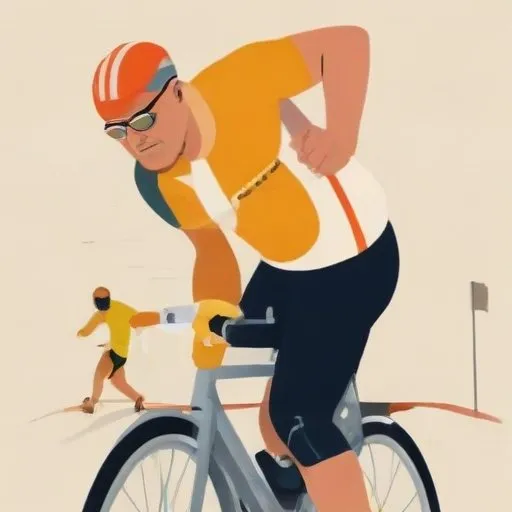
A Danish cycling legend who won the Tour de France in 1996, but later admitted to doping, and now manages a professional cycling team.
Bjarne Riis, nicknamed "The Eagle from Herning," is a Danish former professional road bicycle racer who made history by winning the 1996 Tour de France, a feat that would forever be etched in the annals of cycling.
Riis's road to success was not without its fair share of controversy, however. In 2007, he admitted to using banned substances during his Tour de France victory, leading to his title being stripped. Despite this, Riis remains an iconic figure in the world of cycling, known for his exceptional riding skills, unrelenting determination, and, above all, his uncompromising passion for the sport.
Born on April 3, 1964, in Herning, Denmark, Riis began his cycling journey at a local club, Herning CK. His big break came when he was advised by former cyclist Kim Andersen to start his professional career in Luxembourg, rather than Italy. This decision would prove to be a turning point in Riis's life, marking the beginning of an illustrious career that would take him to the pinnacle of success.
Riis's professional career began in 1986, with his first major result being a fifth-place finish in the GP Wallonie. Although he failed to impress in the initial years, his fortunes changed when he joined the Toshiba team and participated in the 1988 Tour of European Community race. It was here that he caught the attention of Laurent Fignon, a former Tour de France winner, who would go on to become a mentor and close friend.
Riis's association with Fignon and the Système U team proved to be a game-changer. He rode as Fignon's support rider, helping him secure victories in both flat and mountainous terrain. In 1989, Riis played a crucial role in Fignon's Giro d'Italia win, marking his first major professional victory. This period also saw the development of a strong bond between Riis and Fignon, which would last a lifetime.
The 1990s witnessed Riis's meteoric rise to fame. He won multiple Danish National Championships, stage wins in the Giro d'Italia, and, of course, the coveted 1996 Tour de France title. His victory in the Amstel Gold Race in 1997 further solidified his position as a top-ranked cyclist.
In 2007, Riis made a stunning revelation, admitting to using banned substances during his 1996 Tour de France victory. This admission led to his title being stripped, and he was no longer considered the winner by the Tour organizers. However, in July 2008, the Tour reconfirmed his victory, albeit with an asterisk label to indicate his doping offenses.
Riis's doping scandal led to widespread criticism and outrage, with many questioning his integrity andSportsmanship. However, in the years that followed, he worked tirelessly to rebuild his reputation, becoming a strong advocate for clean cycling and anti-doping measures.
Love him or hate him, Bjarne Riis has left an indelible mark on the world of cycling. His victories, though tainted by controversy, demonstrate his exceptional skill and determination. His story serves as a cautionary tale, highlighting the darker aspects of the sport, yet also showcasing the power of redemption and personal growth.
Riis's legacy extends beyond his racing career. He has been instrumental in shaping the sport, serving as the owner and manager of the Tinkoff-Saxo team, formerly known as the Russian UCI WorldTeam Tinkoff. His teams have produced some of the most talented riders in the world, further cementing his place in cycling history.
Riis's personal life has been marked by a strong sense of discipline and perseverance. He is known for his intense training regimens and unwavering dedication to his craft. Away from cycling, Riis is a devoted husband and father of two, who enjoys spending time with his family and indulging in his love for nature and the outdoors.
In conclusion, Bjarne Riis's story is one of triumph, tragedy, and redemption. His legacy serves as a testament to the power of human spirit, reminding us that even in the darkest of times, there is always a way forward. As we look back on his remarkable career, we are reminded of the importance of perseverance, passion, and integrity in sport and in life.
54 Years Old
A legendary cyclist who won the Tour de France a record seven consecutive times, but was later stripped of his titles due to a doping scandal.
62 Years Old
A Spanish cyclist who dominated the Tour de France in the 1990s, winning five consecutive titles and setting multiple records. He's a legendary figure in professional cycling.
65 Years Old
Three-time Tour de France winner and pioneer in the use of aerodynamic equipment and modern training methods, known for his fierce rivalry with Bernard Hinault.
71 Years Old
A dominant force in professional cycling, winning five Tour de France titles and three World Championships, earning the nickname "The Badger" for his fierce competitiveness.
81 Years Old
A Belgian cycling legend and iconic sports broadcaster, renowned for his unparalleled dominance in the sport, winning numerous Tour de France titles and setting multiple records.
Born in 1919
An Italian cycling legend and decorated war hero, known for his dominance in the Tour de France and Giro d'Italia, earning him the nickname "Il Campionissimo" (Champion of Champions).
Born in 1914
A legendary Italian cyclist who won the Tour de France twice and helped Jews escape persecution during World War II.
