


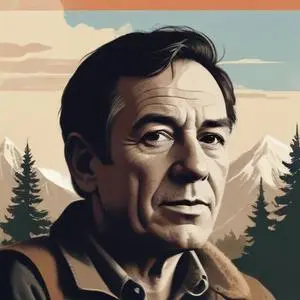
Co-founder of The Wilderness Society, a pioneering conservationist who fought to preserve America's natural wonders, advocating for the protection of vast wilderness areas and wildlife habitats.
Bob Marshall, a pioneering figure in American conservation, is best known for co-founding the Wilderness Society in 1935, a organization dedicated to preserving the country's vast wilderness areas. As a forester, writer, and wilderness activist, Marshall's tireless efforts to protect the natural world have left an indelible mark on the environmental landscape.
Born on January 2, 1901, Marshall developed a deep love for the outdoors from a young age, frequenting the Adirondack Mountains and eventually becoming one of the first Adirondack FortySixers. His passion for exploration and nature led him to travel to the Brooks Range in Alaska's far northern wilderness, where he penned numerous articles and books about his adventures, including the bestselling Arctic Village in 1933.
As a scientist with a PhD in plant physiology, Marshall's career took off in 1925 when he joined the U.S. Forest Service as a forester. After inheriting a substantial fortune following his father's death in 1929, Marshall used his financial independence to embark on expeditions to Alaska and other wilderness areas, solidifying his reputation as a leading advocate for wilderness preservation.
Marshall's influence extended to the highest echelons of government, holding significant public appointed posts, including chief of forestry in the Bureau of Indian Affairs (1933-1937) and head of recreation management in the Forest Service (1937-1939), during the administration of President Franklin D. Roosevelt. In these roles, he played a crucial part in shaping regulations to safeguard vast areas of roadless land under federal management.
In 1935, Marshall co-founded the Wilderness Society, an organization dedicated to preserving primeval land and promoting wilderness as a social and environmental ideal. He personally provided most of the Society's funding in its early years, demonstrating his unwavering commitment to the cause.
Although Marshall's life was cut short when he died of heart failure at the age of 38 in 1939, his legacy continues to inspire generations of environmentalists. The Wilderness Act of 1964, which protected millions of acres of wilderness areas from development, exploitation, and mechanization, was in part a testament to Marshall's tireless efforts.
Today, the Wilderness Society remains a powerful force in American conservation, continuing Marshall's mission to preserve and protect the country's most precious natural assets.
Marshall was not only a passionate environmentalist but also a committed socialist and advocate for civil liberties. His philosophy emphasized the interconnectedness of human well-being and environmental health, underscoring the importance of preserving wilderness areas for future generations.
"There is just one hope of repulsing the invasive harassment of the wilderness by the mechanics of our industrial civilization – that is, by the development of a passionate love for the wilderness, accompanied by a deep respect for its independence, and a determination to let it remain free from human habitation."
— Bob Marshall
Bob Marshall's remarkable life may have been short-lived, but his impact on American conservation and the Wilderness Society will endure for generations to come.
Born in 1887
Pioneering ecologist and author who advocated for land ethics and conservation, inspiring a new generation of environmentalists.
Born in 1838
A pioneering conservationist and writer who advocated for the preservation of America's wilderness and national parks, inspiring generations to appreciate and protect the natural world.
Born in 1858
A pioneering leader who championed progressive reforms, trust-busting, and conservation, earning a Nobel Peace Prize for mediating the Russo-Japanese War. He's also famous for his rugged outdoorsmanship and "big stick" diplomacy.
Born in 1882
Led the United States through the Great Depression and World War II, implementing a series of reforms known as the New Deal and helping to establish the country as a global superpower.
