


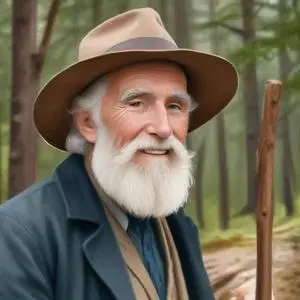
A pioneering conservationist and writer who advocated for the preservation of America's wilderness and national parks, inspiring generations to appreciate and protect the natural world.
John Muir, affectionately known as "John of the Mountains," was a Scottish-born American naturalist, author, and environmental philosopher who dedicated his life to preserving the natural wonders of the United States. Through his tireless advocacy and captivating writing, Muir inspired a nation to protect its most precious wilderness areas, earning him the title of "Father of the National Parks."
Born on April 21, 1838, in Dunbar, Scotland, Muir's love affair with nature began at a young age. He immigrated to the United States with his family in 1849 and grew up in Wisconsin, where he developed a deep appreciation for the natural world. Muir's adventures took him to the Sierra Nevada mountains, where he discovered his true calling as a conservationist.
Muir's activism and writing played a pivotal role in the preservation of Yosemite Valley and Sequoia National Park. His influential articles, "The Treasures of the Yosemite" and "Features of the Proposed Yosemite National Park," published in The Century Magazine, helped push the US Congress to pass a bill in 1890 establishing Yosemite National Park. Muir's work also inspired the establishment of several other national parks, including Grand Canyon, Petrified Forest, and Olympic National Parks.
Muir's contributions to environmental philosophy and conservation extend far beyond his immediate achievements. He co-founded the Sierra Club, a prominent American conservation organization, and his writings have inspired generations of environmentalists, including prominent figures like Ansel Adams. Muir's ecological thinking and environmental activism have profoundly shaped the way Americans understand and interact with the natural world.
Muir's tireless efforts were recognized during his lifetime, earning him numerous awards and honors. Some notable accolades include:
Muir married Louisa Strentzel in 1880, and together they had two daughters, Wanda and Helen. He passed away on December 24, 1914, leaving behind a legacy that continues to inspire environmentalists and nature lovers around the world.
John Muir's influence on modern society is profound and far-reaching. His advocacy for wilderness preservation has led to the protection of millions of acres of land, and his writings have inspired countless individuals to take action in defense of the environment. Muir's legacy serves as a powerful reminder of the importance of preserving our natural heritage for future generations.
John Muir's remarkable life and achievements continue to captivate and inspire us today. As we face the environmental challenges of the 21st century, Muir's words and actions serve as a beacon of hope, reminding us of the importance of preserving our planet's precious natural resources. His legacy is a testament to the power of individual action and the importance of protecting the natural world for generations to come.
Born in 1817
A 19th-century thinker who advocated for simple living, civil disobedience, and individualism, inspiring generations to reevaluate their relationship with nature and society.
Born in 1803
A leading figure in the Transcendentalist movement, he advocated for individualism, self-reliance, and nature-inspired spirituality through his essays and poetry. His ideas continue to influence American thought and culture.
Born in 1887
Pioneering ecologist and author who advocated for land ethics and conservation, inspiring a new generation of environmentalists.
Born in 1858
A pioneering leader who championed progressive reforms, trust-busting, and conservation, earning a Nobel Peace Prize for mediating the Russo-Japanese War. He's also famous for his rugged outdoorsmanship and "big stick" diplomacy.
Born in 1882
Led the United States through the Great Depression and World War II, implementing a series of reforms known as the New Deal and helping to establish the country as a global superpower.
Born in 1907
Pioneering biologist and environmentalist who exposed the dangers of pesticides and inspired the modern environmental movement through her groundbreaking book "Silent Spring".
86 Years Old
The Lord-Lieutenant of Greater London, responsible for supporting the monarch and representing the crown in the city, and known for their ceremonial and civic duties. They play a key role in promoting London's interests and fostering community spirit.
99 Years Old
A fierce advocate for wilderness preservation and critic of industrialization, he wrote influential novels and essays that inspired a generation of environmentalists. His iconic book "Desert Solitaire" is a classic of nature writing.
