


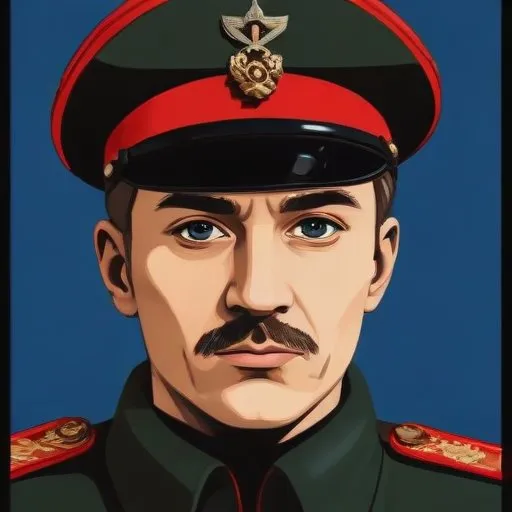
A Russian revolutionary and writer, known for his involvement in the Russian Revolution and his literary works that explored the human psyche.
Boris Savinkov was a Russian writer and revolutionary, infamous for his involvement in the assassinations of high-ranking imperial officials in the early 20th century. As the Deputy Head of the Combat Organization, the paramilitary wing of the Socialist Revolutionary Party, Savinkov played a pivotal role in shaping the course of Russian history.
Born on January 31, 1879, in Kharkov, Ukraine, Savinkov was the son of a judge. He entered the law department of St. Petersburg University in 1897 but was expelled two years later due to his participation in student riots. Undeterred, he continued his studies in Berlin and Heidelberg, where he became acquainted with various socialist organizations.
In 1898, Savinkov joined the socialist movement, but his disillusionment with Marxism soon led him to embrace terrorism. In 1901, he was arrested and sent to exile in Vologda, where he met prominent Russian intellectuals like Nikolai Berdyaev and Anatoly Lunacharsky. However, his experience in exile only strengthened his resolve to adopt more radical methods.
In 1903, Savinkov escaped abroad and joined the Socialist Revolutionary Party, swiftly rising through the ranks to become the Deputy Head of its Combat Organization. Under his leadership, the organization carried out several high-profile assassinations, including the murder of Interior Minister Vyacheslav von Plehve in 1904 and the assassination of Grand Duke Sergei Alexandrovich in 1905.
After the February Revolution of 1917, Savinkov briefly served as Assistant Minister of War in the Provisional Government. However, he soon turned against the ruling Bolsheviks, organizing armed resistance against them. In 1921, he wrote, "The Russian people do not want Lenin, Trotsky, and Dzerzhinsky... nobody elected them."
Savinkov's controversial stance and actions have been the subject of much debate. While some view him as a hero who fought against oppressive regimes, others see him as a ruthless assassin who resorted to terrorism.
In 1920, Savinkov emigrated from Soviet Russia, but he was lured back to the country in 1924 as part of a Syndicate-2 operation. He was arrested in Minsk, along with Lyubov Efimovna Dikgof and her husband A. A. Dikgof. The circumstances of his death remain unclear, with some accounts suggesting he was killed in prison, while others claim he committed suicide.
Boris Savinkov's life and actions continue to fascinate and disturb. While his methods were often violent and controversial, his legacy serves as a reminder of the complexities and challenges of revolutionary politics.
Born in 1870
Founder of the world's first socialist state, leading the Bolshevik Revolution and establishing the Soviet Union, known for his radical Marxist ideology and authoritarian rule.
Born in 1879
Founded the Red Army and played a crucial role in the Russian Revolution, shaping the course of modern communism. A key figure in 20th-century politics and ideology.
Born in 1878
The Soviet Union's ruthless leader who ruled with an iron fist, implementing policies that led to widespread famine and purges, while also playing a crucial role in defeating Nazi Germany in World War II.
Born in 1899
A Russian-born novelist and critic, renowned for crafting intricate, lyrical prose and exploring themes of identity, morality, and the human condition through works like "Lolita" and "Pale Fire".
Born in 1891
A Russian literary mastermind, famous for blending fantasy and realism in works like "The Master and Margarita", which explores the intersection of politics, philosophy, and the human condition.
Born in 1880
A Russian literary giant, known for pioneering the avant-garde movement in literature, blending poetry and prose to create innovative, symbolic works that explored the human experience.
Born in 1882
A Russian master of music, renowned for revolutionizing classical music with bold, avant-garde compositions that blended traditional and modern elements. His iconic works, such as "The Rite of Spring," continue to inspire and influence artists across genres.
