


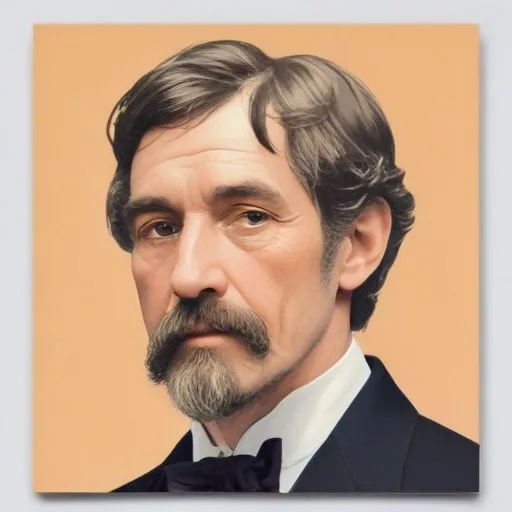
Pioneering writer of the American West, crafting tales of rugged frontier life, outlaws, and miners, with a touch of humor and social commentary.
Bret Harte, a renowned American short story writer and poet, is best remembered for his captivating tales of the California Gold Rush, which continue to enthrall readers to this day. His literary masterpieces, often featuring miners, gamblers, and other romantic figures of the era, have been widely reprinted, adapted, and admired, cementing his status as a literary icon of the American West.
Born Francis Brett Hart on August 25, 1836, in Albany, New York, Harte was named after his great-grandfather, Francis Brett. His father, Henry, later changed the spelling of the family name from Hart to Harte. Harte's ancestry was a rich tapestry of French Huguenot and Dutch heritage, with his mother, Elizabeth Rebecca Ostrander Hart, raising him in a Dutch Reformed church.
As an avid reader, Harte published his first work at age 11, a satirical poem titled "Autumn Musings," which unfortunately garnered ridicule from his family. This early setback, however, did not deter him from pursuing a literary career.
Harte's literary career spanned more than four decades, during which he wrote poetry, plays, lectures, book reviews, editorials, and magazine sketches. However, it was his short stories set during the California Gold Rush that brought him widespread acclaim. Some of his most notable works include:
These works not only showcased Harte's mastery of the short story form but also provided a unique window into the lives of those who lived during the California Gold Rush.
Harte's works have had a profound impact on the way people perceive the American West. His stories have been adapted into numerous films, television shows, and stage productions, introducing his characters and themes to new generations of audiences.
Moreover, Harte's legacy extends beyond the realm of literature. He is often credited with helping to shape the public's perception of the California Gold Rush, an era that has captivated the American imagination.
In recognition of his contributions to American literature, Harte was posthumously inducted into the California Hall of Fame in 2009.
In addition to his literary pursuits, Harte worked as a miner, teacher, messenger, and journalist, even serving as the secretary of the San Francisco Mint. His experiences during this period deeply influenced his writing, allowing him to infuse his stories with a sense of authenticity.
Harte's personal life was marked by both joy and tragedy. He married Anne Tucker in 1862, and the couple had four children together. However, their marriage was not without its challenges, and the couple eventually separated.
Harte's works often explored themes of resilience, loyalty, and the human condition. His stories frequently featured characters who, despite facing immense hardships, managed to find hope and redemption in the unlikeliest of places.
Through his writing, Harte sought to capture the essence of the human experience, revealing the complexities and nuances of the human condition.
Despite his literary success, Harte was not without controversy. Some critics accused him of romanticizing the California Gold Rush, downplaying the harsh realities faced by those who lived during that era.
Additionally, Harte's decision to leave California and return to the East Coast sparked rumors of burnout and creative exhaustion. However, he continued to write prolifically, producing works that remained true to his literary vision.
Harte's writings are replete with memorable quotes that continue to resonate with readers today. One of his most famous quotes is:
"For thirty years the West has been waiting for God, and God has been waiting for the West."
This quote, taken from his essay "The Californians," perfectly captures the sense of anticipation and disillusionment that defined the California Gold Rush era.
Harte's works must be viewed within the context of the California Gold Rush, a period marked by great upheaval and transformation. His stories, while often romanticized, provided a unique window into the lives of those who lived during this era.
In comparison to his contemporaries, Harte's works are notable for their focus on the human experience, rather than the broader historical events of the era. His stories are characterized by their emotional depth and complexity, setting him apart from other writers of the time.
Through his literary masterpieces, Bret Harte has left an indelible mark on the American literary landscape, ensuring that his stories will continue to captivate readers for generations to come.
Born in 1835
Witty writer of classics like "The Adventures of Tom Sawyer" and "The Adventures of Huckleberry Finn", known for humor and social commentary.
Born in 1812
A renowned author of timeless classics, crafting vivid stories that exposed social injustices and explored the human condition, leaving an indelible mark on literature.
Born in 1850
A Scottish novelist, poet, and essayist who wrote iconic adventure novels, including "Treasure Island" and "Dr. Jekyll and Mr. Hyde", that have captivated readers for generations.
Born in 1854
A witty and flamboyant literary mastermind, renowned for crafting clever, humorous, and poignant works that continue to delight audiences with their clever wordplay and societal commentary.
Born in 1809
A master of dark and atmospheric storytelling, crafting haunting tales of mystery and horror that continue to captivate readers to this day.
Born in 1819
Author of epic sea tales and philosophical explorations, including the iconic "Moby-Dick", which continues to influence literature and popular culture.
Born in 1783
Author of the iconic tales "The Legend of Sleepy Hollow" and "Rip Van Winkle", credited with creating the first American folklore and shaping the country's literary identity.
Born in 1789
Wrote influential novels of American history and identity, including "The Last of the Mohicans", which has become an iconic tale of the American frontier.
