


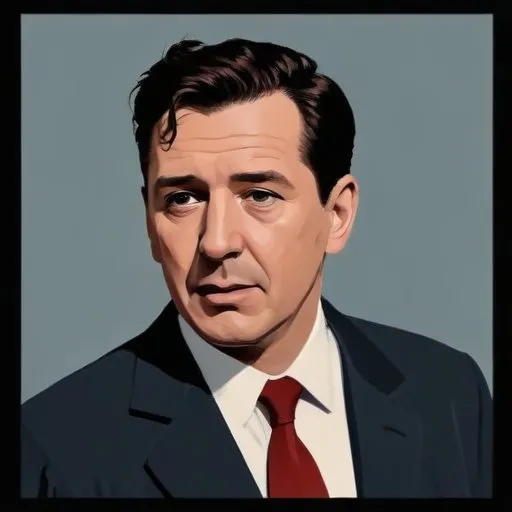
Renowned BBC correspondent who reported on major global events, including the Falklands War, and famously counted helicopters to verify a military operation.
Brian Hanrahan is most famously known for his courageous reporting during the Falklands War, where he cleverly circumvented reporting restrictions to provide the public with a gripping account of the conflict. His iconic phrase, "I'm not allowed to say how many planes joined the raid, but I counted them all out, and I counted them all back," has become synonymous with his fearless journalism.
Born on March 22, 1949, in Middlesex, England, Hanrahan was the son of a construction worker. He was educated at St Ignatius College, Stamford Hill, in Tottenham, and later studied Politics at the University of Essex.
Hanrahan's journey into journalism began in 1970 when he joined the BBC as a photographic stills clerk. A year later, he was one of the six news trainees appointed by the BBC, and he went on to become a news scriptwriter and a Duty Editor in the BBC Television Newsroom.
Hanrahan's reporting career took him to various hotspots, including Northern Ireland, where he reported on The Troubles. However, it was his reporting during the Falklands War that catapulted him to fame. He joined the press corps attached to the Task Force dispatched by the Government of the United Kingdom to counter the Argentine invasion of the Falkland Islands in 1982.
As a war correspondent, Hanrahan traveled with the Task Force aboard the Royal Navy aircraft carrier HMS Hermes, reporting on the early air strikes by Harrier jump jets. His creative workaround of the reporting restrictions showcased his journalistic prowess and earned him widespread recognition.
In the mid-1980s, Hanrahan became a foreign correspondent for the BBC, reporting from various parts of the world. He later went on to become the Diplomatic News Editor for the BBC, a position he held until his passing in 2010.
Brian Hanrahan's fearless reporting and creative storytelling have left an indelible mark on the world of journalism. His legacy continues to inspire journalists and reporters around the world, and his iconic phrase has become a testament to the power of journalism in the face of adversity.
Hanrahan's life was cut short when he passed away on December 20, 2010, but his contributions to journalism and his bravery in the face of danger will continue to be remembered and celebrated for generations to come.
81 Years Old
A renowned war correspondent and author, known for reporting from conflict zones and writing about her experiences. She's a pioneering female journalist who has covered many major global events.
63 Years Old
A British journalist who landed a groundbreaking interview with Princess Diana in 1995, exposing the royal family's secrets and controversies.
87 Years Old
A renowned news anchor and academic, best known for presenting the ITV News at Ten, and being the first black news anchor in the UK. He's a household name in British journalism.
Born in 1813
Pioneering doctor who tracked down the source of a cholera outbreak in London, leading to significant advances in public health and epidemiology. Known for his groundbreaking work in tracing the disease to a contaminated water pump.
76 Years Old
A renowned television presenter and author, best known for his in-depth interviews and witty humor on the BBC's University Challenge and Newsnight programs.
69 Years Old
A Scottish lawyer and politician who served as the Member of the Scottish Parliament for the Highlands and Islands region, and was also the convenor of the Scottish Parliament's Justice Committee.
65 Years Old
A renowned news anchor and author, best known for presenting BBC News at Ten and writing about Welsh history and culture.
67 Years Old
A renowned Scottish journalist and author, known for presenting BBC's flagship Sunday morning news program and writing bestselling books on politics and history.
