


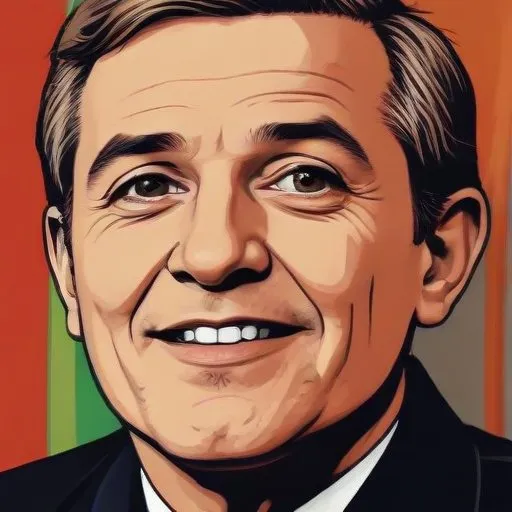
A German-American monologuist and comedian known for his dark, absurdist humor and eccentric stage presence, often performing as a fictionalized version of himself. He's a cult figure celebrated for his unique blend of comedy and philosophy.
Brother Theodore, born Theodore Isidore Gottlieb, was a German-American actor and comedian renowned for his unorthodox, stream-of-consciousness monologues that defied traditional stand-up comedy norms. These "stand-up tragedies," as he called them, earned him a cult following and critical acclaim for their dark humor and philosophical undertones.
Gottlieb was born on November 11, 1906, in Düsseldorf, Germany, to a Jewish family. His father was a magazine publisher, and the family's prosperity would later become a crucial factor in his life. He attended the University of Cologne, but his life took a dramatic turn when he was imprisoned at the Dachau concentration camp at the age of 32. After being released, he fled to Switzerland, where he was deported for chess hustling, and later arrived in the United States with the help of family friend Albert Einstein.
In the United States, Gottlieb worked as a janitor at Stanford University, where he demonstrated his exceptional chess skills by beating 30 professors simultaneously. He later became a dockworker in San Francisco, but it was his passion for acting and monologues that ultimately defined his career. His early performances in the 1940s and 1950s mainly consisted of small roles in B-movies, including an appearance in Orson Welles' 1946 film The Stranger.
Gottlieb's monologues, initially inspired by Edgar Allan Poe, gradually shifted towards darker humor and unorthodox themes. In the 1950s, he attracted a devoted following in New York City with his unique performances. One of his most memorable and incendiary works was his 1958 one-man show, which fervently advocated for quadrupedism, the notion that humans should walk on all fours.
Brother Theodore's contributions to comedy, acting, and philosophy have left an indelible mark on the entertainment industry. His unapologetic style and unconventional subject matter continue to inspire and influence artists to this day. Though his life was marked by tumult and adversity, he remained unwavering in his pursuit of creative expression, leaving behind a legacy that is as fascinating as it is thought-provoking.
As Brother Theodore himself once said, "I'm not a comedian, I'm a tragedian. I make people laugh to avoid crying."
Born in 1901
Host of a popular Sunday night TV variety show featuring iconic performances by famous musicians, comedians, and entertainers, showcasing American culture from the 1940s to the 1970s.
Born in 1913
A beloved comedian and actor who brought laughter to millions through his physical comedy and pantomime skills, starring in numerous films and TV shows, including his own popular variety show.
Born in 1903
A legendary entertainer who brought laughter and joy to millions through his iconic comedy specials, films, and USO tours, leaving a lasting impact on American entertainment.
Born in 1896
A legendary comedian and entertainer, known for his quick wit, charming stage presence, and iconic cigar, starring in films and TV shows that brought laughter to generations.
Born in 1895
A zany comedian and actress who delighted audiences with her witty banter and comedic timing on stage, screen, and radio, particularly in the 1930s and 1940s.
Born in 1898
A charismatic entertainer who shone in vaudeville, film, and television, best known for his smooth baritone voice and emceeing duties at lavish events.
Born in 1906
A virtuosic violinist and comedian who delighted audiences with rapid-fire one-liners and witty humor. He's famous for his "Take my wife, please!" joke.
Born in 1926
Insult comedian known as "Mr. Warmth" for his biting, sarcastic humor and celebrity roasts, entertaining audiences with his quick wit and sharp tongue.
