


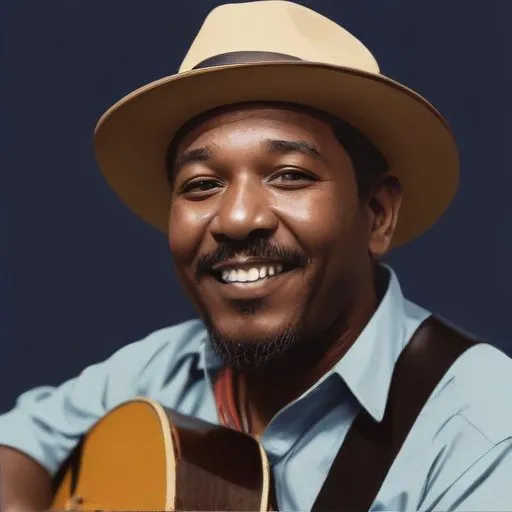
A folk-blues singer and guitarist known for his soulful voice and intricate fingerpicking style, blending traditional blues with urban folk and gospel influences. He was a key figure in the 1940s-1950s blues revival.
Brownie McGhee is revered for his mesmerizing collaboration with harmonica virtuoso Sonny Terry, creating a dynamic duo that revolutionized folk and Piedmont blues music.
With his distinctive vocals, masterful guitar playing, and emotive storytelling, McGhee left an indelible mark on the music world, earning him a permanent place in the annals of blues history.
Born Walter Brown McGhee on November 30, 1915, in Knoxville, Tennessee, Brownie grew up in Kingsport, Tennessee. Tragedy struck at the tender age of four when he contracted polio, rendering his right leg immobile.
Despite the setback, McGhee's passion for music never wavered. His brother Granville "Stick" McGhee, who later became a musician, would push young Brownie around in a cart, earning him the nickname.
Their father, George McGhee, was a factory worker and musician who instilled in Brownie a love for music. A homemade guitar, crafted by his uncle from a tin marshmallow box and a piece of board, became Brownie's first instrument.
At 22, McGhee embarked on a journey as a traveling musician, performing with the Rabbit Foot Minstrels and befriending influential blues guitarist Blind Boy Fuller. Following Fuller's death in 1941, McGhee was promoted as his successor, "Blind Boy Fuller No. 2."
In 1942, McGhee teamed up with Sonny Terry, a harmonica virtuoso, and the duo's overnight success was cemented. For nearly four decades, they recorded and toured together, releasing dozens of albums and mesmerizing audiences worldwide.
Brownie McGhee's remarkable career spanned multiple genres, including folk, blues, and gospel. He inspired generations of musicians, including Bob Dylan, who has often cited McGhee as a key influence.
McGhee's music addressed social issues, such as racial inequality and personal struggles, resonating deeply with listeners. His unique vocal style, infused with warmth, humor, and empathy, continues to captivate audiences today.
"Music is the only thing that's gonna get us out of this mess."
McGhee's music embodied a deep sense of empathy, unity, and social justice. He believed that music possessed the power to transcend racial and cultural boundaries, bringing people together in the face of adversity.
Brownie McGhee's remarkable legacy continues to inspire new generations of musicians and fans alike. His contributions to the blues and folk genres have ensured his place among the pantheon of music legends.
By embracing his unique voice and style, McGhee paved the way for future artists to explore the rich tapestry of American roots music.
Born in 1911
A legendary blues musician renowned for his soulful harmonica playing and distinctive singing style, which greatly influenced the development of blues and folk music.
Born in 1912
A legendary folk musician who traveled the country, singing about the struggles of the working class and fighting for social justice through his powerful lyrics and melodies.
Born in 1919
A legendary folk musician and social activist, known for his iconic banjo-playing and protest songs that inspired generations to take action for civil rights and environmental causes.
Born in 1888
A legendary musician and songwriter who popularized American folk and blues music through his powerful voice and skilled 12-string guitar playing, leaving a lasting impact on the genre.
Born in 1914
A pioneering blues musician, known for his soulful voice, intricate guitar playing, and socially conscious songwriting, which addressed racism and inequality.
Born in 1903
A pioneering Delta blues musician, known for his distinctive, rough-edged voice and guitar playing, influencing many later blues and rock artists.
Born in 1913
A blues legend who electrified the genre with his signature sound and influential hits like "Hoochie Coochie Man" and "Mannish Boy", shaping the course of rock 'n' roll .
Born in 1917
A legendary blues musician who mesmerized audiences with his unique, boogie-woogie guitar style and soulful vocals, creating a distinctive sound that influenced many rock and roll artists.
