


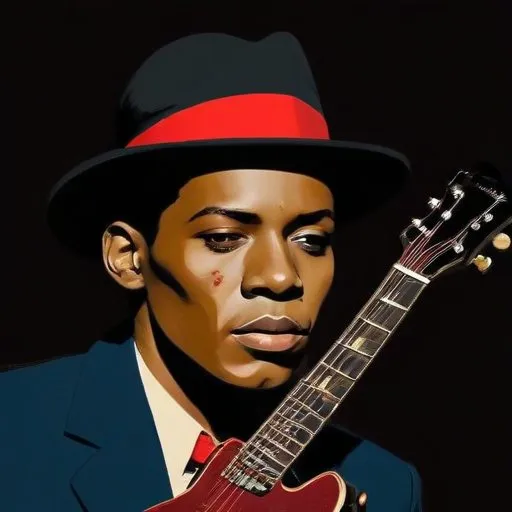
A pioneering blues musician, known for his distinctive fingerpicking style and repertoire of folk-blues songs, which captured the essence of African-American life in the rural South.
Blind Boy Fuller was a renowned American blues guitarist and singer, known for his distinctive Piedmont blues style that captivated audiences in the 1930s. With his soulful voice and masterful fingerpicking, Fuller became one of the most popular blues artists of his time, alongside Blind Blake, Josh White, and Buddy Moss.
Fulton Allen, aka Blind Boy Fuller, was born on July 10, 1904, in Wadesboro, North Carolina, to Calvin Allen and Mary Jane Walker. Despite his early loss of eyesight, Fuller's passion for music drove him to learn guitar and absorb the musical traditions of his community. He married young and worked as a laborer, eventually turning to music as a means of earning a living after losing his sight completely by 1928.
Fuller's unique sound, a blend of country rags, traditional songs, and blues, resonated with locals in Winston-Salem, Danville, and Durham, where he played on street corners and at house parties. His talent attracted a loyal following, including fellow musicians Floyd Council, Richard Trice, Sonny Terry, and George Washington. In Durham, playing around the tobacco warehouses, Fuller's reputation as a master guitarist spread, paving the way for his recording career.
In 1935, Fuller began recording for the American Record Corporation (ARC), producing over 120 songs, including "Rag, Mama, Rag" and "Step It Up and Go." His music showcased his exceptional guitar picking, combining intricate fingerwork with a powerful, emotive voice. Fuller's recordings not only preserved his own legacy but also influenced generations of blues musicians to come.
Blind Boy Fuller's contributions to the blues genre are immeasurable. His distinctive Piedmont style, marked by its strong rhythmic pulse and melodic complexity, has inspired countless musicians, including Brownie McGhee, Lightnin' Hopkins, and Doc Watson. Today, Fuller's music remains an essential part of the blues canon, with his songs still widely performed and admired.
Blind Boy Fuller's music extends beyond the boundaries of blues enthusiasts, influencing a broader range of artists, including folk, rock, and country musicians. His legacy continues to inspire new generations of musicians, ensuring the Piedmont blues tradition remains an integral part of American musical heritage.
Born in 1911
A legendary blues musician renowned for his soulful harmonica playing and distinctive singing style, which greatly influenced the development of blues and folk music.
Born in 1915
A folk-blues singer and guitarist known for his soulful voice and intricate fingerpicking style, blending traditional blues with urban folk and gospel influences. He was a key figure in the 1940s-1950s blues revival.
Born in 1914
A pioneering blues musician, known for his soulful voice, intricate guitar playing, and socially conscious songwriting, which addressed racism and inequality.
Born in 1888
A legendary musician and songwriter who popularized American folk and blues music through his powerful voice and skilled 12-string guitar playing, leaving a lasting impact on the genre.
Born in 1912
A legendary folk musician who traveled the country, singing about the struggles of the working class and fighting for social justice through his powerful lyrics and melodies.
Born in 1919
A legendary folk musician and social activist, known for his iconic banjo-playing and protest songs that inspired generations to take action for civil rights and environmental causes.
Born in 1917
A legendary blues musician who mesmerized audiences with his unique, boogie-woogie guitar style and soulful vocals, creating a distinctive sound that influenced many rock and roll artists.
Born in 1913
A blues legend who electrified the genre with his signature sound and influential hits like "Hoochie Coochie Man" and "Mannish Boy", shaping the course of rock 'n' roll .
