


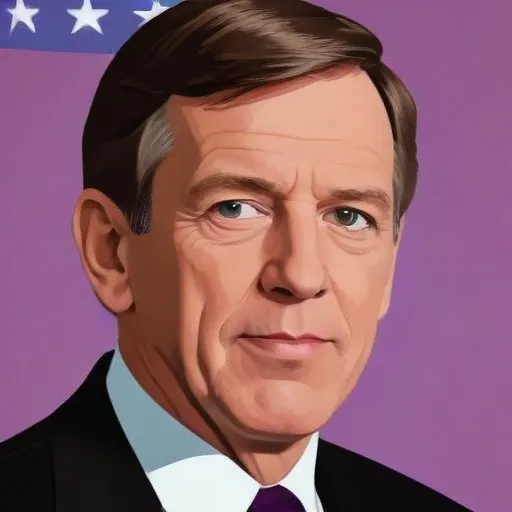
The 47th United States Secretary of the Interior, a lawyer and politician who played a key role in shaping the country's environmental and conservation policies, particularly during the Clinton administration.
Bruce Babbitt, the 47th United States Secretary of the Interior, is renowned for his unwavering commitment to environmental conservation and public service. From 1993 to 2001, he played a pivotal role in shaping the country's environmental policies during the Clinton administration.
Born on June 27, 1938, in Flagstaff, Arizona, Babbitt grew up in a prominent Roman Catholic family. His family owned a department store, a ranch, and Indian trading posts, which instilled in him a deep appreciation for the natural environment. He graduated from the University of Notre Dame, attended Newcastle University in the United Kingdom on a Marshall Scholarship, and later earned his J.D. degree from Harvard Law School.
Babbitt's political career began when he won election as Arizona's attorney general after graduating from Harvard Law School. He went on to become the 16th governor of Arizona, serving from 1978 to 1987. During his tenure, he focused on tax reform, healthcare, and water management, earning a reputation as a innovative leader.
In 1988, Babbitt sought the Democratic presidential nomination, although he eventually dropped out of the race. He then served as the head of the League of Conservation Voters from 1988 to 1992. As Secretary of the Interior, he oversaw the management of America's natural resources, including national parks, forests, and wildlife refuges.
Babbitt married Harriet Coons, also known as Hattie, in 1968. His wife served as United States Ambassador to the Organization of American States and Deputy Administrator of the United States Agency for International Development during the Clinton administration. Babbitt is also an avid outdoorsman and enjoys hiking, camping, and fly-fishing.
Bruce Babbitt's dedication to environmental conservation has left an indelible mark on American politics. His tireless efforts have protected millions of acres of land, promoted sustainable practices, and inspired future generations of leaders. As a testament to his legacy, the Bruce Babbitt Scholars program was established to support students pursuing environmental studies.
Bruce Babbitt's remarkable career serves as a shining example of leadership, dedication, and vision. His commitment to environmental conservation and public service has left a lasting impact on American politics, inspiring future generations to carry on his legacy.
79 Years Old
The 42nd President of the United States, a charismatic leader who reformed healthcare and economy, and infamous for his scandals.
78 Years Old
The 45th Vice President of the United States and Nobel Prize laureate is a prominent advocate for environmental protection, particularly climate change awareness, and has produced influential documentaries on the subject.
Born in 1924
The 41st President of the United States, a decorated war hero and skilled diplomat, led the country through the end of the Cold War and Gulf War. He's known for his foreign policy expertise and "kinder, gentler nation" vision.
Born in 1911
The charismatic leader who championed conservative policies, helped end the Cold War, and is often credited with restoring American pride and optimism. He's also remembered for his folksy, actor-honed communication style.
Born in 1924
A naval officer turned politician who served as the 39th President of the United States, known for his commitment to human rights and social justice, and awarded the Nobel Peace Prize in 2002.
Born in 1913
The 38th President of the United States, a former football star and lawyer, is known for being the first vice president to assume the presidency under the 25th Amendment and for his controversial pardon of Richard Nixon. He's also remembered for his humble and accidental rise to the presidency.
Born in 1913
The 37th President of the United States, a polarizing figure who led the country through significant domestic and foreign policy changes, infamous for his involvement in the Watergate scandal.
Born in 1908
The 36th President of the United States, a skilled politician and leader, played a crucial role in passing landmark civil rights legislation, including the Civil Rights Act and Voting Rights Act.
