


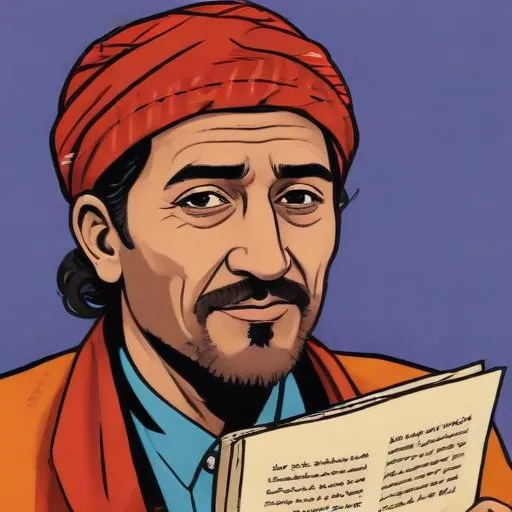
A Turkish poet and translator, renowned for his contributions to modern Turkish literature, particularly in introducing Western literary movements to Turkish readers.
Can Ycel, a renowned Turkish poet, left an indelible mark on the country's literary landscape with his bold use of colloquial language and unflinching critique of societal norms. His poetry, characterized by lyricism, irony, and sarcasm, continues to inspire and provoke readers to this day.
Born on August 21, 1926, Can Ycel was the son of Hasan Ali Ycel, a former Minister of National Education, and a grandchild of an Ottoman sea captain who perished with the frigate Erturul. This rich cultural heritage would later influence his writing, which often explored themes of identity, politics, and social justice.
Ycel's academic pursuits took him to Ankara University and Cambridge, where he studied Latin and Ancient Greek. After completing his education, he worked as a translator at several embassies and at the BBC in London for five years. This experience would later inform his poetry, which often featured clever wordplay and linguistic nuances.
Upon his return to Turkey in 1958, Ycel began to focus on his writing, publishing his first poetry collection in 1973. His work was marked by a strong sense of social and political awareness, often critiquing the establishment and challenging prevailing norms. This led to multiple imprisonments, but Ycel remained undeterred, continuing to write poems that were both beautiful and provocative.
Some of his most notable works include Bir Siyasinin şiirleri (Poems of a Political Prisoner), Sevgi Duvarı (Wall of Love), and Gökkuşağı (Steep Heaven). These collections showcased Ycel's mastery of language and his willingness to push boundaries, using slang and vulgar language to convey the raw emotions and experiences of everyday people.
In his later years, Ycel settled in the remote town of Datça, where he continued to write until his passing on August 12, 1999. His tomb has become a place of pilgrimage for fans and fellow writers, who come to pay homage to a poet who remained true to his art and his convictions.
Ycel's impact on Turkish literature is immeasurable. He inspired a generation of poets to explore new forms of expression and to challenge the status quo. His legacy continues to be felt, with his poetry serving as a testament to the power of words to inspire, provoke, and transform.
Can Ycel's influence extends far beyond his own poetry. He paved the way for a new wave of Turkish writers who sought to explore the complexities of modern Turkish identity and experience. His emphasis on colloquial language and everyday life paved the way for a more inclusive and diverse literary landscape.
Today, Ycel's poetry remains a vital part of Turkey's cultural heritage, continuing to inspire new generations of writers, artists, and thinkers. His legacy is a testament to the power of words to challenge, inspire, and transform, and a reminder that true artistry is always rooted in a deep commitment to truth and justice.
Born in 1873
A Turkish poet, academic, and politician who played a significant role in shaping the country's literary and political landscape, best known for writing the Turkish national anthem.
74 Years Old
A Turkish-American novelist, screenwriter, and academic, known for blending historical and cultural elements in his literary works, which often explore the complexities of Turkish identity and history.
Born in 1914
A Turkish soldier and poet who wrote influential works on patriotism and nationalism, inspiring a generation of Turkish writers and thinkers.
Born in 1925
A prominent Turkish literary figure, known for his poetry, novels, and critiques that explored themes of love, freedom, and social justice. His works are considered a bridge between Turkish and Western literature.
