


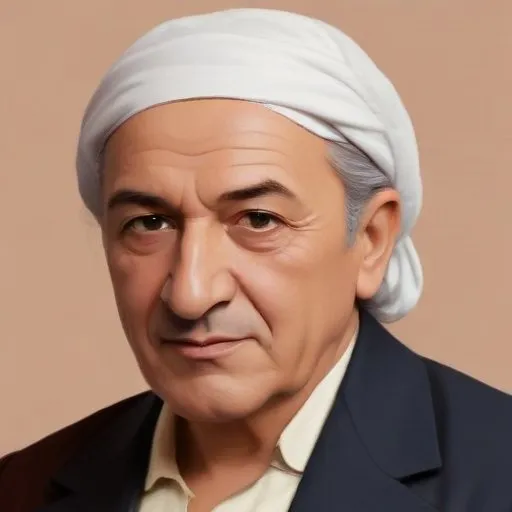
A Turkish poet, academic, and politician who played a significant role in shaping the country's literary and political landscape, best known for writing the Turkish national anthem.
Mehmet Akif Ersoy, widely regarded as one of the most prominent literary minds of his time, is best known for authoring the Turkish National Anthem, a poignant expression of Turkish patriotism and identity. His celebrated work, "İstiklal Marşı," has been a cornerstone of Turkish culture and education, proudly displayed in every public and private school across the country.
Born Mehmed Ragıp in Constantinople, Ottoman Empire in 1873, Ersoy's early life was marked by hardship and turmoil. His father, Pekli Tahir Efendi, an Albanian from the village Shushica, was a tutor at the Fatih Madrasah, while his mother, Emine Hanım, had Turkish and Uzbek origins from Bukhara, modern-day Uzbekistan.
Ersoy's education was cut short by his father's untimely death and a devastating fire that destroyed his family home. Forced to discontinue his education, Ersoy began working to support his family, eventually entering the Mülkiye Baytar Mektebi Veterinary School, where he graduated in 1893.
Ersoy's civil service career took him to various locations in Anatolia, where he conducted research on contagious diseases and gave sermons in mosques, educating the people and raising their awareness. His experiences during this period deeply influenced his writing, reflecting his strong sense of patriotism and social conscience.
Ersoy's literary career flourished during the Young Turk revolution, as he became an influential voice in the movement. His poetry and writings articulated the aspirations and ideals of the Turkish people, earning him widespread recognition and respect.
Ersoy's personal life was marked by significant milestones, including his marriage to MAVİdiye Hanım and the birth of his three children. Despite facing personal struggles and setbacks, Ersoy remained committed to his work and his ideals, inspiring generations of Turks.
Ersoy's life was cut short when he passed away on December 27, 1936, but his legacy continues to inspire and unite the Turkish people to this day.
Ersoy's work has had a lasting impact on Turkish society, shaping the country's cultural and educational landscape. His national anthem remains an integral part of Turkish identity, a symbol of national pride and unity.
In recognition of his contributions, Ersoy's image has been featured on Turkish banknotes, and his birthday, December 20, is celebrated as a national holiday.
Ersoy's philosophical outlook was deeply rooted in his faith and his sense of social responsibility. He believed in the power of education and literature to shape the nation's character and promote social change.
His humanistic approach to poetry and writing, emphasizing the importance of compassion, justice, and equality, has inspired generations of Turkish writers and intellectuals.
Ersoy's contributions to Turkish literature and culture have been recognized with numerous awards and honors, including:
Born in 1881
Founder of modern Turkey, leading the country's transition from the Ottoman Empire to a secular, democratic nation, and implementing sweeping reforms in education, law, and women's rights.
Born in 1884
Led Turkey's transition to a secular, democratic state, and played a key role in the country's modernization. He's remembered for his efforts to establish a strong, independent Turkey.
Born in 1883
The third President of Turkey, serving from 1950 to 1960, known for his role in transitioning the country from a one-party to a multi-party system. He played a significant part in shaping Turkey's modern political landscape.
Born in 1924
A Turkish engineer-turned-politician who served as the country's 9th President, known for his efforts to modernize Turkey's economy and infrastructure. He played a key role in shaping Turkey's politics and economy during the latter half of the 20th century.
Born in 1925
A Turkish journalist, scholar, and politician who served as the 16th Prime Minister of Turkey, known for his progressive policies and literary works. He played a significant role in shaping Turkey's modern politics and culture.
98 Years Old
A Turkish engineer and politician who served as the 8th President of Turkey, known for implementing economic reforms and liberalizing the country's economy. He's also credited with modernizing Turkey's infrastructure and industry.
75 Years Old
The 11th President of Turkey, a politician and academic who played a key role in shaping Turkey's modern politics and foreign policy, known for his efforts to strengthen Turkey's ties with the EU.
