


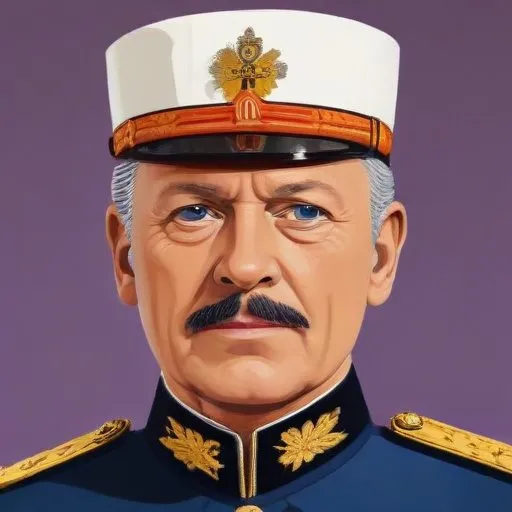
A renowned military leader and statesman, he played a crucial role in shaping Sweden's history, particularly during the Thirty Years' War, and held significant political offices.
Carl Gustaf Wrangel, a Swedish statesman and military commander, is renowned for his exceptional leadership during the Thirty Years War, as well as his command of the Swedish forces in the Torstenson, Bremen, Second Northern, and Scanian Wars.
Wrangel's military career was marked by numerous victories and promotions. He held the ranks of Field Marshal, Commander-in-Chief of the Swedish forces in Germany from 1646 to 1648, and Lord High Admiral of Sweden from 1657. His exceptional leadership skills and strategic thinking earned him the respect and admiration of his contemporaries.
In addition to his military accomplishments, Wrangel played a significant role in the Swedish government. He served as Governor-General of Swedish Pomerania from 1648 to 1652 and again from 1656 to 1676. Furthermore, he was appointed Lord High Constable of Sweden in 1664 and became a member of the Privy Council.
Wrangel was born on December 23, 1613, near Uppsala to Baroness Margareta Grip av Vins and Herman Wrangel. He was a member of the Wrangel family of Baltic German origin, with branches settled in Sweden, Russia, and Germany.
Wrangel married Anna Margareta von Haugwitz, who bore him eleven children, six of whom died at a young age. The five surviving children were:
Wrangel's contributions to Swedish history are multifaceted. He played a crucial role in shaping the country's military and government during a tumultuous period. His leadership and strategic thinking continue to inspire generations of military commanders and statesmen.
Wrangel's legacy extends to architecture as well. He constructed several representative mansions, including Wrangelsburg, in Pomerania, which still bears his name. His estates, primarily located in the Dominions of Sweden, showcase his taste for grandeur and elegance.
Carl Gustaf Wrangel's remarkable life and achievements serve as a testament to his unwavering dedication to his country and his people. His legacy continues to inspire and educate, reminding us of the power of effective leadership and strategic thinking.
Born in 1583
Lord High Chancellor of Sweden who played a crucial role in shaping the country's government and military during the 17th century, known for his diplomatic skills and administrative reforms.
Born in 1603
A renowned 17th-century military leader, he led Swedish forces to several victories in the Thirty Years' War, earning recognition as one of the greatest generals in Swedish history.
Born in 1596
A 17th-century Swedish military leader who fought in the Thirty Years' War and led troops to several victories, earning him a prominent place in Swedish history.
Born in 1665
A 17th-century military leader and statesman who played a crucial role in Sweden's Great Northern War, leading troops to several victories and advising the king on state affairs.
