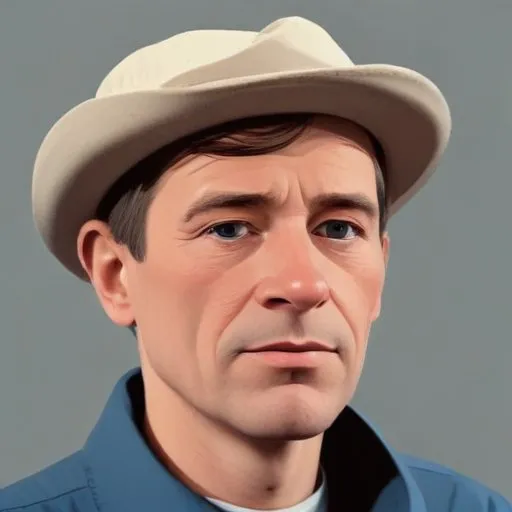
Carl-Henning Pedersen: The Scandinavian Chagall
A Life of Vibrant Colors and Radical Beliefs
Carl-Henning Pedersen, a Danish painter, was known for his bold and expressive works that earned him the nickname "Scandinavian Chagall." As a key member of the COBRA movement, a European avant-garde art movement, Pedersen's art was a reflection of his radical political beliefs and his passion for modernism.
Early Life and Influences
Born on September 23, 1913, in Copenhagen, Pedersen grew up in a poor area near Vigerslev Alle. His early life was marked by poverty, but it was also where he developed his strong Political convictions. In 1933, he joined the International Folk High School in Elsinore, where he met his future wife, Else Alfelt, a self-taught painter. Alfelt encouraged Pedersen to explore his artistic side, and he eventually exhibited his first abstract works at the Artists Autumn Exhibition in Copenhagen in 1936.
The Artistic Journey
Pedersen's artistic style was deeply influenced by his travels to Paris in 1939, where he was exposed to the works of Picasso and Matisse. He was particularly drawn to the vibrant colors and emotive qualities of Chagall's paintings, which remained a strong influence on his art for the rest of his life. During the Nazi occupation of Denmark, Pedersen joined the HØst group, where he wrote about medieval Danish murals and continued to produce abstract works that were at odds with the socialist realism preferred by his communist friends.
COBRA Movement and Legacy
In 1948, Pedersen, along with his wife Else Alfelt, became one of the founding members of the COBRA movement, a group of artists from Copenhagen, Brussels, and Amsterdam who sought to break free from traditional artistic conventions. The movement's name was an acronym of the cities where its founders were based. During his time with COBRA, Pedersen produced some of his most iconic works, characterized by freeform, spontaneous images in strong, fantastic colors. He continued to push the boundaries of modern art, earning him numerous awards, including the Eckersberg Award in 1950.
Personal Life and Milestones
Pedersen's personal life was marked by significant milestones, including his marriage to Else Alfelt in 1934 and the birth of their two daughters, Vibeke and KariNina. His family life was deeply intertwined with his artistic career, and his wife remained a constant source of inspiration and support throughout his life.
Philosophical Contributions and Beliefs
Pedersen's art was deeply rooted in his radical political beliefs and his passion for modernism. He believed in the power of art to challenge societal norms and to promote social change. His abstract works were a reflection of his desire to break free from traditional artistic conventions and to explore new ways of expressing the human experience.
Career Highlights and Major Works
- 1948: Founding member of the COBRA movement
- 1950: Winner of the Eckersberg Award
- 1951: Exhibited at the São Paulo Art Biennial
- 1960s: Produced a series of abstract paintings that explored the relationship between color and emotion
- 1970s: Created a number of large-scale murals for public buildings in Denmark
Influence on Modern Society
Pedersen's contribution to modern art is undeniable. His bold and expressive works continue to inspire generations of artists, and his legacy as one of the leading Danish artists of the 20th century remains unchallenged. His radical political beliefs and his passion for modernism continue to resonate with artists and art lovers around the world.
Legacy and Historical Context
Carl-Henning Pedersen's life and art were deeply intertwined with the turbulent history of the 20th century. From the Nazi occupation of Denmark to the rise of the COBRA movement, Pedersen's art was a reflection of his times. Today, his works remain a testament to the power of art to challenge societal norms and to promote social change. Pedersen's legacy continues to inspire and influence artists, and his art remains a vibrant and powerful reflection of the human experience.
FAQ
What is Carl-Henning Pedersens contribution to Danish art?
Carl-Henning Pedersen made significant contributions to Danish art, creating innovative paintings and sculptures that explored new forms and techniques. His work continues to influence Danish modernism, earning him recognition as a pioneering artist.
What inspired Carl-Henning Pedersens artistic style?
Pedersens artistic style was inspired by his fascination with the natural world, mythology, and the human condition. His works often featured dreamlike landscapes, fantastical creatures, and symbolic motifs, reflecting his unique perspective and creative vision.
How did Carl-Henning Pedersen influence modern Danish art?
Carl-Henning Pedersens work had a profound impact on modern Danish art, inspiring a generation of artists to experiment with new forms, techniques, and themes. His influence extended beyond Denmark, shaping the trajectory of modern art in Europe and beyond.
What are Carl-Henning Pedersens most famous works?
Pedersens most famous works include his paintings, sculptures, and prints, which often featured bold colors, geometric forms, and symbolic motifs. His works are highly regarded for their intellectual depth, emotional resonance, and technical skill.
What honors did Carl-Henning Pedersen receive for his contributions?
Carl-Henning Pedersen received numerous honors and awards for his contributions to Danish art, including the Eckersberg Medal and the Prince Eugen Medal. His work continues to be celebrated and recognized internationally, ensuring his legacy as a pioneering artist.