


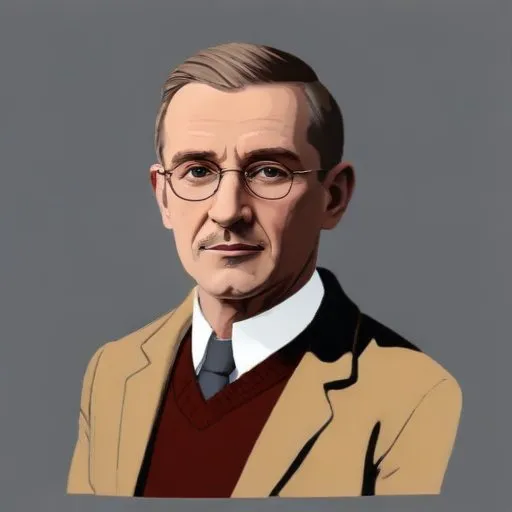
A Danish painter and educator who pioneered abstract art in Denmark, known for his bold, expressive works that blended Surrealism and Constructivism.
Richard Mortensen, a renowned Danish painter, is best known for his vibrant and thought-provoking abstract art that explores the realms of color, form, and emotion. With a career spanning over six decades, Mortensen's work is a testament to his innovative approach to art, which continues to inspire and influence artists to this day.
Born on October 23, 1910, in Copenhagen, Denmark, Mortensen's fascination with art began at a young age. He studied at the Royal Danish Academy of Art in Copenhagen between 1931 and 1932, where he was heavily influenced by the works of Wassily Kandinsky, a pioneering abstract artist.
Mortensen's encounter with Kandinsky's work marked a turning point in his artistic journey. He developed an abstract art style that was characterized by bold colors, geometric shapes, and a sense of dynamism. This new direction in his art led to the formation of the Linien school of abstract painters in Copenhagen, which Mortensen co-founded.
In 1937, Mortensen embarked on a study trip to Paris, where he met some of the most influential surrealist artists of the time, including Salvador Dalí, Roger Vitrac, and Antonin Artaud. This exposure to the surrealist movement further shaped his artistic vision and philosophy.
During World War II, Mortensen's work reflected the violence and turmoil that was ravaging Europe. His paintings from this period are a testament to the human experience during times of war and conflict.
Following the death of his wife, Sonja Hauberg, in 1947, Mortensen moved to Paris, where he remained until 1964. It was during this period that he became associated with the Galerie Denise René, a hub for concrete art. His work from this period is characterized by large, clear, and bright color surfaces that showcase his mastery of color and form.
In 1964, Mortensen returned to Denmark and was appointed professor at the Royal Danish Academy of Art in Copenhagen, a position he held until 1980. During this period, he continued to produce works that were both innovative and thought-provoking.
Mortensen's contributions to the world of art were recognized with several awards, including the Edvard Munch Prize in 1946, the Kandinsky Prize in 1950, the Prince Eugen Medal in 1967, and the Thorvaldsen Medal in 1968.
Mortensen married author and poet Sonja Hauberg in 1945, and they had a son, Finn Hauberg Mortensen, who became a literary researcher and professor. Richard Mortensen passed away on January 6, 1993, in Ejby, Lejre Municipality, leaving behind a legacy of artistic innovation and excellence.
"Art is not a mirror held up to reality, but a hammer with which to shape it." - Richard Mortensen
Richard Mortensen's life and work are a testament to the power of art to inspire, provoke, and challenge. His innovative approach to abstract art continues to influence artists and art lovers to this day, ensuring his legacy as one of the most important Danish artists of the 20th century.
Born in 1631
Governor-general of Norway during the Napoleonic Wars, known for maintaining Norway's autonomy and independence. He played a crucial role in shaping Norway's future as a sovereign state.
