


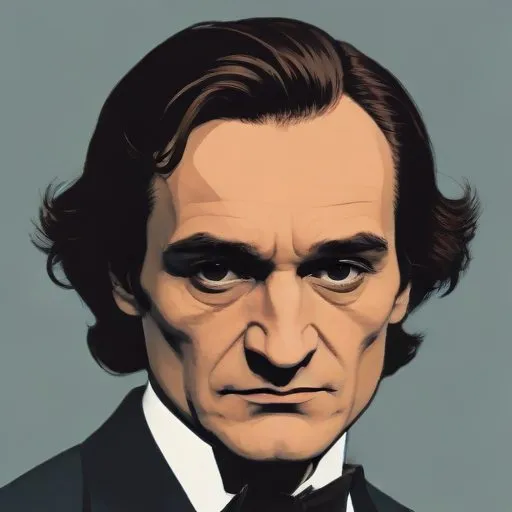
A French theatre pioneer who developed the concept of the "Theatre of Cruelty," which emphasized a more immersive and emotional experience for the audience. He's known for his avant-garde plays and acting style.
Meet Antonin Artaud, a French artist who defied conventions and pushed the boundaries of art, theatre, and cinema. He is best known for his conceptualization of the Theatre of Cruelty, a revolutionary approach to theatre that rejected traditional norms and embraced the raw, the surreal, and the transgressive.
Born on September 4, 1896, in Marseille, France, Artaud was the son of Euphrasie Nalpas and Antoine-Roi Artaud. His eclectic ancestry, which included Greek and Turkish roots, had a profound impact on his life and work. As a child, Artaud was diagnosed with meningitis, an experience that would later influence his artistic vision.
Artaud's early education at the Collège Sacré-Cœur introduced him to the works of Arthur Rimbaud, Stéphane Mallarmé, and Edgar Allan Poe, which sparked his passion for writing and literature. He founded a private literary magazine with his friends, marking the beginning of his creative journey.
Artaud's most significant contribution to modern theatre is the concept of the Theatre of Cruelty, which he outlined in his book The Theatre and Its Double. This revolutionary approach rejected the conventional norms of Western theatre, instead embracing a more primal, ritualistic, and physical form of expression.
The Theatre of Cruelty aimed to shatter the complacency of the audience, plunging them into a world of raw emotions, visceral sensations, and unbridled energy. Artaud believed that theatre should be a transformative experience, one that awakened the audience to the primal forces that shape human existence.
Artaud's literary output was prolific and diverse, spanning poetry, plays, and essays. His works often explored themes of cosmology, philosophy, the occult, mysticism, and indigenous cultures. Some of his notable works include:
Artaud's work has had a profound impact on modern theatre, influencing generations of artists, writers, and directors. His ideas about the Theatre of Cruelty have shaped the work of iconic figures like Jean-Luc Godard, Pier Paolo Pasolini, and Peter Brook.
Today, Artaud's legacy extends beyond the realm of theatre, influencing contemporary art, music, and cinema. His emphasis on the primal, the surreal, and the transgressive has inspired countless creatives to push the boundaries of their craft.
Artaud's life was marked by personal struggles, including addiction, mental illness, and institutionalization. His turbulent relationships with friends and family often mirrored the intense emotions and conflicts that fueled his art.
Despite the controversies and challenges that surrounded him, Artaud remained committed to his art, leaving behind a body of work that continues to inspire, provoke, and transform audiences around the world.
"I am not a man of the theatre, I am a man of the unknown."
"Theatre is the only place where one can die without dying."
"We must wage war on the theatre, just as we would on a plague."
Here is a brief visual timeline of Artaud's life and work:
| 1896 | Antonin Artaud born in Marseille, France |
| 1907-1914 | Attends the Collège Sacré-Cœur |
| 1920s | Begins writing poetry and plays, exploring themes of cosmology and philosophy |
| 1930s | Develops the concept of the Theatre of Cruelty, outlining it in his book The Theatre and Its Double |
| 1940s | Continues to write and experiment with new forms of theatre, despite personal struggles and controversies |
| 1948 | Antonin Artaud dies in Ivry-sur-Seine, France |
Through his life and work, Antonin Artaud left an indelible mark on modern art and theatre, inspiring generations to come.
Born in 1906
A pioneering absurdist writer who crafted avant-garde novels, poems, and plays that probed the human condition, often with dark humor and existential themes. His works are renowned for their complexity and influence on modern literature.
Born in 1910
A French writer and activist who explored themes of morality, sexuality, and social justice in his works, often drawing from his experiences as a thief and prisoner.
Born in 1913
A French novelist, philosopher, and journalist who wrote influential works like "The Stranger" and "The Plague", exploring absurdism and the human condition.
Born in 1905
Existentialist philosopher and playwright who argued that humans have complete freedom to choose their actions and create their own meaning in life, influencing modern thought on morality and individual responsibility.
Born in 1896
French poet and author who founded Surrealism, a cultural movement that explored the subconscious and the world of dreams. He wrote novels, poems, and essays that continue to influence art and literature today.
Born in 1880
An Italian-French literary genius who pioneered Cubist poetry, blending fragmented images and multiple narratives to create a new kind of lyrical expression. His work influenced the development of Surrealism and modern art.
Born in 1869
A pioneering artist who revolutionized modern art with bold, expressive, and colorful works that blurred the lines between painting and sculpture, creating a new language of form and color.
Born in 1881
A pioneering artist who transformed modern art with pioneering Cubist works, creating a new visual language that continues to inspire and influence art, design, and culture.
