


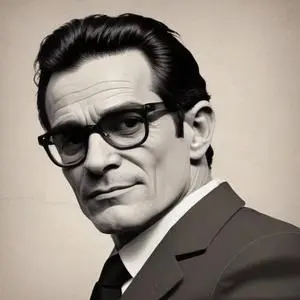
A provocative and influential artist who explored the intersection of politics, religion, and sexuality through his films, which often featured vivid imagery and unflinching social commentary.
Pier Paolo Pasolini, the renowned Italian poet, film director, writer, actor, and playwright, is best known for directing the iconic Trilogy of Life series, which includes The Decameron, The Canterbury Tales, and Arabian Nights. With his multifaceted talents and unapologetic style, Pasolini left an indelible mark on the world of art, cinema, and politics.
Born on March 5, 1922, in Bologna, Italy, Pasolini was the son of Susanna Colussi and Carlo Alberto Pasolini. His family's strong educational background and leftist political leanings heavily influenced his early life and future works.
Pasolini's artistic career spanned multiple genres, including poetry, literature, and cinema. His poetry collections, such as Poems of the City and The Ashes of Gramsci, showcased his unique voice and perspective. In the 1960s, he transitioned to filmmaking, directing critically acclaimed films like Accattone, Mamma Roma, and The Gospel According to St. Matthew.
Pasolini's Trilogy of Life series, consisting of The Decameron, The Canterbury Tales, and Arabian Nights, solidified his reputation as a visionary filmmaker. These films explored themes of love, sex, and power, often juxtaposing sociopolitical commentary with graphic and provocative content.
Pasolini was an avowed Marxist, vocal advocate for heritage language revival, and cultural conservative. He criticized the bourgeoisie and what he saw as the Americanization and cultural degeneration of Italian society. His works often reflected his commitment to social justice and his disdain for consumerism.
Pasolini's personal life was marked by controversy, particularly due to his open homosexuality. He was also known for his involvement in various scandals and public feuds, which often overshadowed his artistic achievements.
On November 2, 1975, Pasolini's life was brutally cut short in a still-unsolved abduction, torture, and murder in Ostia, Italy. The investigation has continued to spark heated debates and speculation, with recent leads pointing to a potential contract killing by a criminal organization.
Despite the controversy surrounding his life and death, Pasolini's legacy as a pioneering artist, intellectual, and cultural icon endures. His works continue to inspire and provoke, ensuring his place as one of the most important figures in 20th-century Italian history.
Pasolini's innovative style and unflinching critique of society have influenced generations of artists, filmmakers, and intellectuals. His work has inspired everyone from Bernardo Bertolucci to Francis Ford Coppola, and continues to shape the cinematic landscape today.
Born in 1920
Visionary filmmaker behind surreal, poetic, and deeply personal cinematic masterpieces that blur the lines between reality and fantasy.
Born in 1912
A pioneering filmmaker who explored the human condition through visually stunning and psychologically complex movies, often focusing on alienation and social isolation.
Born in 1901
A renowned filmmaker and actor, known for directing poignant, neorealist classics like "Bicycle Thieves" and "Umberto D.", which still influence world cinema today.
Born in 1906
Pioneering filmmaker behind neorealist classics like "Rome, Open City" and "Paisan", known for gritty, socially conscious storytelling that influenced generations of directors.
94 Years Old
A pioneering filmmaker of the French New Wave, known for directing iconic films like "Jules and Jim" and "The 400 Blows", which redefined cinematic storytelling.
95 Years Old
A pioneer of French New Wave cinema, known for experimental and provocative films that challenged traditional narrative structures and explored themes of politics, philosophy, and social commentary.
83 Years Old
Acclaimed filmmaker behind gritty, intense, and visually stunning movies that often explore themes of redemption, faith, and the human condition, with a distinctive directing style that blends violence and artistry.
87 Years Old
Academy Award-winning filmmaker behind epic movies like The Godfather and Apocalypse Now, known for his groundbreaking storytelling and direction.
