


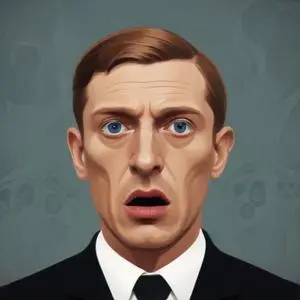
A Norwegian painter who created iconic, emotionally charged works that explored the human experience, including the famous piece "The Scream".
Edvard Munch, the Norwegian painter, is inextricably linked to his iconic work, "The Scream", one of Western art's most acclaimed images. This masterpiece, created in 1893, has become synonymous with the angst and anxiety of modern existence, catapulting Munch to international fame.
Munch's early life was marked by illness, bereavement, and the looming specter of a familial mental condition. Born on December 12, 1863, in Løten, Norway, his childhood was a tapestry of sorrow and fear. Despite these challenges, Munch found solace in art, which became his emotional outlet and sanctuary.
Studying at the Royal School of Art and Design in Kristiania (now Oslo), Munch was drawn to the bohemian lifestyle, under the influence of the nihilist Hans Jæger. This exposure encouraged Munch to explore his own emotional and psychological state through his art, birthing his distinctive "soul painting" style.
Munch's travels abroad introduced him to a plethora of artistic influences. In Paris, he was inspired by the works of Paul Gauguin, Vincent van Gogh, and Henri de Toulouse-Lautrec, particularly their innovative use of color. In Berlin, he met the Swedish dramatist August Strindberg, whom he painted, and began his monumental series, "The Frieze of Life". This collection of works delved into deeply felt themes such as love, anxiety, jealousy, and betrayal, steeped in a rich atmosphere.
The Scream, one of Munch's most celebrated works, was conceived in Kristiania. According to the artist, he was out walking at sunset when he heard the "enormous, infinite scream of nature". This anguished face, a universal symbol of modern angst, has become an indelible part of our collective psyche. Between 1893 and 1910, Munch created multiple versions of "The Scream", including two paintings and two pastels, as well as numerous prints.
As Munch's fame and wealth grew, his emotional state remained precarious. He briefly considered marriage, but ultimately could not commit. A mental breakdown in 1908 prompted him to abandon heavy drinking and seek solace in his art. His later years were marked by peace and seclusion, as he continued to create works that would cement his legacy.
Despite his works being banned in Nazi-occupied Europe, most of Munch's oeuvre survived World War II, securing his place in the annals of art history. Today, Edvard Munch is celebrated as a pioneering painter, whose innovative style and emotional depth continue to inspire generations of artists and art lovers alike.
Born in 1881
A pioneering artist who transformed modern art with pioneering Cubist works, creating a new visual language that continues to inspire and influence art, design, and culture.
Born in 1904
A renowned surrealist master of bizarre, dream-like paintings and sculptures that blur reality and fantasy, known for iconic works like "The Persistence of Memory" and "The Elephants".
Born in 1853
A post-Impressionist master, renowned for vibrant, expressive paintings of landscapes, still lifes, and portraits, characterized by bold colors and emotional depth.
Born in 1840
A founder of Impressionism, capturing fleeting light and color in dreamy landscapes and water scenes, revolutionizing modern art.
Born in 1869
A pioneering artist who revolutionized modern art with bold, expressive, and colorful works that blurred the lines between painting and sculpture, creating a new language of form and color.
Born in 1907
A Mexican artist who created vibrant, emotional, and often unsettling paintings that explored her own experiences with physical and emotional pain, as well as her cultural heritage.
Born in 1890
Austrian soldier and painter who captured the intensity of human emotion through bold, expressive portraits and landscapes, often exploring themes of death, sexuality, and the human condition.
Born in 1862
Austrian Symbolist master of opulent, gold-leaf adorned paintings and illustrations that explored the human form, often with erotic undertones. His works are synonymous with Viennese Art Nouveau.
