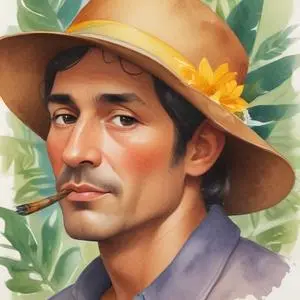
Paul Gauguin

Paul Gauguin

Paul Gauguin was born on June 7th, 1848

Full Name: Eugène Henri Paul Gauguin
Birthplace: Paris, France
Profession: Painter, Sculptor
Nationality: French
Movement: Post-Impressionism
Known For: Synthetist paintings
Died: May 8, 1903
Influenced By: Impressionism

A post-Impressionist master who broke away from traditional European art forms, creating bold, expressive, and emotive works that explored the human experience and the beauty of the natural world.

Timeline
1848
Born in Paris, France
Paul Gauguin, the French painter and sculptor, was born in Paris, France. He would go on to become a leading figure in the world of Post-Impressionism.
1871
Worked as a stockbroker
Gauguin worked as a stockbroker in Paris, France, before abandoning the business world for art.
1874
Started painting
Gauguin started painting, marking the beginning of his artistic career.
1888
Traveled to Arles to join Vincent van Gogh
Gauguin traveled to Arles to join Vincent van Gogh, leading to a tumultuous and influential period in both artists lives.
1903
Died in Atuona, French Polynesia
Paul Gauguin died in Atuona, French Polynesia, leaving behind a body of innovative and expressive works of art.
Paul Gauguin

Paul Gauguin Quiz

What style of art is Paul Gauguin most associated with?

Score: 0/5
FAQ
What inspired Paul Gauguins move to Tahiti?
Paul Gauguin was inspired to move to Tahiti by his desire to escape the constraints of European art and to explore new sources of inspiration. He was drawn to the islands exotic culture and rich artistic traditions.
How did Paul Gauguins time in Tahiti affect his art?
Paul Gauguins time in Tahiti had a profound impact on his art. He was exposed to new colors, forms, and inspirations, which he incorporated into his work, creating a distinctive and innovative style.
What was Paul Gauguins relationship like with Vincent van Gogh?
Paul Gauguins relationship with Vincent van Gogh was complex and tumultuous. They were fellow artists who shared a deep passion for art, but they also had significant creative and personal differences that led to tension and conflict.
How did Paul Gauguins experiences in Tahiti influence his views on colonialism?
Paul Gauguins experiences in Tahiti shaped his views on colonialism. He was critical of European exploitation of Tahitian culture and sought to promote a more nuanced understanding of indigenous cultures.
What is Paul Gauguins legacy in the art world?
Paul Gauguins legacy in the art world is that of a pioneering Post-Impressionist painter who explored new forms of expression and challenged traditional artistic conventions. He paved the way for future generations of artists to experiment and innovate.

Related People:

Vincent van Gogh

Born in 1853

A post-Impressionist master, renowned for vibrant, expressive paintings of landscapes, still lifes, and portraits, characterized by bold colors and emotional depth.

Henri Rousseau

Born in 1844

A self-taught artist who created vibrant, dreamlike jungle scenes and naive portraits, blending fantasy and realism with a unique, primitive style.

Camille Pissarro

Born in 1830

A Danish-French Impressionist painter who captured the beauty of landscapes and cityscapes with vivid colors and bold brushstrokes, influencing the development of modern art.

Paul Cézanne

Born in 1839

A post-Impressionist pioneer, he's famous for his still-life compositions and landscapes that laid the groundwork for Cubism, influencing 20th-century art.

Georges Seurat

Born in 1859

A post-Impressionist mastermind who pioneered Pointillism, a technique of creating images from tiny dots of color, resulting in mesmerizing, dreamlike scenes. His innovative style continues to inspire artists and designers today.

Henri Matisse

Born in 1869

A pioneering artist who revolutionized modern art with bold, expressive, and colorful works that blurred the lines between painting and sculpture, creating a new language of form and color.

Pablo Picasso

Born in 1881

A pioneering artist who transformed modern art with pioneering Cubist works, creating a new visual language that continues to inspire and influence art, design, and culture.

Eugène Delacroix

Born in 1798

A Romantic-era master of expressive brushstrokes and vivid color, creating iconic works that captured the drama and emotion of historical and literary scenes.