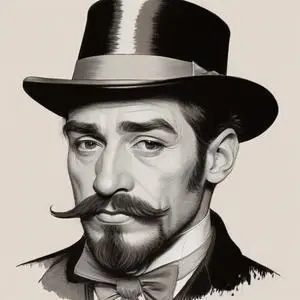
Henri de Toulouse-Lautrec

Henri de Toulouse-Lautrec

Henri de Toulouse-Lautrec was born on November 24th, 1864

Full Name: Henri de Toulouse-Lautrec
Place of Birth: Albi, France
Profession: Painter, Illustrator
Nationality: French
Date of Birth: November 24, 1864
Notable Work: Posters, Portraits of Parisian Life
Death Date: September 30, 1901
Style: Art Nouveau, Post-Impressionism

A post-Impressionist master of capturing Parisian nightlife, known for vibrant, expressive paintings and posters of cabarets, brothels, and high society. His works exude a sense of decadence and joie de vivre.

Written by: Michael Rodriguez Michael Rodriguez

A Life of Color and Controversy

Henri de Toulouse-Lautrec, a French painter, printmaker, and illustrator, is renowned for his captivating depictions of Paris's vibrant nightlife and its eclectic inhabitants during the late 19th century. His bold, expressive works immortalize the essence of the city's bohemian lifestyle, capturing the essence of cabarets, brothels, and street life with an unflinching gaze.

Early Life and Aristocratic Roots

Born on November 24, 1864, at the Château du Bosc, Camjac, Aveyron, in southern France, Henri was the firstborn son of Count Alphonse de Toulouse-Lautrec Montfa and Adèle Zoé Tapi de Céleyran. His aristocratic lineage was marked by the titles of Comte de Toulouse-Lautrec and Vicomte de Lautrec, descending from both the Counts of Toulouse and Odet de Foix.

BREAKING FREE FROM CONVENTION

Despite his noble heritage, Toulouse-Lautrec's life took an unconventional turn. At the age of 13, he broke his left leg, and shortly after, his right leg. This accident, possibly related to the rare condition pycnodysostosis, stunted his growth, leaving him with undersized legs. This physical limitation, however, only fueled his artistic passion and his desire to experience the world around him.

IMMERSION IN PARISIAN NIGHTLIFE

Toulouse-Lautrec's fascination with the Parisian demimonde led him to frequent cabarets, brothels, and theaters, immersing himself in the lives of dancers, prostitutes, and performers. This exposure would become the foundation of his art, as he sought to capture the essence of these unconventional individuals and their stories. His affinity for the avant-garde and his bold, expressive style earned him a place among the Post-Impressionist masters, alongside Paul Cézanne, Vincent van Gogh, Paul Gauguin, and Georges Seurat.

CAREER HIGHLIGHTS AND MAJOR WORKS

PERSONAL MILESTONES AND KEY LIFE EVENTS

PHILOSOPHICAL CONTRIBUTIONS AND BELIEFS

Toulouse-Lautrec's art not only reflected his fascination with the human condition but also served as a social commentary. He humanized the marginalized, celebrating the beauty and resilience of those often overlooked. His work embodies a sense of empathy and understanding, challenging the conventions of his time.

LEGACY AND IMPACT

Henri de Toulouse-Lautrec's groundbreaking art and his unwavering commitment to capturing the essence of Parisian life have left an indelible mark on the art world. His bold, expressive style continues to inspire generations of artists, and his work remains a testament to the beauty and complexity of humanity.

TRIVIA AND FUN FACTS

FINAL THOUGHTS

Henri de Toulouse-Lautrec's life was a testament to the power of art to transcend boundaries and challenge conventions. Through his works, he continues to captivate audiences, offering a glimpse into the vibrant, often scandalous world of late 19th-century Paris. As we delve into his art, we are reminded of the enduring beauty and complexity of humanity, and the boundless potential of the creative spirit.
Timeline
1864
Born in Albi, France
Henri de Toulouse-Lautrec was born on November 24, 1864, in Albi, France. He would go on to become a famous painter and illustrator.
1882
Moved to Paris, France
Lautrec moved to Paris, France, where he began his art career.
1885
Published First Posters
Lautrec published his first posters, which showcased his unique style and sense of humor.
1891
Created La Goulue Poster
Lautrec created his famous La Goulue poster, which became an iconic image of the Belle Époque era.
1901
Died in Malromé, France
Henri de Toulouse-Lautrec died on September 9, 1901, in Malromé, France, leaving behind a legacy as a brilliant painter and illustrator.
Henri de Toulouse-Lautrec

Henri de Toulouse-Lautrec Quiz

What style of art is Henri de Toulouse-Lautrec most associated with?

Score: 0/5
FAQ
What is Henri de Toulouse-Lautrecs most famous artwork?
Toulouse-Lautrecs La Goulue at the Moulin Rouge (1891) is considered one of his most iconic works, capturing the vibrant spirit of Parisian nightlife and the artists fascination with the human form.
How did Henri de Toulouse-Lautrecs art reflect his life?
Toulouse-Lautrecs art often mirrored his own experiences as a Parisian aristocrat, exploring themes of love, loss, and the human condition, as seen in his portraits of courtesans, cabarets, and cityscapes.
What style of art did Henri de Toulouse-Lautrec pioneer?
Toulouse-Lautrec was a leading figure in the development of Post-Impressionism, a movement characterized by bold colors, distorted forms, and a focus on capturing the emotional essence of a subject.
How did Henri de Toulouse-Lautrecs art influence modern art movements?
Toulouse-Lautrecs innovative use of color and composition paved the way for later art movements like Expressionism, Fauvism, and Cubism, cementing his impact on the development of modern art.
What is Henri de Toulouse-Lautrecs legacy in the art world?
As a pioneering Post-Impressionist artist, Toulouse-Lautrecs bold, expressive, and deeply personal works continue to inspire artists, designers, and art enthusiasts, ensuring his enduring legacy in the art world.

Related People:

Pablo Picasso

Born in 1881

A pioneering artist who transformed modern art with pioneering Cubist works, creating a new visual language that continues to inspire and influence art, design, and culture.

Henri Matisse

Born in 1869

A pioneering artist who revolutionized modern art with bold, expressive, and colorful works that blurred the lines between painting and sculpture, creating a new language of form and color.

Edgar Degas

Born in 1834

A master of capturing the beauty of movement and everyday life, this artist is renowned for their stunning Impressionist paintings, sculptures, and illustrations of dancers, horses, and Parisian scenes.

Camille Pissarro

Born in 1830

A Danish-French Impressionist painter who captured the beauty of landscapes and cityscapes with vivid colors and bold brushstrokes, influencing the development of modern art.

Paul Cézanne

Born in 1839

A post-Impressionist pioneer, he's famous for his still-life compositions and landscapes that laid the groundwork for Cubism, influencing 20th-century art.

Georges Braque

Born in 1882

A pioneer of Cubism, creating fragmented forms and multiple perspectives in art, revolutionizing modern art movements.

Amedeo Modigliani

Born in 1884

An Italian artist famous for elongated, emotive portraits and nudes that blended primitivism with cubism, capturing the essence of his subjects with expressive simplicity.

Egon Schiele

Born in 1890

Austrian soldier and painter who captured the intensity of human emotion through bold, expressive portraits and landscapes, often exploring themes of death, sexuality, and the human condition.