


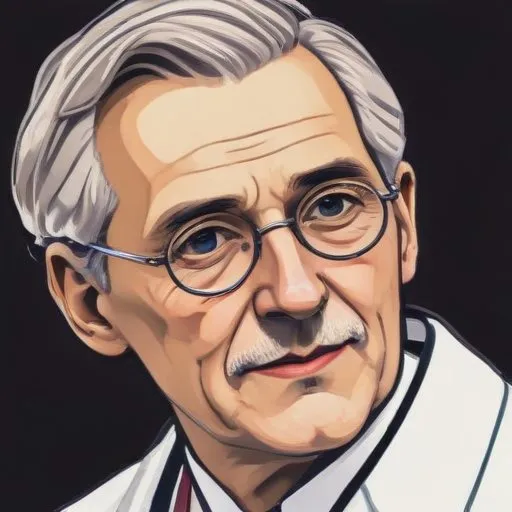
Developed the first device to measure blood pressure and made significant contributions to the field of physiology, particularly in the areas of respiration and circulation.
Carl Ludwig, a renowned German physician and physiologist, left an indelible mark on the field of physiology, revolutionizing the understanding, methods, and apparatus used in nearly all branches of the discipline. His groundbreaking research and innovative spirit earned him the esteemed Copley Medal in 1884, cementing his position as a pioneer in the field.
Born on December 29, 1816, in Witzenhausen, near Kassel, Germany, Ludwig's affinity for science and medicine was evident from an early age. He pursued his passion by studying medicine at Erlangen and Marburg, earning his doctor's degree in 1839.
Ludwig's academic and research career spanned over five decades, during which he held professorships in Zurich and Vienna. In 1865, he moved to the University of Leipzig, where he established the Physiological Institute, now known as the Carl Ludwig Institute of Physiology.
His research focused on various topics, including blood pressure, urinary excretion, and anesthesia. Ludwig's work on blood pressure led to the development of the stromuhr, an instrument that measures blood flow.
In recognition of his outstanding contributions to the field of physiology, Ludwig was awarded the Copley Medal in 1884. He was also elected a foreign member of the Royal Swedish Academy of Sciences in 1869.
Carl Ludwig's legacy extends far beyond his own research and discoveries. He played a pivotal role in shaping the field of physiology, introducing new methods and apparatus that transformed the way scientists approached the discipline.
Today, the Carl Ludwig Institute of Physiology continues to flourish, bearing testament to his enduring impact on the field. The Carl Ludwig Honorary Medal, established in 1932, is awarded annually to outstanding investigators in cardiovascular research, perpetuating his legacy and inspiring future generations of scientists.
Carl Ludwig's groundbreaking research and innovative spirit have had a lasting impact on modern society. His work on blood pressure and anesthesia has improved medical practices, enhancing patient care and outcomes.
Moreover, his legacy has inspired generations of scientists, fostering a culture of innovation and discovery in the field of physiology. His contributions continue to influence modern medicine, shaping the way scientists approach complex medical challenges.
Carl Ludwig's work took place during a period of significant scientific transformation. He, along with his contemporaries Hermann von Helmholtz, Ernst von Brücke, and Emil du Bois-Reymond, played a crucial role in shaping the field of physiology in the 19th century.
His legacy serves as a testament to the power of human curiosity, innovation, and perseverance. Ludwig's remarkable journey, marked by numerous achievements and honors, continues to inspire scientists, medical professionals, and scholars around the world.
Born in 1821
A 19th-century physician and physicist who made significant contributions to the fields of electromagnetism, thermodynamics, and the physiology of human perception, particularly in the study of vision and hearing.
Born in 1818
A German physician and physiologist who pioneered the field of electrophysiology, discovering the electrical impulses that control muscle movement and founding the field of neurophysiology.
Born in 1821
A pioneer in modern medicine, he founded the field of social medicine, emphasizing the importance of social and environmental factors on health, and made significant contributions to cellular pathology.
Born in 1817
A pioneer in the field of anatomy and physiology, he discovered the importance of nerve cells and made significant contributions to the understanding of human embryology.
