


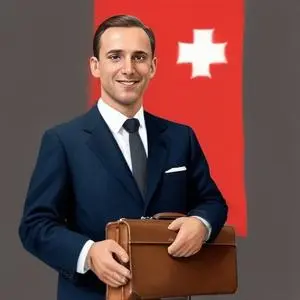
Swiss vice-consul to Hungary during WWII, credited with saving over 62,000 Jews from the Holocaust through diplomatic efforts and bravery. A heroic figure who risked his life to protect thousands from persecution.
Carl Lutz, a Swiss diplomat, is credited with saving the lives of over 62,000 Jews during World War II, making him one of the most significant rescuers of the Holocaust. His bravery and selflessness in the face of unimaginable danger have earned him a place in history as a true hero.
Born on March 30, 1895, in Walzenhausen, Switzerland, Lutz grew up in a small town in the canton of Appenzell. His father, Johannes, owned a sandstone quarry, and his mother, Ursula, died of tuberculosis when Lutz was just 14 years old. This event would have a profound impact on his life, shaping his empathy and compassion for others.
Lutz began working in an apprenticeship in a textile mill in St. Margrethen at the age of 15, and later immigrated to the United States in 1913, where he lived and worked for over 20 years. During this time, he attended Central Wesleyan College in Warrenton, Missouri, and later earned a bachelor's degree from George Washington University in 1924.
Lutz's diplomatic career began in 1924, when he joined the Swiss consular corps at the Swiss Legation in Washington, D.C. He served in various consulates across the United States, including Philadelphia and St. Louis, before being appointed as vice-consul to the Swiss Consulate General in Budapest, Hungary in 1942.
It was during his time in Budapest that Lutz would embark on his most daring and heroic endeavor: saving the lives of thousands of Jews from the clutches of the Nazi regime.
Lutz, in collaboration with other foreign diplomats and Hungarian citizens, organized a massive rescue operation, providing safe passage and protection to Jews fleeing persecution. He issued thousands of protective letters and visas, and even set up safe houses and escape routes for those in danger.
Lutz's efforts were met with resistance from the Hungarian and German authorities, who sought to deport Jews to concentration camps. Despite these challenges, Lutz persevered, using his diplomatic immunity to shield himself and his operation from prosecution.
In 1964, Lutz was awarded the title of Righteous Among the Nations by Yad Vashem, Israel's official memorial to the victims of the Holocaust. This honor is bestowed upon non-Jews who risked their lives to save Jews during the Holocaust.
In addition to this recognition, Lutz received numerous other awards and honors, including the Hungarian government's highest medal of honor, the Order of Merit.
Carl Lutz's bravery and selflessness have inspired generations, and his legacy continues to serve as a beacon of hope in the face of oppression and injustice. His story is a testament to the power of human compassion and the importance of standing up against evil, even in the darkest of times.
Today, Lutz's heroism is remembered and celebrated around the world, and his name is synonymous with courage, kindness, and humanity.
Lutz married Gertrud Fankhauser in 1935, and the couple had no children together. He passed away on February 12, 1975, but his legacy lives on, a reminder to us all of the importance of standing up for what is right, even in the face of overwhelming adversity.
In conclusion, Carl Lutz's heroism during World War II is a shining example of humanity at its best. His bravery, compassion, and selflessness have inspired generations, and his legacy will continue to inspire and motivate us to stand up against evil and fight for what is right.
Born in 1912
A Swedish architect and diplomat who saved thousands of Hungarian Jews from the Holocaust by issuing protective passports and providing shelter, earning a legendary status as a hero.
Born in 1908
A Czech-German businessman credited with saving the lives of over 1,200 Jews during the Holocaust by employing them in his factories. He is the subject of the award-winning film "Schindler's List".
Born in 1900
This Japanese diplomat issued thousands of visas to Jewish refugees in Lithuania, saving them from the Holocaust, despite disobeying orders and risking his career. He is celebrated for his courage and humanity during WWII.
Born in 1900
Leading the SS and Gestapo, he oversaw the Nazi regime's brutal security apparatus and implemented the "Final Solution," orchestrating the genocide of six million Jews during World War II.
Born in 1906
A high-ranking Nazi officer responsible for organizing the logistics of the Holocaust, overseeing the mass deportation of Jews to concentration camps during World War II.
