


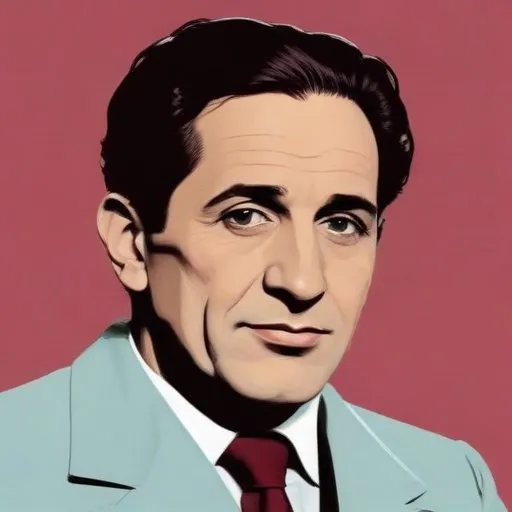
Austrian-Jewish screenplay writer behind iconic films like "The Cabinet of Dr. Caligari" and "Sunrise", credited with influencing the development of cinematic storytelling.
Carl Mayer, an Austrian screenwriter, is renowned for crafting the screenplays of some of the most iconic films of the silent era, including The Cabinet of Dr. Caligari (1920), Sunrise: A Song of Two Humans (1927), and Der Letzte Mann (1924). As a pioneer of German Expressionist cinema, Mayer's work has had a lasting impact on the film industry, influencing generations of filmmakers to come.
Born on November 20, 1894, in Graz, Austria, Mayer grew up in a Jewish family. His life took a dramatic turn when his father, a stock speculator, committed suicide, forcing the young Carl to drop out of school at 15 and take on a secretarial job. Mayer's early struggles eventually led him to move to Vienna, where he began working as a dramatist.
Mayer's big break came in 1917, when he moved to Berlin and started working at the Residenztheater. It was during this period that he befriended Gilda Langer, a leading actress, and fell in love with her. Mayer wrote the script for The Cabinet of Dr. Caligari (1920) with Hans Janowitz, intending for Langer to star in the film. However, Langer's untimely death in 1920 led to Mayer paying for her tombstone, with notes from Wagner's Tristan und Isolde engraved on it.
Mayer's work on Dr. Caligari propelled him to work with some of the most prominent directors of the time, including F. W. Murnau. Their collaboration on Der Letzte Mann (1924) and Sunrise: A Song of Two Humans (1927) resulted in cinematic masterpieces that continue to inspire filmmakers today.
As a Jew and a pacifist, Mayer realized it was best to leave Germany when the Nazis came to power in 1933. He moved to London, where he continued to work on scripts, including the screenplay for Berlin Symphony of a Metropolis (1927) with Karl Freund and Walter Ruttmann.
Carl Mayer's contribution to German Expressionist cinema is immeasurable. His scripts have inspired generations of filmmakers, and his work continues to be celebrated for its innovative storytelling and atmospheric tension. Mayer's legacy serves as a testament to the power of cinema to transcend borders and generations, leaving an indelible mark on the film industry.
"The cinema is a machine that can recreate the world, and I want to be the one to recreate it." - Carl Mayer
Born in 1906
Academy Award-winning filmmaker behind iconic movies like "Some Like It Hot" and "Sunset Boulevard", known for his witty dialogue and genre-bending storytelling.
Born in 1890
Pioneering filmmaker behind iconic sci-fi and noir classics, influencing generations of directors with his visual style and storytelling. 82
Born in 1892
A pioneering filmmaker who charmed audiences with sophisticated comedies and witty romantic dramas, often blending satire and social commentary.
Born in 1905
Austrian-American actor, director, and producer who helmed iconic films like "Laura" and "Anatomy of a Murder," known for his bold, provocative storytelling and innovative cinematography.
Born in 1902
A master of cinematic elegance, this director and screenwriter crafted visually stunning and emotionally charged films that explored the human condition, often focusing on the lives of women.
65 Years Old
A pioneering golfer who won multiple PGA Tour events and was a member of the Ryder Cup team, known for his consistent play and sportsmanship.
Born in 1902
Acclaimed filmmaker behind iconic movies like "Ben-Hur" and "Roman Holiday", known for his meticulous attention to detail and ability to elicit powerful performances from actors.
Born in 1907
Academy Award-winning filmmaker behind iconic movies like "High Noon" and "From Here to Eternity", known for his gripping storytelling and nuanced character portrayals.
