


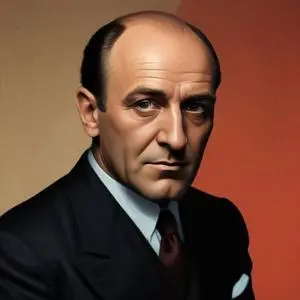
A pioneering filmmaker who crafted hauntingly beautiful and influential silent movies, including the iconic vampire classic "Nosferatu".
F.W. Murnau is renowned as one of the most influential filmmakers of the silent era, leaving an indelible mark on the world of cinema. He is best known for his iconic 1922 film Nosferatu, an unauthorized adaptation of Bram Stoker's Dracula, which has since become a masterpiece of German Expressionist cinema and an early cult classic.
Born Friedrich Wilhelm Plumpe on December 28, 1888, in Bielefeld, Germany, Murnau grew up in a cultured family that encouraged his early interest in film. He went on to study philology and art, eventually joining Max Reinhardt's acting school, where his passion for filmmaking was nurtured.
During World War I, Murnau served in the Imperial German Army, initially as an infantry company commander and communications officer, before joining the German Army's Flying Corps as an observer-gunner. He survived several crashes without severe injuries, an experience that would later influence his filmmaking style.
Murnau's directorial debut premiered in 1919, but it was Nosferatu that brought him international recognition in 1922. Although the film was not a commercial success due to copyright issues with Stoker's estate, it cemented Murnau's status as a visionary filmmaker. He went on to direct The Last Laugh (1924) and a 1926 interpretation of Goethe's Faust, solidifying his position as a master of German Expressionist cinema.
In 1926, Murnau emigrated to Hollywood, where he joined the Fox Studio and directed three films: Sunrise (1927), 4 Devils (1928), and City Girl (1930). Sunrise, in particular, is widely regarded as one of the greatest films ever made, earning Murnau critical acclaim and cementing his legacy in the world of cinema.
Murnau's final film, Tabu (1931), was a collaboration with documentary filmmaker Robert J. Flaherty, shot on location in Bora Bora. Tragically, Murnau died on March 11, 1931, at the age of 42, from injuries sustained in an automobile accident, just a week before the film's successful opening.
Of the 21 films Murnau directed, eight are now considered lost, with only 12 surviving in their entirety. Despite this, his influence on modern cinema is undeniable. Murnau's innovative use of camera angles, lighting, and narrative techniques continues to inspire filmmakers to this day.
F.W. Murnau's tragic death at a young age may have cut his career short, but his legacy as a master filmmaker continues to captivate audiences and inspire new generations of filmmakers.
Born in 1890
Pioneering filmmaker behind iconic sci-fi and noir classics, influencing generations of directors with his visual style and storytelling. 82
Born in 1899
Master of suspense, renowned for crafting iconic thrillers that blended psychological complexity with cinematic innovation, leaving an indelible mark on the film industry.
Born in 1889
A pioneering filmmaker who crafted visually stunning and emotionally charged movies that probed the human condition, particularly in the realms of faith and morality.
Born in 1892
A pioneering filmmaker who charmed audiences with sophisticated comedies and witty romantic dramas, often blending satire and social commentary.
Born in 1906
Academy Award-winning filmmaker behind iconic movies like "Some Like It Hot" and "Sunset Boulevard", known for his witty dialogue and genre-bending storytelling.
Born in 1885
A pioneering filmmaker and actor, known for his meticulous attention to detail and innovative cinematography, creating epic silent films that showcased his artistic vision.
