


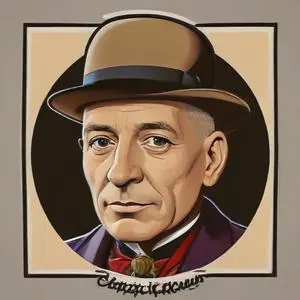
A pioneering filmmaker and actor, known for his meticulous attention to detail and innovative cinematography, creating epic silent films that showcased his artistic vision.
Erich von Stroheim, the Austrian-American director, screenwriter, actor, and producer, is renowned for his avant-garde and visionary filmmaking style that left an indelible mark on the silent era. His 1924 masterpiece, Greed, an adaptation of Frank Norris's 1899 novel McTeague, is widely considered one of the greatest films of all time.
Born Erich Oswald Stroheim in Vienna, Austria, on September 22, 1885, he was the son of Benno Stroheim, a hatmaker, and Johanna Bondy, both observant Jews. Stroheim's early life was marked by desertion from military service, and in 1909, he immigrated to America, where he initially worked as a traveling salesman.
Stroheim's entry into the film industry was marked by his work as an actor, and he quickly gained fame for his distinctive acting style and his ability to bring depth and complexity to his characters. His breakthrough came with the 1919 film Blind Husbands, which he wrote, directed, and starred in. The film's success catapulted him to international stardom, and he went on to direct several critically acclaimed films, including Foolish Wives (1922) and The Wedding March (1928).
Stroheim's innovative filmmaking style introduced more sophisticated plots, noirish sexual and psychological undercurrents, and a focus on character development, which set him apart from his contemporaries. He is credited with being one of the first auteur directors, and his influence can be seen in the works of later filmmakers such as Billy Wilder and Fritz Lang.
Stroheim's clashes with Hollywood studio bosses over budget and workers' rights led to difficulties in finding work as a director. He subsequently shifted his focus to acting, becoming a well-respected character actor, particularly in French cinema. He worked with renowned directors such as Jean Renoir and Max Ophüls, and appeared in films like La Grande Illusion (1937) and The Mask of Dimitrios (1944).
Stroheim's legacy as a visionary filmmaker and actor continues to inspire. He was honored by the French neo-Surrealist group, Lettrists, with a 70-minute film titled Erich von Stroheim in 1979. He passed away on May 12, 1957, at the age of 71, leaving behind a body of work that remains a testament to his innovative spirit and artistic genius.
"The greatest danger in the film world is not so much the commercialization of art, but the artification of commerce." - Erich von Stroheim
Born in 1901
A glamorous and androgynous Hollywood icon, known for her sultry voice, striking features, and trailblazing gender-bending style on screen. She mesmerized audiences with her unique blend of European sophistication and American charm.
Born in 1905
A legendary actress who captivated audiences with her iconic performances on the silver screen, earning her the title of Hollywood's first female superstar.
Born in 1890
Pioneering filmmaker behind iconic sci-fi and noir classics, influencing generations of directors with his visual style and storytelling. 82
Born in 1906
Academy Award-winning filmmaker behind iconic movies like "Some Like It Hot" and "Sunset Boulevard", known for his witty dialogue and genre-bending storytelling.
Born in 1894
A pioneering filmmaker of the silent era, known for his visually stunning and emotionally charged movies that often explored themes of love, sacrifice, and redemption.
Born in 1875
Pioneering filmmaker behind groundbreaking silent movies, credited with developing innovative camera techniques and narrative storytelling styles.
Born in 1893
Pioneering silent film star and director, known for her iconic performances in classics like "The Birth of a Nation" and "Broken Blossoms".
Born in 1892
A pioneering actress, producer, and screenwriter who co-founded United Artists, revolutionizing the film industry with her creative vision and business acumen. She was a silent film star and one of the most popular actresses of her time.
