


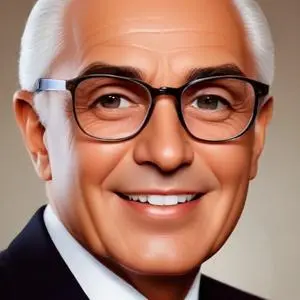
Acclaimed film producer behind iconic movies like "La Strada" and "Doctor Zhivago", known for his collaborations with wife Sophia Loren and Federico Fellini.
Carlo Ponti was a renowned Italian film producer credited with revitalizing Italian cinema post-World War II, producing over 140 films that left an indelible mark on the industry. He is best known for launching the career of his wife, Sophia Loren, and collaborating with acclaimed directors such as Federico Fellini, Michelangelo Antonioni, and Vittorio De Sica.
Born on December 11, 1912, in Magenta, Lombardy, Ponti studied law at the University of Milan and later joined his father's law firm. His entry into the film industry was serendipitous, born out of negotiating contracts for his father's firm. This led to his first foray into film production in 1940, with the film Piccolo mondo antico, starring Alida Valli.
Ponti's career gained momentum in 1941 when he joined Lux Film in Rome, producing films such as Giacomo the Idealist, A Yank in Rome, and To Live in Peace. His work caught the attention of the international film community, and he went on to produce some of Italy's most acclaimed films of the 1950s and 1960s.
Ponti's contributions to cinema were recognized globally. He won the Academy Award for Best Foreign Language Film for La Strada (1954) and received a nomination for Best Picture for producing Doctor Zhivago (1965). In 1996, he was appointed as a Knight Grand Cross of the Order of Merit of the Italian Republic.
Ponti's collaborations with some of the most prominent directors of Italian cinema are a testament to his vision and dedication to the craft. He worked with Federico Fellini on La Strada, Michelangelo Antonioni on Il Grido, and Vittorio De Sica on Two Women. His legacy extends beyond his own films, as he played a crucial role in launching the careers of many renowned Italian filmmakers.
Ponti's personal life was marked by his enduring marriage to Sophia Loren, whom he discovered and nurtured as a talent. The couple was married for over 50 years, until Ponti's passing in 2007. Ponti was also known for his charitable work, particularly in the realm of education and cultural preservation.
Carlo Ponti's impact on modern cinema is multifaceted. He played a pivotal role in popularizing Italian neorealism, a film movement that focused on the everyday lives of ordinary people. His collaborations with international directors introduced Italian cinema to a global audience, paving the way for future generations of filmmakers.
Through his unwavering dedication to his craft, Ponti left an indelible mark on the world of cinema. His legacy serves as a testament to the power of vision, perseverance, and collaboration in the pursuit of artistic excellence.
91 Years Old
Academy Award-winning actress renowned for her striking beauty and powerful performances in iconic films like "Two Women" and "Marriage Italian Style".
Born in 1924
A renowned actor and singer, starring in over 150 films, including iconic Italian neorealist classics and international productions, earning him numerous awards and nominations.
Born in 1901
A renowned filmmaker and actor, known for directing poignant, neorealist classics like "Bicycle Thieves" and "Umberto D.", which still influence world cinema today.
Born in 1920
Visionary filmmaker behind surreal, poetic, and deeply personal cinematic masterpieces that blur the lines between reality and fantasy.
Born in 1912
A pioneering filmmaker who explored the human condition through visually stunning and psychologically complex movies, often focusing on alienation and social isolation.
Born in 1906
Acclaimed Italian filmmaker renowned for lavish, visually stunning productions that often explored themes of social class, morality, and the human condition. His cinematic masterpieces continue to influence filmmakers today.
99 Years Old
Italian actress and photographer, iconic beauty and sex symbol of the 1950s and 1960s, starring in films like "Fanfan la Tulipe" and "Buona Sera, Mrs. Campbell".
