


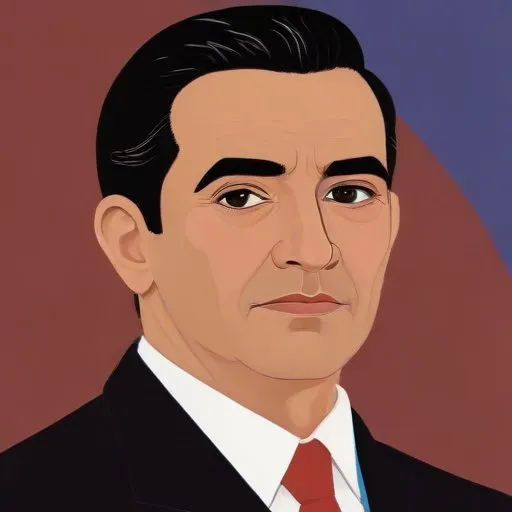
A Cuban-born author and academic who won the National Book Award for his memoir "Waiting for Snow in Havana", which recounts his childhood experiences during the Cuban Revolution. He is a professor of history and literature at Yale University.
Carlos Eire, the T. Lawrason Riggs Professor of History and Religious Studies at Yale University, is a renowned historian of late medieval and early modern Europe, known for his meticulous research and captivating narrative style. His works have delved into the intricacies of the Reformation, the Counter-Reformation, and the cultural and intellectual history of early modern Europe, solidifying his reputation as a leading authority in the field.
Born on November 23, 1950, in Havana, Cuba, Eire's life was marked by turmoil and upheaval. His father, Antonio Nieto Cortadellas, a prominent judge before Fidel Castro's revolution, instilled in him a love for history and learning. Eire's family fled to the United States in 1962, when he was just 11 years old, joining the ranks of the 14,000 unaccompanied Cuban children airlifted to the United States during the Cuban Revolution.
Eire's educational pursuits led him to Loyola University in Chicago, where he earned his Bachelor of Arts in History and Theology in 1973. He then went on to earn his doctoral degree from Yale University in 1979, laying the foundation for his distinguished academic career.
Eire's academic journey has taken him to various esteemed institutions, including St. Johns University in Minnesota, the University of Virginia, and the Institute for Advanced Study in Princeton. In 1996, he joined the faculty at Yale University, where he has taught for over two decades.
His published works are a testament to his scholarly rigor and engaging writing style. Some of his notable books include:
In addition to these works, Eire has co-authored Jews, Christians, Muslims: An Introduction to Monotheistic Religions (Prentice Hall, 1997) and penned two memoirs, Waiting for Snow in Havana (Free Press, 2003), winner of the U.S. National Book Award for Nonfiction, and Learning to Die in Miami (November 2010).
Eire's scholarly contributions have been recognized with several prestigious awards, including:
Carlos Eire's work has had a profound impact on the field of historical studies, shedding new light on the complexities of late medieval and early modern Europe. His commitment to rigorous scholarship and storytelling has inspired generations of historians and scholars, cementing his place as a leading authority in the field. As a testament to his enduring influence, Eire continues to teach and write, leaving an indelible mark on the world of historical studies.
32 Years Old
A young Cuban boy at the center of a highly publicized international custody and immigration battle between his Cuban father and American relatives in 2000. His case sparked a heated debate about U.S.-Cuba relations and immigration policies.
Born in 1926
The Cuban revolutionary who led the country from 1959 to 2008, implementing socialist policies and defying US opposition, becoming an iconic figure in modern history.
95 Years Old
The Cuban revolutionary leader who served as President of Cuba from 2008 to 2018, known for implementing economic reforms and improving relations with the US. He played a key role in shaping Cuba's socialist government and economy.
94 Years Old
A key figure in the Cuban Revolution, known for his bravery and radical ideals, who played a crucial role in overthrowing the authoritarian government. He's an iconic symbol of rebellion and social change.
Born in 1853
A Cuban journalist, poet, and theorist who led the Cuban independence movement against Spanish rule and is revered as a national hero, known for his literary and philosophical works.
