


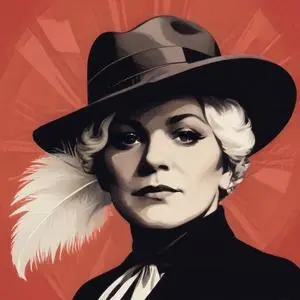
Founded the League of Women Voters and International Alliance of Women, a pioneering figure in the women's suffrage movement, fighting for women's right to vote and equality.
Carrie Chapman Catt, a pioneering figure in the fight for women's rights, is renowned for her tireless efforts in securing the passage of the 19th Amendment to the United States Constitution, granting American women the right to vote in 1920. As a leading figure in the women's suffrage movement, Catt dedicated her life to breaking down barriers and shattering glass ceilings, paving the way for future generations of women to exercise their fundamental right to participate in the democratic process.
Born Carrie Clinton Lane on January 9, 1859, in Ripon, Wisconsin, Catt grew up in rural Charles City, Iowa, where her family moved when she was just seven years old. Her early interest in science and medicine led her to pursue higher education, enrolling at Iowa Agricultural College (now Iowa State University) in 1877. Despite her father's initial hesitation, Catt persevered, working multiple jobs to support herself, including as a dishwasher, librarian, and teacher.
Catt's involvement in the women's suffrage movement began in the late 1880s, when she joined the Iowa Woman Suffrage Association. Her leadership skills and unwavering dedication quickly propelled her to the forefront of the movement, earning her the presidency of the National American Woman Suffrage Association (NAWSA) in 1900. Catt's visionary leadership and strategic organizing played a crucial role in the passage of the 19th Amendment, as she traveled across the country, rallying supporters and mobilizing opposition to the status quo.
Catt's remarkable life was marked by her unwavering commitment to social justice and human rights. Her personal philosophy, rooted in the values of equality, fairness, and democracy, continues to inspire generations of activists and reformers. In her later years, Catt remained an outspoken advocate for world peace, disarmament, and international cooperation.
Carrie Chapman Catt's extraordinary accomplishments have left an indelible mark on American history. As one of the most influential women of the 20th century, her legacy serves as a testament to the power of grassroots activism, strategic leadership, and unrelenting dedication to creating a more just and equitable society. Her work continues to inspire women and men around the world to demand their right to participate in the democratic process and to strive for a more perfect union.
"The vote is the emblem of your equality, women of America, the guarantee of your liberty."
– Carrie Chapman Catt
In recognition of her trailblazing efforts, Catt was awarded the Iowa State University's Distinguished Achievement Citation in 1921 and was inducted into the National Women's Hall of Fame in 1975. Her legacy continues to be celebrated and honored through various awards, scholarships, and commemorative events.
Carrie Chapman Catt's remarkable life and legacy serve as a powerful reminder of the transformative power of grassroots activism, strategic leadership, and unyielding commitment to creating a more just and equitable society. As we continue to navigate the complexities of modern democracy, Catt's inspiring story offers a timeless lesson in the importance of perseverance, collective action, and the unwavering pursuit of human rights and social justice.
Born in 1820
Pioneering figure in the women's suffrage movement, fighting for women's right to vote and own property. Her tireless efforts led to significant advancements in women's rights.
Born in 1815
Pioneering women's rights activist who led the women's suffrage movement, fighting for women's right to vote and own property.
Born in 1885
A pioneering figure in the women's suffrage movement, fighting for equal rights and voting privileges through nonviolent protests and strategic lobbying. Her legacy continues to inspire feminist activism today.
Born in 1857
A pioneering investigative journalist who exposed corporate wrongdoing, particularly in the oil industry, through her meticulous research and writing, sparking significant reforms.
Born in 1860
A pioneering social worker and peace activist, she founded Hull House, a settlement that provided social services to immigrants and the working poor, and was awarded the Nobel Peace Prize in 1931.
Born in 1884
A humanitarian and politician who championed human rights, women's empowerment, and social justice, leaving a lasting impact on American politics and international relations.
Born in 1879
A pioneering birth control activist who advocated for women's reproductive rights and founded the American Birth Control League, precursor to Planned Parenthood.
