


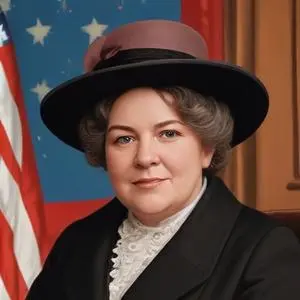
Pioneering women's rights activist who led the women's suffrage movement, fighting for women's right to vote and own property.
Elizabeth Cady Stanton was a trailblazing American writer, activist, and leader of the women's rights movement in the mid-to-late 19th century. She is most renowned for being the primary author of the Declaration of Sentiments, a groundbreaking document that sparked the women's suffrage movement in the United States.
Born on November 12, 1815, in Johnstown, New York, Elizabeth Cady Stanton was the daughter of Daniel Cady, a prominent judge, and Margaret Livingston Cady. Her early life was marked by a strong sense of social justice, instilled by her father's abolitionist views and her mother's progressive ideas on women's education.
In 1848, Stanton organized the Seneca Falls Convention, the first convention dedicated exclusively to women's rights. This pivotal event marked a turning point in the women's suffrage movement, with Stanton's Declaration of Sentiments calling for equal rights, including the right to vote, for women.
In 1851, Stanton met Susan B. Anthony, and the two formed a decades-long partnership that would prove instrumental in shaping the women's rights movement. Together, they founded the Women's Loyal National League, which campaigned for the abolition of slavery, and later established The Revolution, a newspaper dedicated to promoting women's rights.
During the American Civil War, Stanton and Anthony led the Women's Loyal National League in the largest petition drive in U.S. history, calling for the abolition of slavery. After the war, they became primary organizers of the American Equal Rights Association, pushing for equal rights for both African Americans and women.
Stanton's unwavering commitment to women's suffrage sometimes led to controversy. Her opposition to the 15th Amendment, which granted suffrage to African American men but not women, led to a split in the women's rights movement. Stanton's statements during this period, such as her reference to African Americans as "Sambo," have been criticized as elitist and racially condescending.
Despite controversies, Elizabeth Cady Stanton's contributions to the women's rights movement are undeniable. Her tireless efforts paved the way for future generations of women's rights activists, including her own daughter, Harriot Stanton Blatch. Stanton's legacy extends beyond her role in securing women's suffrage, inspiring generations to fight for social justice and equality.
Stanton's words continue to inspire and provoke, including her famous statement: "The moment we begin to fear the opinions of others and hesitate to tell the truth that is in us, and from motives of policy are silent when we should speak, the divine floods of light and life no longer flow into our souls."
Elizabeth Cady Stanton's unwavering commitment to women's rights has had a lasting impact on modern society. Her legacy continues to inspire women's rights activists, politicians, and individuals around the world, shaping the course of human history in pursuit of equality and social justice.
Born in 1820
Pioneering figure in the women's suffrage movement, fighting for women's right to vote and own property. Her tireless efforts led to significant advancements in women's rights.
Born in 1826
A pioneering suffragist and writer who fought for women's rights and abolition, penning influential works that helped shape the women's liberation movement.
Born in 1793
A pioneering Quaker minister and women's rights activist who fought for abolition and women's suffrage, playing a key role in the Seneca Falls Convention.
Born in 1805
Founded an influential abolitionist newspaper, The Liberator, to advocate for the immediate emancipation of slaves. Known for his radical and uncompromising stance against slavery.
Born in 1885
A pioneering figure in the women's suffrage movement, fighting for equal rights and voting privileges through nonviolent protests and strategic lobbying. Her legacy continues to inspire feminist activism today.
