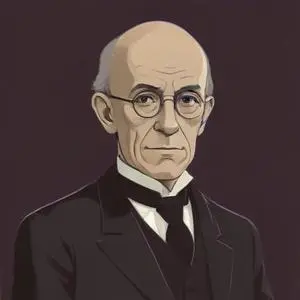
William Lloyd Garrison

William Lloyd Garrison

William Lloyd Garrison was born on December 10th, 1805

Full Name: William Lloyd Garrison
Profession: Journalist and Activist
Nationality: American
Occupation: Editor
Place of Birth: Newburyport, Massachusetts
Zodiac Sign: Unknown
Notable Work: The Liberator
Known For: Abolitionist Movement

Founded an influential abolitionist newspaper, The Liberator, to advocate for the immediate emancipation of slaves. Known for his radical and uncompromising stance against slavery.

Written by: Rajesh Kumar Rajesh Kumar

William Lloyd Garrison: The Fearless Abolitionist

A Beacon of Hope for the Oppressed

William Lloyd Garrison, a trailblazing American abolitionist, journalist, and social reformer, is best known for his unyielding commitment to eradicating slavery and promoting social justice. Through his iconic newspaper, The Liberator, Garrison's passionate voice resonated across the nation, inspiring a generation to fight for freedom and equality.

A Life of Principle and Purpose

Born on December 10, 1805, in Newburyport, Massachusetts, Garrison's early life was marked by hardship and struggle. His father, Abijah Garrison, a merchant and sailing pilot, had obtained American papers, relocating his family to Newburyport in 1806. However, the U.S. Embargo Act of 1807 led to economic decline, forcing the young Garrison to support his family through manual labor.

Garrison's early experiences instilled in him a deep sense of empathy and a strong moral compass. He became an apprentice to a local printer, which would later serve him well in his publishing endeavors. In 1826, Garrison co-founded The National Philanthropist, a weekly newspaper focused on social reform, marking the beginning of his journalistic career.

The Liberator: A Catalyst for Change

In 1831, Garrison founded The Liberator, a revolutionary newspaper that would become the mouthpiece for the abolitionist movement. With its inaugural issue, Garrison boldly declared, "I will not equivocate—I will not excuse—I will not retreat a single inch—and I will be heard." This uncompromising stance made The Liberator a beacon of hope for the enslaved and a thorn in the side of slave owners.

Published in Boston until the abolition of slavery in 1865, The Liberator became a powerful platform for Garrison to advocate for immediate and uncompensated emancipation. Through its pages, he confronted the atrocities of slavery, exposed the hypocrisy of the American government, and promoted Christian pacifism as a means to combat evil.

Controversy and Persecution

Garrison's unwavering commitment to abolitionism made him a target for violence and intimidation. In 1835, a mob attacked him in Boston, and he was burned in effigy. Gallows were erected outside his office, and a price was placed on his head. Nevertheless, Garrison persisted, refusing to be silenced by threats or violence.

A Maverick and a Visionary

Garrison's philosophical contributions extended beyond abolitionism. He was a proponent of nogovernmentism, rejecting the inherent validity of the American government due to its engagement in war, imperialism, and slavery. This radical stance made him a pioneer in the movement for social justice.

In the 1870s, Garrison emerged as a leading advocate for women's rights, campaigning for their suffrage and equal citizenship. This new focus sparked a rift within the abolitionist community, but Garrison remained undeterred, convinced that the struggle for women's rights was integral to the broader quest for human freedom.

A Legacy of Courage and Conviction

William Lloyd Garrison's remarkable life serves as a testament to the power of unwavering principle and unrelenting activism. Through The Liberator and his tireless advocacy, Garrison inspired generations to fight for freedom, equality, and social justice. His legacy continues to resonate, reminding us that even in the face of adversity, courage and conviction can spark transformative change.
Timeline
1805
Birth of William Lloyd Garrison
William Lloyd Garrison was born in Newburyport, Massachusetts. He would go on to become a prominent American journalist and abolitionist.
1831
Founded The Liberator
Garrison founded The Liberator, a prominent anti-slavery newspaper that advocated for the immediate emancipation of slaves.
1840
Founded American Anti-Slavery Society
Garrison co-founded the American Anti-Slavery Society, a prominent organization dedicated to abolishing slavery.
1879
Death of William Lloyd Garrison
William Lloyd Garrison passed away, leaving behind a legacy as a pioneering abolitionist and journalist.
William Lloyd Garrison

William Lloyd Garrison Quiz

What was the primary goal of William Lloyd Garrison's abolitionist newspaper, The Liberator?

Score: 0/6
FAQ
What was William Lloyd Garrisons role in the abolitionist movement?
William Lloyd Garrison was a leading figure in the abolitionist movement, and founded The Liberator, an influential anti-slavery newspaper.
What was the significance of The Liberator?
The Liberator was significant because it provided a platform for abolitionist voices to be heard, and helped to mobilize public opinion against slavery.
How did William Lloyd Garrisons work impact the abolition of slavery?
William Lloyd Garrisons work had a significant impact on the abolition of slavery, as he helped to galvanize public opinion and pressure lawmakers to end the institution.
What was William Lloyd Garrisons relationship like with other abolitionists?
William Lloyd Garrison had close relationships with other prominent abolitionists, including Frederick Douglass and Lydia Maria Child.
What is William Lloyd Garrisons legacy in American history?
William Lloyd Garrisons legacy in American history is that of a courageous and dedicated advocate for social justice and human rights.

Related People:

John Brown

Born in 1800

Abolitionist who led the raid on Harpers Ferry, a pivotal event that helped spark the American Civil War, fighting to end slavery through radical action.

Abraham Lincoln

Born in 1809

Led the United States through its Civil War and ultimately abolished slavery, leaving a lasting legacy in American history.

Ralph Waldo Emerson

Born in 1803

A leading figure in the Transcendentalist movement, he advocated for individualism, self-reliance, and nature-inspired spirituality through his essays and poetry. His ideas continue to influence American thought and culture.

Henry David Thoreau

Born in 1817

A 19th-century thinker who advocated for simple living, civil disobedience, and individualism, inspiring generations to reevaluate their relationship with nature and society.

William Ellery Channing

Born in 1780

Unitarian minister and influential thinker who advocated for social reform, abolition, and individualism through powerful sermons and writings.

Lydia Maria Child

Born in 1802

A pioneering writer and abolitionist who penned influential works on social justice and women's rights, leaving a lasting impact on American literature and social reform.