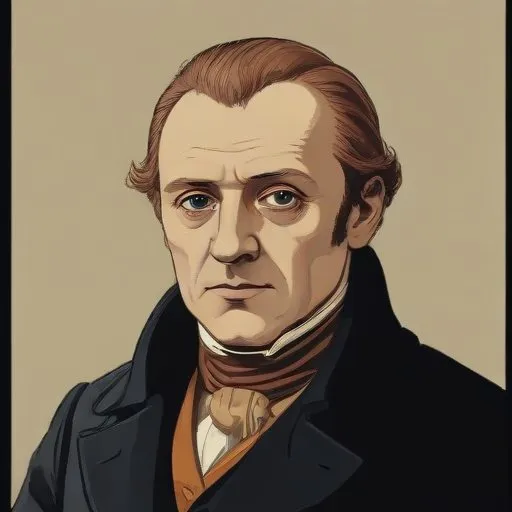
Caspar Friedrich Wolff: The Pioneering Embryologist
A Revolutionary in the Field of Embryology
Caspar Friedrich Wolff, a German physiologist and embryologist, is renowned for his groundbreaking contributions to the field of modern embryology. Born on January 18, 1733, in Berlin, Brandenburg, Wolff's work laid the foundation for a deeper understanding of the development of living organisms.
Early Life and Education
Wolff graduated as an M.D. from the University of Halle in 1759, presenting his dissertation, "Theoria Generationis." This seminal work consisted of three parts, focusing on the development of plants, animals, and theoretical considerations. Wolff's innovative approach challenged the prevailing theory of preformation, proposing instead that organs form from undifferentiated cells in a process known as epigenesis.
The Theory of Epigenesis
Wolff's theory was met with skepticism, with prominent figures like Albrecht von Haller opposing his views. However, Wolff's work laid the groundwork for future generations of scientists, who would go on to build upon his ideas.
Academic Career and Research
During the Seven Years' War, Wolff served as a field doctor in the Prussian Army, only to face difficulties in securing an academic position upon his return. It wasn't until 1767, with the help of mathematician
Leonhard Euler, that Wolff obtained the chairmanship of anatomy at the St. Petersburg Academy of Sciences.
Breakthroughs in Embryology and Anatomy
Wolff's research spanned embryology, anatomy, and botany. His most significant discovery was that of the primitive kidneys, known as mesonephros or Wolffian bodies, and their excretory ducts. This breakthrough was documented in his dissertation and further explored in his subsequent work.
Major Works and Contributions
- "Theoria Generationis" (1759) - Wolff's seminal dissertation that introduced the concept of epigenesis and challenged the theory of preformation.
- Description of the primitive kidneys (mesonephros) and their excretory ducts.
- Pioneering work in embryology, paving the way for future generations of scientists.
Legacy and Impact
Caspar Friedrich Wolff's contributions to the field of embryology have had a lasting impact on our understanding of the development of living organisms. His work has influenced countless scientists, shaping the course of modern embryology and beyond.
Personal Life and Milestones
Wolff died on February 22, 1794, in Saint Petersburg, leaving behind a legacy that continues to inspire and educate scientists to this day. Despite facing opposition and obstacles throughout his career, Wolff remained dedicated to his work, driven by a passion for discovery and a thirst for knowledge.
Remembering Wolff's Wisdom
"As the embryo grows, it is shaped by the interactions of its parts, and the form of the whole is determined by the balance of these interactions." - Caspar Friedrich Wolff
Wolff's words encapsulate the essence of his work, highlighting the intricate dance of cellular development that gives rise to life. His legacy serves as a testament to the power of human curiosity and the importance of pursuing knowledge, even in the face of adversity.
FAQ
What are Caspar Friedrich Wolffs most significant contributions to embryology?
Caspar Friedrich Wolff made significant contributions to embryology, including the discovery of the Wolffian duct and the development of the theory of epigenesis, which posits that organs develop from undifferentiated tissue.
How did Caspar Friedrich Wolffs work impact the field of physiology?
Caspar Friedrich Wolffs work had a profound impact on the field of physiology, shaping our understanding of human development and the formation of organs and tissues.
What inspired Caspar Friedrich Wolffs research in embryology?
Caspar Friedrich Wolff was inspired by his fascination with the mysteries of human development and his desire to understand the intricate processes that govern the formation of life.
How did Caspar Friedrich Wolffs theories challenge prevailing views of his time?
Caspar Friedrich Wolffs theories challenged prevailing views of his time by proposing that organs develop from undifferentiated tissue, rather than being pre-formed in the embryo.
What is Caspar Friedrich Wolffs legacy in the history of science?
Caspar Friedrich Wolffs legacy in the history of science is that of a pioneering embryologist who pushed the boundaries of human knowledge and understanding, shaping our comprehension of human development and physiology.