


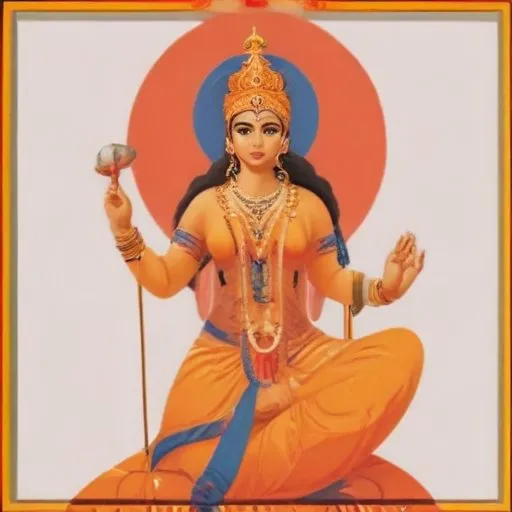
A revered Indian spiritual leader and Vedic scholar, known for his wisdom, teachings, and writings on Hinduism and spirituality. He was the 68th Shankaracharya of Kanchi Kamakoti Peetham, a prestigious Hindu monastery.
Chandrashekarendra Saraswati, also known as the Sage of Kanchi, was a revered Indian sage, saint, and mystic who was revered for his extraordinary spiritual insight and wisdom. Born in 1894, he was the 68th Shankaracharya of Kanchi Kamakoti Peetham, one of the most prestigious spiritual institutions in India.
Swami Chandrashekarendra Saraswati was born in a pious Brahmin family in Villupuram, Tamil Nadu. From a young age, he demonstrated an intense spiritual inclination, often spending hours in meditation and studying ancient Hindu scriptures. His early life was marked by a series of mystical experiences that deepened his understanding of the universe and humanity's place in it.
Swami Chandrashekarendra Saraswati's teachings emphasized the importance of self-realization, detachment, and compassion. He believed that the ultimate goal of human life was to attain liberation from the cycle of birth and death, and that this could be achieved through the pursuit of knowledge, devotion, and wisdom.
He advocated for the unity of all religions, emphasizing that the pursuit of truth and self-realization was the common thread that bound humanity together. His philosophical contributions have had a profound impact on modern Indian thought, inspiring countless individuals to embark on their own spiritual journeys.
Swami Chandrashekarendra Saraswati's remarkable life was marked by numerous achievements, including:
The Sage of Kanchi's teachings have had a profound impact on modern Indian society, inspiring a new generation of spiritual seekers, scholars, and leaders. His emphasis on social service, compassion, and unity has inspired numerous initiatives and organizations dedicated to promoting the greater good.
His influence extends beyond Indian shores, with his teachings and writings having inspired spiritual leaders and seekers worldwide.
Swami Chandrashekarendra Saraswati's life and teachings are a testament to the enduring power of spirituality and wisdom. His legacy continues to inspire and guide countless individuals, institutions, and initiatives, ensuring that his profound wisdom will endure for generations to come.
In a world torn apart by conflict, division, and uncertainty, the Sage of Kanchi's message of unity, compassion, and self-realization remains as relevant today as it was during his lifetime.
Swami Chandrashekarendra Saraswati's life was marked by several extraordinary events, including:
Chandrashekarendra Saraswati's extraordinary life and teachings serve as a beacon of hope and guidance for humanity. His wisdom, compassion, and dedication to the pursuit of truth have inspired countless individuals to embark on their own journeys of self-discovery and spiritual growth.
As we navigate the complexities and challenges of modern life, the Sage of Kanchi's message of unity, compassion, and self-realization remains as relevant and inspiring as ever, illuminating the path to a brighter, more enlightened future for all.
Born in 1872
An Indian spiritual leader who developed a philosophy of integral yoga, aiming to unite spiritual growth with worldly life, and wrote extensively on spirituality, philosophy, and poetry.
Born in 1879
A revered Indian sage who advocated for self-inquiry and non-dualism, guiding seekers towards spiritual liberation through direct experience of the ultimate reality.
Born in 1897
A renowned Indian sage and guru, he is most known for his teachings on non-dualism and the attainment of self-realization through direct experience and inquiry.
Born in 1910
A spiritual teacher and author who developed a method of meditation and wrote extensively on spirituality, introducing Eastern wisdom to Western audiences.
