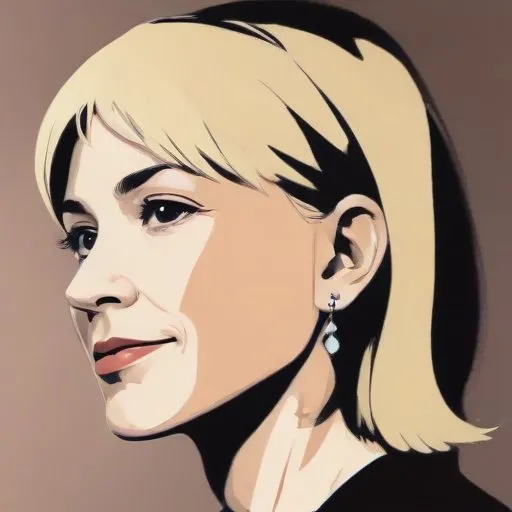
Chantal Mouffe: A Pioneering Political Theorist
A Radical Democrat and Critic of Deliberative Democracy
Chantal Mouffe is a renowned Belgian political theorist, celebrated for her groundbreaking contributions to the development of radical democracy, agonistic pluralism, and post-Marxist political inquiry. Her work, particularly her collaboration with Ernesto Laclau, has been instrumental in shaping the Essex School of discourse analysis, a theoretical framework that has significantly influenced contemporary political thought.
Early Life and Education
Born on June 17, 1943, Mouffe pursued her academic interests at the Universities of Leuven, Paris, and Essex. Her extensive educational background has equipped her with a profound understanding of political theory, philosophy, and sociology. Throughout her career, she has held various teaching positions at esteemed institutions in Europe, North America, and Latin America, including Harvard, Cornell, Princeton, and the CNRS Paris.
Academic Contributions and Critiques
Mouffe's intellectual endeavors have led to the development of a distinct post-Marxist political inquiry, which draws upon the works of Gramsci, poststructuralism, and theories of identity. Her seminal work,
Hegemony and Socialist Strategy, co-authored with Laclau, has been widely acclaimed and has had a significant impact on the field of political theory. Mouffe has also authored influential works such as
Agonistics: Thinking the World Politically and
The Democratic Paradox, which have further solidified her reputation as a leading scholar of radical democracy.
A Critique of Deliberative Democracy
Mouffe is a staunch critic of deliberative democracy, particularly in its Rawlsian and Habermasian forms. She has argued that these approaches neglect the inherent conflicts and power struggles that are inherent in democratic societies. Instead, Mouffe advocates for an agonistic model of democracy, which acknowledges and legitimates the expression of conflicts and confrontations.
Influence on Modern Society and Pop Culture
Mouffe's ideas have had a profound impact on modern society, influencing various fields such as politics, philosophy, and art. Her work has inspired artists, thinkers, and activists who seek to challenge the dominant norms and power structures. Her concept of agonistic pluralism has been applied to various areas, including cultural studies, sociology, and feminist theory.
Controversies and Public Perception
Mouffe's radical approach to democracy has been met with criticism from some quarters. Her use of
Carl Schmitt's concept of the political has been seen by some as problematic, while others have criticized her focus on state institutions in her work
Agonistics: Thinking the World Politically. Despite these controversies, Mouffe remains a prominent and respected figure in the academic community.
Teaching and Mentorship
Mouffe has held various teaching positions throughout her career, including her current professorship at the University of Westminster. She is a member of the Centre for the Study of Democracy and has supervised numerous Ph.D. students. Her pedagogical approach emphasizes the importance of critical thinking, political engagement, and intellectual curiosity.
Legacy and Impact on the Field
Chantal Mouffe's work has left an indelible mark on the field of political theory. Her ideas have inspired a new generation of scholars, activists, and thinkers who are committed to promoting radical democracy and challenging the status quo. As a pioneering political theorist, Mouffe's legacy continues to shape our understanding of democracy, power, and the political.
Quotes and Memorable Sayings
- "Democracy is not a blue-print, but a horizon."
- "The political is not a realm of harmony, but of conflict and confrontation."
- "Radical democracy is not about eliminating conflict, but about creating a space for its legitimate expression."
Visual Timeline and Milestones
| 1943 |
Chantal Mouffe born on June 17th |
| 1960s |
Pursues academic interests at the Universities of Leuven, Paris, and Essex |
| 1980s |
Co-authors Hegemony and Socialist Strategy with Ernesto Laclau |
| 1990s |
Holds visiting positions at Harvard, Cornell, Princeton, and the CNRS Paris |
| 2013 |
Publishes Agonistics: Thinking the World Politically |
| 2018 |
Publishes For a Left Populism |
Awards and Honors
Mouffe has received various awards and honors for her contributions to political theory and radical democracy. Her work has been recognized by esteemed academic institutions and organizations, solidifying her position as a leading scholar in her field.
FAQ
What is Chantal Mouffes theory of agonistic democracy?
Chantal Mouffes theory of agonistic democracy argues that democratic societies should be based on a model of conflict and disagreement, rather than consensus and unity. She advocates for a more inclusive and participatory form of democracy that acknowledges and respects diversity.
What is Chantal Mouffes critique of liberal democracy?
Chantal Mouffe has been critical of liberal democracy, arguing that it fails to address the root causes of social and political conflicts. She contends that liberal democracy prioritizes individual rights over collective interests and neglects the role of emotion and passion in politics.
What is Chantal Mouffes concept of the political?
Chantal Mouffes concept of the political refers to the dimension of human experience that is marked by conflict, struggle, and antagonism. She argues that the political is essential to democratic politics and should be acknowledged and engaged with, rather than suppressed or ignored.
What is Chantal Mouffes relationship with Ernesto Laclau?
Chantal Mouffe has collaborated closely with Argentine philosopher Ernesto Laclau, with whom she developed the concept of radical democracy. Their work together has been influential in shaping contemporary debates on democracy, power, and identity.
What is Chantal Mouffes impact on contemporary political thought?
Chantal Mouffes work has had a significant impact on contemporary political thought, influencing scholars and activists across a range of disciplines. Her ideas on agonistic democracy, radical democracy, and the political have sparked important debates about the nature of democracy and the role of conflict in political life.