


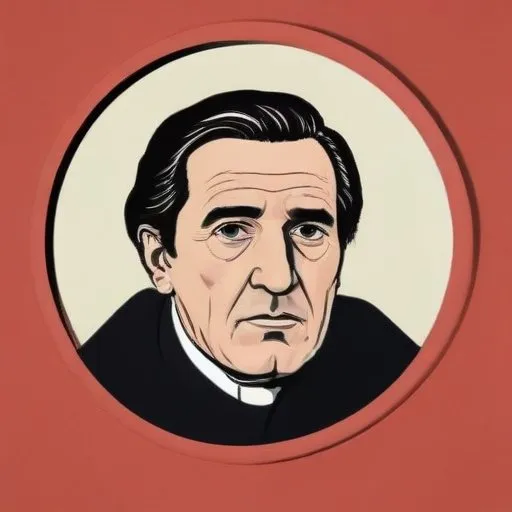
A prominent contemporary philosopher and academic, known for developing the concept of "evental philosophy" and applying it to various fields, including politics, ethics, and aesthetics.
Alain Badiou is a renowned French philosopher and mathematician, best known for his groundbreaking work in philosophical applications of mathematics, particularly set theory and category theory. His Being and Event project has revolutionized the concepts of being, truth, event, and the subject, rejecting linguistic relativism and advocating for universalism and truth.
Badiou was born on January 17, 1937, to Raymond Badiou, a mathematician and member of the French Resistance during World War II. He followed in his father's footsteps, studying mathematics and philosophy at the Lyce Louis-LeGrand and then the École Normale Supérieure (ENS) from 1955 to 1960. His diplôme d'études supérieures, equivalent to an MA thesis, focused on Spinoza and was written under the guidance of Georges Canguilhem.
Badiou's work is characterized by his use of mathematical concepts to inform philosophical debates. He rejects linguistic relativism, advocating for universalism and truth. His concept of "event" is central to his philosophy, referring to a sudden, unpredictable occurrence that challenges our understanding of the world.
He is also known for his broader applications of conceptions of indifference, exploring the relationship between being, truth, and the subject. Badiou's work has been influential in various fields, including philosophy, mathematics, and politics.
Badiou has been involved in various political organizations and has regularly commented on political events. He is a strong advocate for communism as a political force and has been critical of capitalism and liberal democracy.
Badiou has taught at various institutions, including the University of Reims and the University of Paris VIII (Vincennes-Saint-Denis). He has also been involved in various political movements, including the Unified Socialist Party (PSU).
Badiou's work has had a significant impact on contemporary philosophy, politics, and culture. His ideas have influenced many areas, including ethics, politics, and aesthetics. His advocacy for communism and universalism has sparked debates and discussions about the role of truth and being in modern society.
“The event is not a thing, but a relation.”
“Truth is not a matter of representation, but of fidelity.”
Badiou's work is a significant contribution to the development of contemporary philosophy. His rejection of linguistic relativism and advocacy for universalism and truth have had a lasting impact on the field. His influence can be seen in various areas, from politics and ethics to aesthetics and culture.
Badiou's legacy is a testament to the power of philosophy to challenge and shape our understanding of the world. His work continues to inspire and provoke, ensuring his place as one of the most important and influential philosophers of our time.
Born in 1905
Existentialist philosopher and playwright who argued that humans have complete freedom to choose their actions and create their own meaning in life, influencing modern thought on morality and individual responsibility.
Born in 1889
A German philosopher and academic who explored the meaning of existence, time, and human existence, influencing 20th-century philosophy with his concept of "Being-in-the-world".
96 Years Old
A pioneer of poststructuralism, deconstructing traditional notions of meaning and challenging Western philosophy's core assumptions. His work redefined the way we think about language, culture, and identity.
99 Years Old
A French historian and philosopher who critiqued power structures and social norms, arguing that knowledge and truth are shaped by those in power. He's known for his concepts of power, discipline, and surveillance.
Born in 1925
A French philosopher who developed influential concepts like "rhizome" and "desire-machines," which challenged traditional notions of identity, reality, and power.
Born in 1924
A French philosopher, sociologist, and literary theorist who challenged traditional notions of knowledge, truth, and power, and is famous for his concept of "postmodernism".
77 Years Old
A contemporary philosopher and cultural critic, known for his provocative writings on ideology, capitalism, and popular culture, often blending Lacanian psychoanalysis with Marxist theory.
Born in 1576
A 17th-century priest and glassmaker who pioneered glassmaking techniques and wrote the first comprehensive guide to glassmaking, "L'Arte Vetraria".
