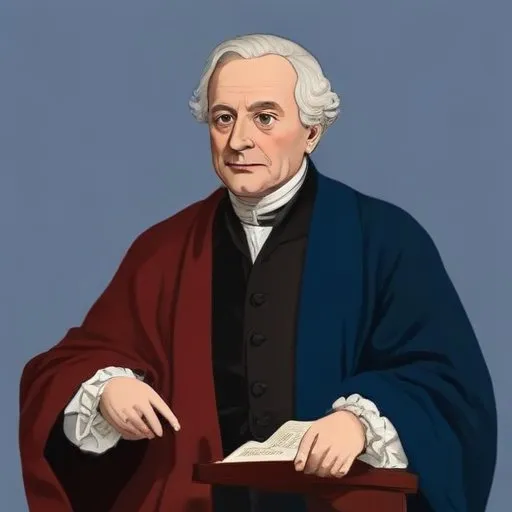
Charles Batteux: The Father of Modern Aesthetics
A Pioneer in the Realm of Beauty and Taste
Charles Batteux, a renowned French philosopher and writer, is famously known for his groundbreaking work,
Les Beaux Arts Réduits à un Même Principe (The Fine Arts Reduced to a Single Principle), published in 1746. This treatise revolutionized the understanding of beauty and taste, proposing a unified theory that harmonized the diverse concepts of aesthetics prevalent at the time.
Early Life and Education
Born on May 6, 1713, in Alland-Huyet-Sausseuil, Ardennes, France, Batteux pursued his passion for theology at the University of Reims. His intellectual curiosity led him to Paris in 1739, where he began teaching in various colleges, eventually earning the chair of Greek and Roman philosophy at the prestigious Collège de France.
The Fine Arts Reduced to a Single Principle
Batteux's magnum opus,
Les Beaux Arts Réduits à un Même Principe, is a comprehensive analysis of the fine arts, aiming to identify a single principle that governs the beauty and taste of various art forms. This seminal work not only elevated Batteux's reputation but also influenced the development of aesthetics across Europe. The treatise's significance was acknowledged by the prominent art historian, P. O. Kristeller, who credited Batteux with taking the "decisive step towards the system of the fine arts" and shaping the modern concept of fine art.
Career Highlights and Major Works
Batteux's illustrious career was marked by several notable achievements:
- Translation of Horace (1750): His translation of the Roman poet Horace's works showcased his mastery of classical languages and literature.
- Cours de belles lettres (1765): This comprehensive course on literature highlighted Batteux's expertise in the field and was later included in his magnum opus, Principes de la littérature (1774).
- La morale d'Épicure tirée de ses propres écrits (1758): In this work, Batteux delved into the philosophical concepts of Epicureanism, demonstrating his versatility as a thinker.
- Histoire des causes premières (1769): This treatise explored the concept of first causes, showcasing Batteux's curiosity about the fundamental principles governing the universe.
- Cours d'études à l'usage des élèves de l'école militaire (40 volumes, 1770s): This extensive work, comprising 45 volumes, served as a comprehensive educational resource for students at the military school.
Influence on Modern Society
Batteux's contributions to aesthetics have had a lasting impact on Western cultural heritage. His theories on beauty and taste have influenced generations of artists, philosophers, and art historians. His work has also inspired other notable thinkers, such as
Immanuel Kant, who built upon Batteux's ideas in his own philosophical works.
Legacy and Recognition
Batteux's remarkable contributions earned him membership in two prestigious academies:
- Académie des Inscriptions (1754)
- Académie française (1761)
Today, Charles Batteux is celebrated as a pioneering figure in the realm of aesthetics, whose works continue to inspire and enlighten scholars and art lovers alike.
FAQ
What are the main contributions of Charles Batteux to French philosophy?
Charles Batteux made significant contributions to French philosophy, particularly in the fields of aesthetics and ethics. His work Les Beaux-Arts réduits à un même principe (The Fine Arts Reduced to a Single Principle) is considered a seminal text in the development of modern aesthetics.
What was Charles Batteuxs role in the Enlightenment?
As a prominent French philosopher and academic, Charles Batteux played a key role in the Enlightenment movement. He was a strong advocate for reason, individualism, and the scientific method, which were core principles of the Enlightenment.
How did Charles Batteux influence French art and literature?
Charles Batteuxs work on aesthetics had a profound impact on French art and literature. His ideas about the nature of beauty and the role of the artist influenced many prominent French artists and writers, including Denis Diderot and Jean-Jacques Rousseau.
What are Charles Batteuxs most notable written works?
Charles Batteux is best known for his written works on aesthetics, ethics, and philosophy. His most notable works include Les Beaux-Arts réduits à un même principe (The Fine Arts Reduced to a Single Principle) and La Morale dÉpicure (The Morality of Epicurus).
What was Charles Batteuxs relationship with other Enlightenment thinkers?
Charles Batteux was part of a network of prominent Enlightenment thinkers, including Voltaire, Denis Diderot, and Jean-Jacques Rousseau. He engaged in lively debates and discussions with these thinkers, contributing to the development of Enlightenment ideas.