


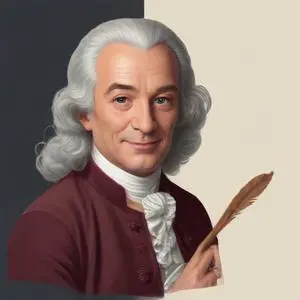
A witty and insightful 18th-century writer and philosopher who used satire to critique societal norms and advocate for reason, tolerance, and human rights.
Renowned for his biting wit, philosophical insights, and tireless advocacy for freedom of speech and religion, Voltaire remains one of the most influential thinkers of the Enlightenment era. This French polymath, born François-Marie Arouet, left an indelible mark on literature, philosophy, and society, earning him a reputation as one of the most significant figures of the 18th century.
Voltaire's prolific writing career spanned over five decades, during which he produced an astonishing array of works, including plays, poems, novels, essays, histories, and scientific expositions. His magnum opus, Candide, a novella that critiques and ridicules the philosophers and events of his time, stands as a testament to his razor-sharp wit and intellectual curiosity.
Voltaire's life was marked by controversy, imprisonment, and exile, yet he remained undeterred in his pursuit of knowledge and social justice. Some notable milestones include:
Voltaire's impact on modern society is profound and far-reaching, with his ideas influencing:
Voltaire's wit and wisdom continue to inspire and provoke, as evident in these quotes:
Voltaire's influence extends beyond literature and philosophy, with references in popular culture, including:
Voltaire's remarkable life and work continue to captivate audiences, inspiring generations to embrace the power of reason, creativity, and intellectual curiosity. As a writer, philosopher, and satirist, Voltaire remains an enduring symbol of the Enlightenment's pursuit of knowledge, freedom, and human progress.
Born in 1712
A pioneering thinker who shaped modern democracy and education with his ideas on social contracts, general will, and the importance of early childhood education. His writings influenced the French Revolution and modern political thought.
Born in 1724
Developed influential philosophical frameworks, such as the Critique of Pure Reason, that shaped modern Western thought on ethics, morality, and human understanding.
Born in 1632
A 17th-century thinker who laid the groundwork for modern democracy, arguing that governments derive their power from the people and that individuals have inherent rights to life, liberty, and property.
Born in 1689
A French lawyer and philosopher who developed the concept of separation of powers, which divides a government into legislative, executive, and judicial branches to prevent abuse of power. His ideas greatly influenced modern democracy.
