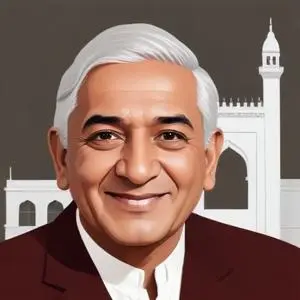
Charles Correa: The Visionary Architect of Modern India
A Pioneer of Urban Planning and Architecture
Charles Correa, a stalwart of Indian architecture, is renowned for his groundbreaking contributions to modern architecture and urban planning in post-Independent India. With a distinctive approach that blended traditional methods and materials with modern sensibilities, Correa's works are a testament to his commitment to creating spaces that cater to the needs of the urban poor.
Early Life and Education
Born on September 1, 1930, in Secunderabad, India, Correa was of Roman Catholic Goan descent. He pursued his higher education at St. Xavier's College, Mumbai, before moving to the University of Michigan (1949-1953), where he was inspired by the teachings of
Buckminster Fuller. Correa later earned his master's degree from the Massachusetts Institute of Technology (1953-1955).
Early Career and Notable Projects
Correa established his professional practice in Mumbai in 1958. One of his earliest significant projects was the
Mahatma Gandhi Sangrahalaya (Mahatma Gandhi Memorial) at Sabarmati Ashram in Ahmedabad (1958-1963). This was followed by the Madhya Pradesh Legislative Assembly in Bhopal (1967). In 1961-1966, Correa designed his first high-rise building, the Sonmarg apartments in Mumbai.
Architectural Philosophy and Contributions
Correa's work was characterized by a deep understanding of India's cultural heritage and a commitment to creating spaces that were accessible and inclusive. His designs often incorporated traditional elements, such as courtyards and open-to-the-sky rooms, which were adapted to suit modern requirements. Correa's architectural philosophy was guided by a focus on the needs of the urban poor, which he believed could be addressed through innovative and sustainable design.
Urban Planning and Low-Cost Shelter
During the 1970s and 1980s, Correa's work shifted towards urban planning and low-cost shelter. He was appointed Chief Architect for New Bombay (Navi Mumbai) from 1970 to 1975, where he played a key role in shaping the urban landscape of the new city. In 1984, Correa founded the Urban Design Research Institute in Bombay, which aimed to promote sustainable urban development and improve the built environment.
Awards and Honors
Throughout his career, Correa received numerous awards and honors for his contributions to architecture and urban planning. Some notable recognitions include the Padma Shri (1972) and the Padma Vibhushan (2006), two of India's highest civilian honors.
Legacy and Impact
Charles Correa's legacy extends far beyond his individual projects. He is credited with shaping the course of modern architecture in India and inspiring a generation of architects and urban planners. His commitment to creating inclusive and sustainable spaces has had a lasting impact on the built environment in India and beyond.
In Memoriam
Charles Correa passed away on June 16, 2015, leaving behind a rich legacy of architectural and urban planning achievements. His contributions continue to inspire and influence architects, urban planners, and policymakers around the world.
FAQ
What was Charles Correas architectural style?
Charles Correa was an Indian architect known for his modernist and Brutalist designs, which often incorporated elements of traditional Indian architecture and culture.
What were some of Charles Correas most famous buildings?
Some of Charles Correas most famous buildings include the Gandhi Ashram Museum in Ahmedabad, the Kanchanjunga Apartments in Mumbai, and the Jawahar Kala Kendra in Jaipur.
What were Charles Correas views on urban planning?
Charles Correa was a strong advocate for sustainable and inclusive urban planning, believing that cities should be designed to serve the needs of all citizens, not just the wealthy and powerful.
What awards did Charles Correa receive?
Charles Correa received numerous awards for his work, including the Padma Shri, the Padma Bhushan, and the Royal Gold Medal for Architecture.
How did Charles Correa impact Indian architecture?
Charles Correas work had a profound impact on Indian architecture, inspiring a new generation of architects to explore modernist and sustainable design principles.