


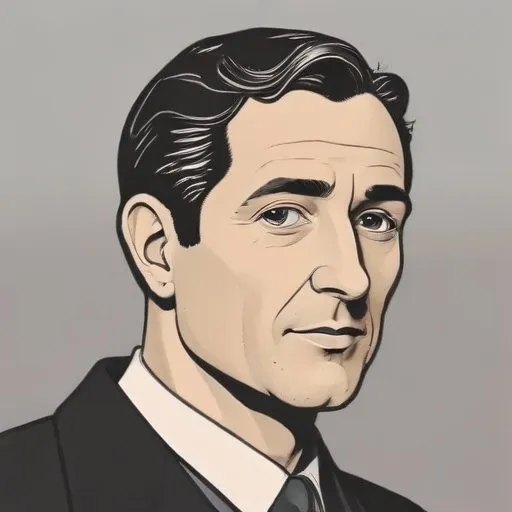
A French sculptor renowned for his expressive, figurative works that captured the subtleties of human emotion, often focusing on the female form. His pieces exude a sense of quiet intimacy and vulnerability.
Charles Despiau, a renowned French sculptor, is best known for his serene and classically inspired portraits and nudes that adorn the collections of over 30 museums in France and over 100 museums worldwide. His exceptional attention to detail and dedication to perfecting his craft have made him a prominent figure in the world of sculpture.
Born on November 4, 1874, in Mont-de-Marsan, Landes, Despiau's artistic journey began at the École des Arts Décoratifs, followed by the École nationale supérieure des Beaux-Arts. His early training laid the foundation for his later success.
In 1907, Despiau's talent caught the attention of Auguste Rodin, who hired him as an assistant. This opportunity allowed Despiau to work alongside the master sculptor, refining his skills and developing his unique style. After serving in the camouflage unit during World War I, Despiau returned to sculpture and gained recognition with his one-man show at the Brummer Gallery in New York in 1927.
Despiau's sculptures, often described as calm and classical, exude a sense of serenity and elegance. His focus on perfecting each piece led to a relatively small but highly esteemed body of work, with only 150 sculptures and 1,000 drawings created over his 50-year career. The Metropolitan Museum of Art and the Museum of Modern Art in New York are among the institutions that proudly display his works.
The largest collection of Despiau's sculptures can be found in his native Mont-de-Marsan, in a museum he shares with Robert Wlérick, established in the Donjon Lacataye.
Throughout his career, Despiau received numerous accolades for his contributions to the world of sculpture. His dedication to his craft and his commitment to perfection earned him a place among the most respected artists of his time.
Despiau's sculptures continue to inspire artists and art enthusiasts alike, serving as a testament to the power of dedication and perfectionism. His legacy is a reminder of the importance of cultivating one's craft, and his works remain a source of beauty and tranquility in the world of modern art.
Born in 1840
A French sculptor and illustrator famous for creating iconic, emotionally charged figures that capture the human experience, including the iconic symbol of intellectualism, The Thinker.
Born in 1864
French illustrator and sculptor renowned for her pioneering work in Rodin's studio and her own expressive, emotional sculptures that explored the human form. Her tragic life and tumultuous relationship with Rodin have become legendary.
Born in 1869
A pioneering artist who revolutionized modern art with bold, expressive, and colorful works that blurred the lines between painting and sculpture, creating a new language of form and color.
Born in 1881
A pioneering artist who transformed modern art with pioneering Cubist works, creating a new visual language that continues to inspire and influence art, design, and culture.
Born in 1884
An Italian artist famous for elongated, emotive portraits and nudes that blended primitivism with cubism, capturing the essence of his subjects with expressive simplicity.
Born in 1876
A pioneer of modernist sculpture, he's renowned for his minimalist, abstract, and avant-garde works that redefined the boundaries of art, pushing the limits of form and materiality.
Born in 1901
A pioneer of modern art, creating elongated, abstract human figures that capture the essence of humanity, and exploring the relationship between sculpture and space.
Born in 1898
A pioneer of modern sculpture, creating abstract, biomorphic forms that evoke a sense of primal emotion, and illustrating books with whimsical, dreamlike drawings.
