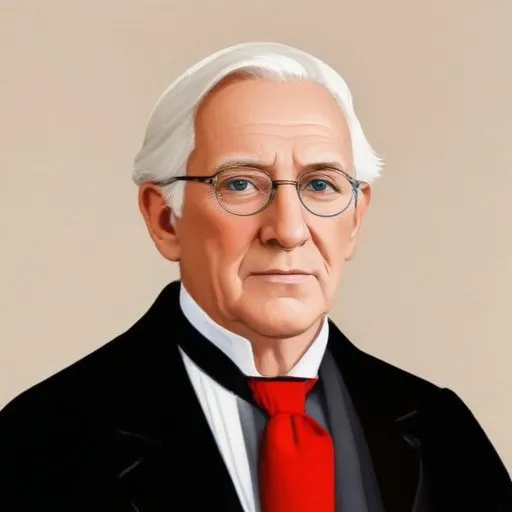
Charles Grandison Finney: The Father of Old Revivalism
A Leader in the Second Great Awakening
Charles Grandison Finney, an American Presbyterian minister, is renowned for his pivotal role in the Second Great Awakening in the United States. He is often referred to as the Father of Old Revivalism, a testament to his unwavering dedication to evangelism and religious reform.
Early Life and Conversion
Born on August 29, 1792, in Warren, Connecticut, Finney was the youngest of nine children. His family relocated to the upstate frontier of Jefferson County, New York, following the American Revolutionary War. Without the benefit of a college education, Finney's leadership abilities, musical talent, and striking physical presence earned him recognition in his community. He was drawn to the Baptist church in Henderson, New York, where he was inspired by the emotional, revival-style meetings led by the preacher.
The Call to Ministry
Finney's conversion experience and subsequent baptism into the Holy Spirit led him to abandon his legal practice and dedicate his life to preaching the Gospel. This transformative event marked the beginning of his ministry, during which he would go on to become a powerful advocate for social reform.
Philosophical Contributions and Beliefs
Finney's theological views were shaped by his rejection of traditional Reformed theology. He was an ardent proponent of Christian perfectionism, which emphasized the possibility of achieving moral perfection through faith. This belief system informed his advocacy for social justice, particularly in the areas of abolitionism and equal education for women and African Americans.
Career Highlights and Major Works
Finney's ministry was marked by remarkable success, particularly during his tenure as a revivalist preacher in the Burnedover District in Upstate New York and Manhattan from 1825 to 1835. He was a prolific writer, and his works include
Lectures on Revival,
The Spirituality of the Law, and
The Principles of Victory. His literary contributions continue to inspire and influence generations of Christian scholars and laypersons alike.
Oberlin College and Social Reform
In 1835, Finney joined the faculty of Oberlin College in Ohio, an institution that accepted students regardless of race or sex. He served as the college's second president from 1851 to 1865, during which time he fostered a culture of activism among the faculty and students. The college became a hub for abolitionist and social reform efforts, with many students and faculty members actively participating in the Underground Railroad and advocating for universal education.
Historical Context and Legacy
Finney's life and ministry were marked by a profound commitment to social justice and religious reform. His legacy extends far beyond his own lifetime, as his influence can be seen in the development of modern evangelicalism and the ongoing struggle for social justice in the United States. His unwavering dedication to the cause of abolitionism and equal education for all serves as a powerful testament to the enduring impact of his ministry.
Personal Relationships and Anecdotes
Finney's personal relationships were marked by a deep sense of compassion and empathy. He was known for his striking physical presence, which was said to have included a height of 6'3" and piercing eyes that commanded attention. Despite his imposing stature, Finney was beloved by those who knew him, and his personal relationships were characterized by a deep sense of warmth and kindness.
Influence on Modern Society
Finney's influence on modern society is impossible to overstate. His advocacy for social justice and equal education helped to pave the way for the Civil Rights Movement of the 1950s and 1960s. His commitment to Christian perfectionism continues to inspire generations of evangelicals, and his literary contributions remain a testament to his unwavering dedication to the cause of social reform.
FAQ
What was Charles Grandison Finneys role in the Second Great Awakening?
Finney was a key figure in the Second Great Awakening, a period of religious revival in the United States in the early 19th century. He was a powerful preacher and evangelist who helped to spread the revival movement throughout the country.
What was Finneys approach to evangelism?
Finney was known for his innovative approach to evangelism, which emphasized the use of persuasive language and emotional appeals to win converts. He also believed in the importance of social reform and activism in conjunction with evangelism.
What was Finneys theology like?
Finney was a Calvinist who believed in the importance of personal conversion and the role of the Holy Spirit in salvation. He also believed in the importance of social justice and the need for Christians to work for reform in society.
How did Finneys preaching style contribute to his success?
Finney was known for his charismatic preaching style, which emphasized simplicity, clarity, and emotional appeal. He was able to connect with ordinary people and inspire them to make a commitment to Christ.
What is Finneys legacy in American Christianity?
Finney is considered one of the most important figures in American Christianity in the 19th century, and his influence can still be seen today in many evangelical and charismatic churches. He helped to shape the course of American Christianity and promote the cause of social reform.