


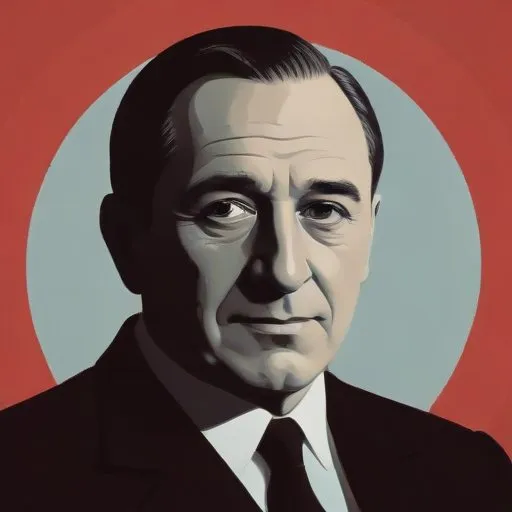
Academy Award-winning documentarian and producer behind iconic films like "Robert Kennedy Remembered" and "The John Glenn Story", capturing pivotal moments in American history.
Charles Guggenheim is widely regarded as one of the most decorated documentary filmmakers in the history of the Academy, with an impressive four Oscars and twelve nominations to his name. He is known for his powerful, evocative storytelling style, which brought complex social and political issues to life through the medium of film.
Charles Eli Guggenheim was born on March 31, 1924, in Cincinnati, Ohio, into a prominent German-Jewish family. His father and grandfather had a thriving furniture business, and it was expected that Charles would follow in their footsteps. However, he struggled with dyslexia as a child, which went undiagnosed, and he was thought to be a slow learner. Despite this, he persevered and eventually learned to read at the age of nine.
After serving in the United States Army during World War II, Guggenheim pursued a career in broadcasting, studying farming at Colorado A&M and later finishing his college education at the University of Iowa in 1948. He moved to New York City and began working for Lew Cohen at CBS, where he was introduced to the world of film and storytelling.
In 1954, Guggenheim founded his own film production company, Charles Guggenheim and Associates, and produced his first feature film, The Great St. Louis Bank Robbery (1959). This marked the beginning of a long and successful career in documentary filmmaking.
Guggenheim's work was recognized with numerous awards and nominations, including four Academy Awards for Best Documentary Feature. His winning films include A Time for Justice (1995), The JOHNSTON FLOOD (1989),
Charles Guggenheim's legacy extends far beyond his impressive awards tally. He was a pioneer in the field of documentary filmmaking, known for his innovative storytelling style and his ability to tackle complex, controversial subjects with sensitivity and nuance.
Throughout his career, Guggenheim worked tirelessly to promote social justice and advocate for human rights. His films continue to inspire and educate audiences to this day, and his influence can be seen in the work of many contemporary documentary filmmakers.
Guggenheim was married to Marion Haenzel from 1952 until his death in 2002. The couple had two children, Davis and Grace. In his later years, Guggenheim was recognized for his contributions to the field of documentary filmmaking, receiving the Alfred I. duPont-Columbia University Award for Broadcast Journalism in 1999.
"The most important thing in filmmaking is to tell a good story. If you can make people care, you can make them think."
"I'm not interested in making films that are simply 'issues' films. I want to make films that are about people, about their struggles and triumphs."
Charles Guggenheim's career spanned several decades, during which time he witnessed and documented some of the most significant social and political movements of the 20th century. His films provide a unique window into the past, offering a glimpse of the struggles and triumphs of ordinary people during extraordinary times.
Today, Guggenheim's legacy continues to inspire a new generation of documentary filmmakers, who are drawn to his innovative storytelling style and his commitment to social justice.
Born in 1916
Legendary news anchor and voice of authority, known for delivering trusted and unbiased reporting during pivotal moments in American history, including the Apollo 11 moon landing.
Born in 1917
The 35th President of the United States was a charismatic leader who navigated the country through the Cuban Missile Crisis and advocated for civil rights, leaving a lasting legacy in American politics.
Born in 1925
A Navy officer, lawyer, and politician who served as US Attorney General, playing a key role in the Civil Rights Movement and advocating for social justice. He was a prominent figure in American politics during the 1960s.
97 Years Old
A prominent leader in the civil rights movement, advocating for racial equality and social justice through nonviolent means, leaving a lasting impact on American history.
Born in 1915
A legendary entertainer who charmed audiences with smooth vocals and iconic film roles, leaving an indelible mark on American popular culture.
Born in 1909
A pioneering filmmaker who directed iconic movies like "On the Waterfront" and "East of Eden," and was a key figure in the development of the Actors Studio.
Born in 1924
A cultural icon who revolutionized acting with his intense, nuanced performances, earning him numerous accolades, including two Oscars. He's synonymous with iconic roles in "A Streetcar Named Desire" and "The Godfather".
95 Years Old
A whistleblower who leaked the Pentagon Papers, exposing government secrets about the Vietnam War, and a prominent anti-war activist.
