


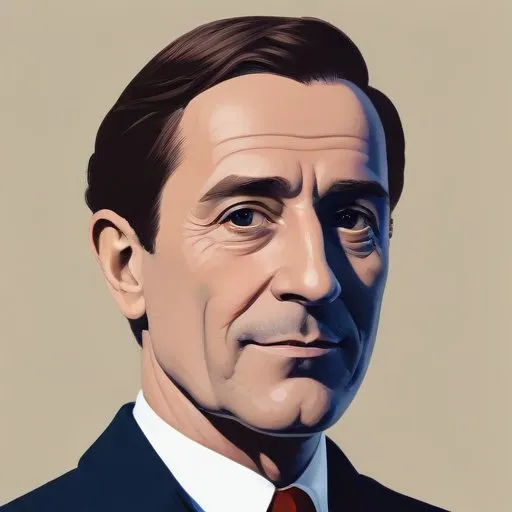
A talented artist celebrated for his vivid illustrations and paintings that captured the essence of Canadian life, particularly in rural Quebec, during the early 20th century.
Charles Huot is renowned for his exquisite paintings and illustrations that adorn the walls of prominent institutions, including the Parliament Building in Quebec City. His remarkable talent and dedication to his craft have earned him a distinguished place in the world of art, making him one of the most celebrated French-Canadian painters of his time.
Born on April 6, 1855, in Quebec City, Huot demonstrated a remarkable aptitude for drawing from a young age. Recognizing his talent, his family enrolled him in the Collège de Sainte-Anne-de-la-Pocatière at the tender age of ten. Later, he attended the École Normale Laval, where his artistic prowess continued to flourish.
In 1874, Huot traveled to Paris to further his artistic education at the prestigious École des Beaux-Arts. Under the guidance of renowned painter Alexandre Cabanel, Huot refined his skills and immersed himself in the rich artistic heritage of Europe. During his time in Paris, he participated in numerous exhibitions, including the Salon in 1876, where his work caught the attention of Patrice MacMahon, who purchased his painting "The Good Samaritan" on behalf of the French Government.
Upon returning to Canada in 1886, Huot's career truly began to take off. He received a significant commission to decorate the Church of the Holy Savior in 1887, marking the beginning of a series of religious-themed works. His paintings, characterized by their vivid colors and intricate details, soon adorned the walls of numerous churches and institutions throughout Quebec.
In 1910, Huot was selected by a committee to create two large historical paintings for the Parliament Building in Quebec City. The resulting works, "Sovereign Council" and "The Debate on Languages," executed between 1910 and 1913, are considered some of his most notable achievements.
Huot married Louise Schlachter in 1885, and the couple had a daughter together. In 1903, they traveled to Europe, where Huot continued to hone his skills, studying with Francesco Gai in Italy. After his wife's passing in 1907, Huot returned to Canada with his daughter, where he continued to paint and teach.
Charles Huot's contributions to the world of art are undeniable. His stunning paintings and illustrations have left an indelible mark on Canadian art and culture. Through his work, he has inspired generations of artists, and his legacy continues to be felt to this day.
Through his remarkable body of work, Charles Huot has left a lasting legacy, cementing his place as one of Canada's most esteemed painters and illustrators.
Born in 1796
A French painter and etcher, renowned for capturing the essence of landscapes and figures with a unique blend of realism and romanticism, creating dreamy, ethereal scenes.
47 Years Old
A Belgian goalkeeper who played for several clubs, including Bologna and Torino, and is known for his impressive saves and penalty-stopping abilities.
Born in 1798
A Romantic-era master of expressive brushstrokes and vivid color, creating iconic works that captured the drama and emotion of historical and literary scenes.
Born in 1746
A visionary artist who pioneered Romanticism, capturing the human experience through bold, emotionally charged paintings and sculptures that continue to inspire and unsettle.
Born in 1776
A Romantic-era painter celebrated for capturing the essence of the English countryside through serene, naturalistic landscapes, often featuring skies and clouds.
Born in 1774
A 19th-century Romantic painter and etcher, renowned for his mystical and contemplative landscapes that often featured ruins, mountains, and misty skies, evoking a sense of spirituality and connection to nature.
Born in 1840
A founder of Impressionism, capturing fleeting light and color in dreamy landscapes and water scenes, revolutionizing modern art.
