


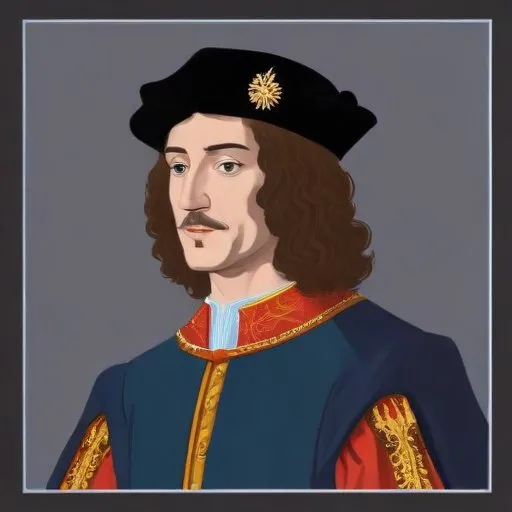
A 15th-century nobleman who ruled over Guelders and Zutphen, known for his involvement in the Burgundian Wars and his role in shaping the region's history.
Charles II, Duke of Guelders, was a prominent figure in the Netherlands during the 15th and 16th centuries, known for his bold rebellions against the Habsburgs and his crucial role in shaping the country's history.
Born on November 9, 1467, Charles was the son of Adolf of Egmond and Catherine of Bourbon. He was raised at the Burgundian court of Charles the Bold, where he learned the art of politics and warfare. In 1473, Charles the Bold bought the duchy of Guelders from Adolf of Egmond, paving the way for Charles' future claim to the throne.
In 1492, the citizens of Guelders, dissatisfied with Maximilian's rule, ransomed Charles and recognized him as their Duke. Charles gained the support of the French King, but in 1505, Guelders was regained by King Maximilian's son Philip the Handsome. Charles managed to escape to Spain, where he attended Philip's coronation as King of Castile.
After Philip's death in 1506, Charles regained control over Guelders by 1513. He became a major player behind the scenes of the Frisian peasant rebellion, financially supporting the rebel leader Pier Gerlofs Donia. However, he later switched sides and allied himself with his military commander Maarten van Rossum.
Charles II's rebellions against the Habsburgs and his involvement in the Frisian peasant rebellion had a profound impact on the Netherlands. His struggles for independence and self-determination paved the way for future generations of Dutch leaders.
Today, Charles is remembered as a hero who fought against foreign occupation and oppression. His legacy continues to inspire the Dutch people, serving as a symbol of resistance and determination.
Charles II's life was marked by rebellion, struggle, and determination. His legacy continues to shape the Netherlands, inspiring future generations to fight for their rights and independence.
Born in 1467
Twin sister of a duke, she married into the Burgundian dynasty, becoming a powerful duchess consort and influential patron of the arts. Her court attracted prominent artists and thinkers of the time.
