


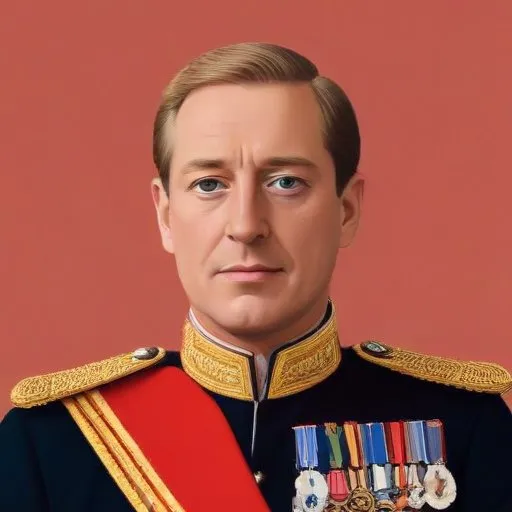
Ruler of Savoy from 1504 to 1553, known for his diplomatic and military prowess, and his role in the Italian Wars. He strengthened Savoy's position in Europe through strategic alliances and military campaigns.
Charles III, Duke of Savoy, also known as Charles the Good, is renowned for his remarkable 49-year reign, making him the third longest-reigning Savoyard monarch in history. During his tenure, he navigated treacherous political landscapes, securing his dukedom amidst French encroachment and family rivalries.
Born on October 10, 1486, Charles was a younger son of Philip Filippo the Landless and Claudine de Brosse. His grandparents were Duke Louis of Savoy and Anne of Cyprus. With little expectation of inheriting the dukedom, Charles's life took a dramatic turn when his father unexpectedly succeeded his grandnephew Charles II of Savoy as duke and head of the Savoy dynasty.
Following his father's death in 1497, Charles's half-brother Philibert the Handsome succeeded him as Duke of Savoy. However, Philibert's untimely death in 1504 paved the way for Charles's ascension to the throne at the age of 18. Charles faced numerous challenges to his authority, including from Philibert Berthelier, but he successfully quelled these threats to solidify his position.
Charles's father had staked a claim to the titles of the kingdoms of Cyprus, Jerusalem, and Armenia, which were initially intended for his sister Yolande Louise. Charles, in turn, assumed these titles and continued to assert his claim to these territories. Although the de jure rights to Jerusalem and Cyprus were lost to the Savoy family after Yolande's death in 1499, Charles's successors would continue to use these titles.
Charles III's remarkable reign was marked by his determination to protect and expand his dukedom. Despite facing numerous challenges, he ensured the continuation of the Savoy dynasty, paving the way for future generations. His legacy is a testament to his resilience and ability to navigate turbulent times, earning him the revered title of Charles the Good.
Charles III's reign coincided with a period of significant upheaval in Europe, marked by the rise of powerful nation-states and the decline of feudal structures. His ability to maintain his dukedom amidst these changes demonstrates his skillful diplomacy and strategic thinking. In comparison to his contemporaries, Charles III's longevity and adaptability set him apart as a remarkable ruler of his time.
Born in 1528
A 16th-century Italian nobleman who led his duchy to independence and reformed its government, earning him the title "Testa d'Italia" (Head of Italy). He's also known for his military campaigns and architectural achievements.
Born in 1562
Ruler of Savoy from 1580 to 1630, he expanded his territories through strategic marriages and military campaigns, earning the nickname "the Great".
Born in 1587
Ruler of Savoy from 1630 to 1637, he played a key role in the Thirty Years' War and expanded his duchy through strategic alliances and military campaigns.
Born in 1820
Unified Italy's first king, who played a key role in the country's unification and modernization. He's remembered for his strong leadership and diplomatic skills.
