


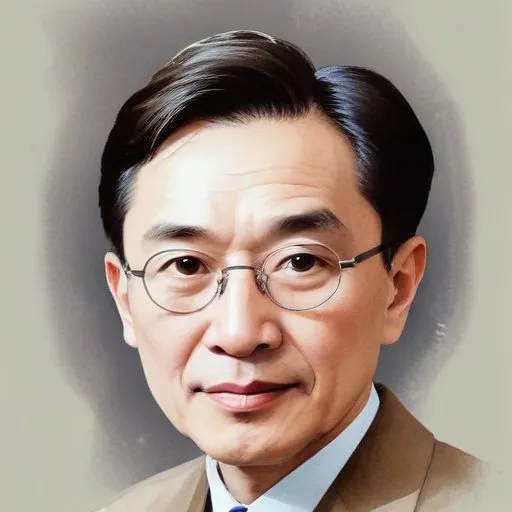
Developed the theory of fiber optic communication, revolutionizing global data transmission and enabling high-speed internet.
Charles K. Kao, the "Godfather of Broadband" and pioneer of fiber optic communications, revolutionized the way we transmit data, paving the way for the modern internet as we know it. His groundbreaking work in the 1960s laid the foundation for the widespread adoption of fiber optics in telecommunications, earning him the Nobel Prize in Physics in 2009.
Born on November 4, 1933, in Shanghai, China, Kao's family settled in Hong Kong in 1949. He graduated from St. Joseph's College in Hong Kong in 1953 and later moved to London to study electrical engineering.
In the 1960s, Kao worked at Standard Telecommunication Laboratories, the research center of Standard Telephones and Cables (STC) in Harlow, where he developed methods to combine glass fibers with lasers, enabling the transmission of digital data. This pioneering work formed the basis of modern fiber optic communications.
Kao's work has had a profound impact on modern society, enabling the widespread adoption of high-speed internet, facilitating global communication, and driving economic growth. His contribution has paved the way for countless innovations in fields such as medicine, education, and entertainment.
Kao believed in the importance of collaboration and interdisciplinary research, stating, "A lot of people think that doing science is just about getting the answer, but it's not. It's about understanding the question."
Despite his groundbreaking work, Kao faced skepticism and criticism in the early stages of his research. However, his perseverance and dedication ultimately led to widespread recognition and acclaim.
Charles K. Kao's legacy extends far beyond his scientific contributions. He has inspired generations of scientists, engineers, and innovators, leaving behind a testament to the power of human ingenuity and the importance of pushing the boundaries of knowledge.
Charles K. Kao's remarkable life and achievements serve as a beacon of inspiration, reminding us of the transformative power of human curiosity and innovation.
Born in 1916
Developed theories on the Big Bang, cosmic microwave background radiation, and the universe's expansion, making groundbreaking contributions to our understanding of the cosmos.
93 Years Old
A Nobel Prize-winning physicist who discovered cosmic microwave background radiation, providing key evidence for the Big Bang theory. His work revolutionized our understanding of the universe's origins.
Born in 1914
A pioneer in particle physics, designing the Fermilab, and creating sculptures that explore the relationship between art and science.
Born in 1918
A pioneering radio astronomer who made groundbreaking discoveries about the universe, including the detection of quasars and the mapping of the cosmic microwave background radiation.
Born in 1924
A British astronomer who discovered pulsars, a type of neutron star, and was awarded the Nobel Prize in Physics in 1974 for this groundbreaking finding.
