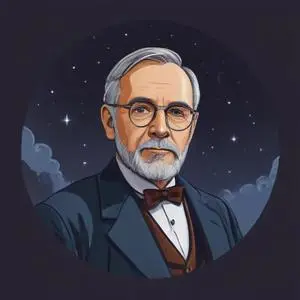
Sir Martin Ryle: A Pioneering Radio Astronomer
A Legacy of Innovation in Radio Astronomy
Sir Martin Ryle, a renowned English radio astronomer, left an indelible mark on the field of astronomy through his groundbreaking work on radio telescope systems and aperture synthesis. He is best known for developing revolutionary radio telescope systems that enabled the accurate location and imaging of weak radio sources, paving the way for significant advancements in our understanding of the universe.
Early Life and Education
Born on September 27, 1918, in Brighton, England, Ryle was the son of Professor John Alfred Ryle and Miriam (née Scully) Ryle. He was the nephew of Oxford University Professor of Philosophy
Gilbert Ryle. Ryle's educational background was impressive, with stints at Bradfield College and Christ Church, Oxford, where he studied physics.
Wartime Contributions and Early Career
During World War II, Ryle worked with the Telecommunications Research Establishment (TRE) on the design of antennas for airborne radar equipment. After the war, he received a fellowship at the Cavendish Laboratory, where his focus shifted from radio waves from the Sun to other areas. This marked the beginning of his pioneering work in radio astronomy.
Breakthroughs in Radio Astronomy
Ryle's innovations in radio astronomy were instrumental in the development of astronomical interferometry and aperture synthesis. In 1946, he and Derek Vonberg published the first interferometric astronomical measurements at radio wavelengths. This work led to the discovery of the most distant known galaxies in the universe at that time.
Awards and Honors
Ryle's contributions to astronomy were recognized through numerous awards and honors, including his appointment as the twelfth Astronomer Royal from 1972 to 1982 and his sharing of the Nobel Prize for Physics in 1974 with
Antony Hewish. This Nobel Prize was the first awarded in recognition of astronomical research.
Later Life and Social Activism
In the 1970s, Ryle redirected his attention to social and political issues, which he believed were more pressing. He held the position of Professor of Radio Astronomy at the University of Cambridge and was the founding director of the Mullard Radio Astronomy Observatory.
Legacy and Impact
Ryle's work has had a lasting impact on the field of astronomy, paving the way for future generations of radio astronomers. His innovative approaches and techniques have enabled significant advancements in our understanding of the universe. Through his work, Ryle has left an enduring legacy that continues to inspire and influence scientists today.
- Notable Contributions:
- Development of revolutionary radio telescope systems
- Pioneering work on aperture synthesis
- Accurate location and imaging of weak radio sources
- Discovery of the most distant known galaxies in the universe
FAQ
What was Martin Ryles contribution to astronomy?
Martin Ryle was an English astronomer and author who made significant contributions to the field of radio astronomy, particularly in the areas of radio telescopes and the study of celestial radio sources.
What was Martin Ryles most notable discovery?
Martin Ryles most notable discovery was the detection of quasars, extremely luminous objects at the centers of galaxies, which revolutionized our understanding of the universe and the nature of these enigmatic objects.
What was Martin Ryles approach to scientific research?
Martin Ryles approach to scientific research was characterized by his emphasis on innovative instrumentation, rigorous observation, and collaboration with other scientists, earning him a reputation as a pioneering and influential astronomer.
How did Martin Ryles work influence our understanding of the universe?
Martin Ryles work influenced our understanding of the universe by providing new insights into the nature of quasars, black holes, and the evolution of galaxies, and paving the way for further research into the mysteries of the cosmos.
What awards or recognition did Martin Ryle receive for his work?
Martin Ryle received several awards and recognition for his work, including the Nobel Prize in Physics in 1974, the Royal Medal, and a knighthood for his services to astronomy.